 Bug FAQ
Lesser Purple Emperor
Apatura ilia · Order: Lepidoptera · Family: Nymphalidae
Also called: Purple Emperor
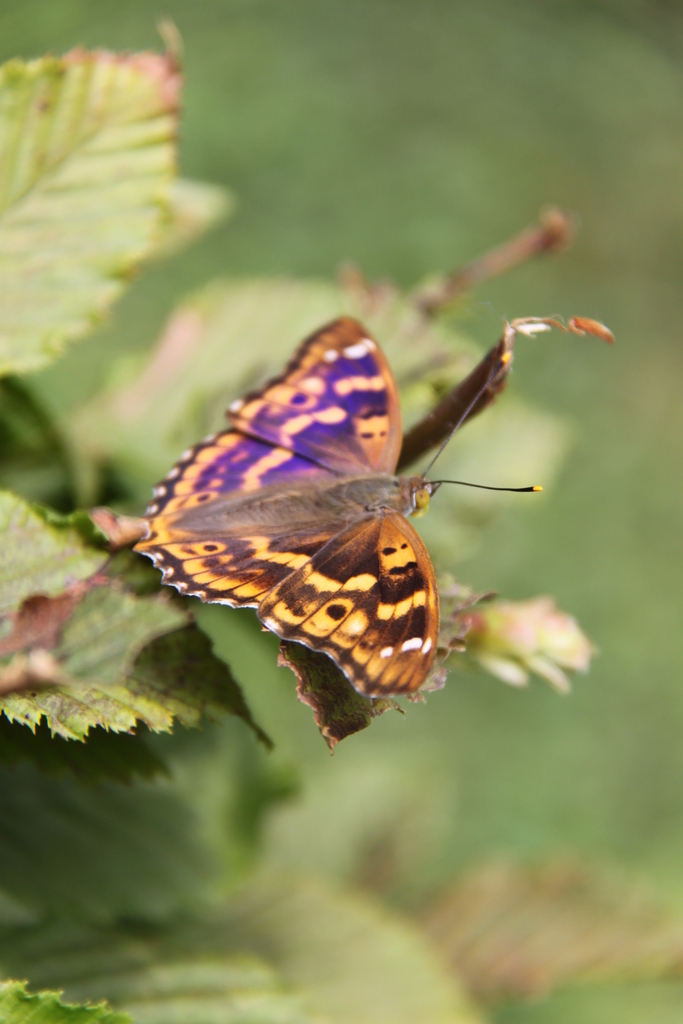
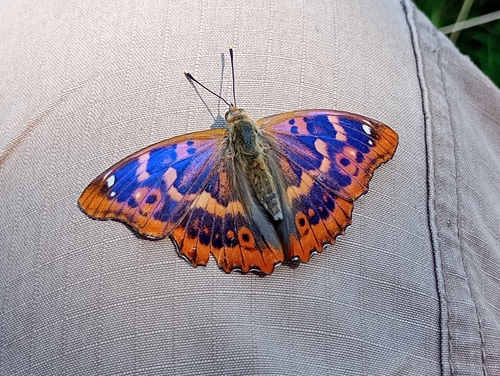
The lesser purple emperor is a medium-sized butterfly with a wingspan of about 55 to 70 mm, dark brown upper wings with metallic blue-violet tones in males, and distinctive orange eye-spots on the forewings. It lives across most of Europe and into the Palearctic, favoring habitats similar to the purple emperor and feeding on poplars, willows and related trees. The caterpillars are dirty-green with red-edged yellow stripes and reddish horns, and the pupae are greenish with yellow-edged wing cases.
Source: Wikipedia
Size
Females have a wingspan of 55 to 60 mm, while males are larger at 60 to 70 mm.
Source: Wikipedia
Where it lives
Its habits match those of the related purple emperor and it is found in countries such as Germany, France, Austria, Finland and parts of Russia.
Source: Wikipedia
What it eats
Adults feed on poplars (Populus tremula, P. pyramidalis) and various willows like Salix caprea, S. viminalis and S. rosmarinifolia.
Source: Wikipedia
Life cycle
Caterpillars are 4 to 5 cm long, dirty green with reddish horns, black-striped head, and multiple red-edged yellow stripes along the body. The pupa is greenish, with a dorsal ridge and yellow-edged wing cases and head processes.
Source: Wikipedia
Where it comes from
It is native to most of Europe and extends eastward across the Palearctic region.
Source: Wikipedia
More photos
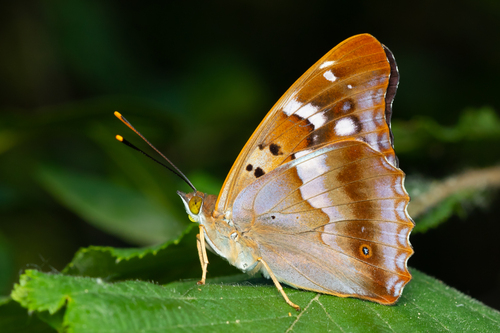
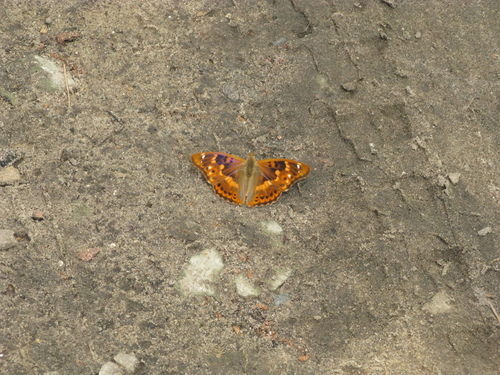
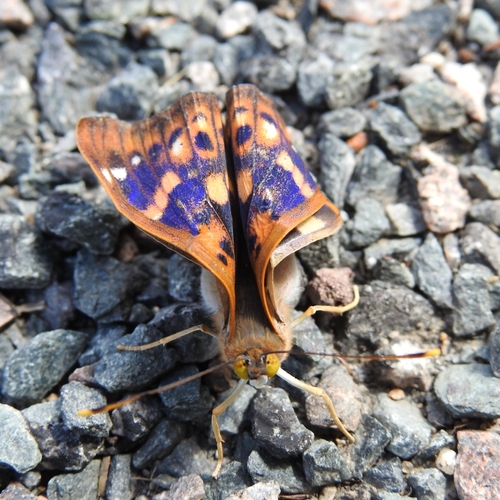
Same family (Nymphalidae)






Sources
- Wikipedia: https://en.wikipedia.org/wiki/Apatura_ilia
Look it up elsewhere: GBIF · iNaturalist · BugGuide · Wikipedia
Text written 2026-10-24 from the sources above and checked sentence by sentence against them. Data fetched 2026-10-22.