 Bug FAQ
Ligated Furrow Bee
Halictus ligatus · Order: Hymenoptera · Family: Halictidae
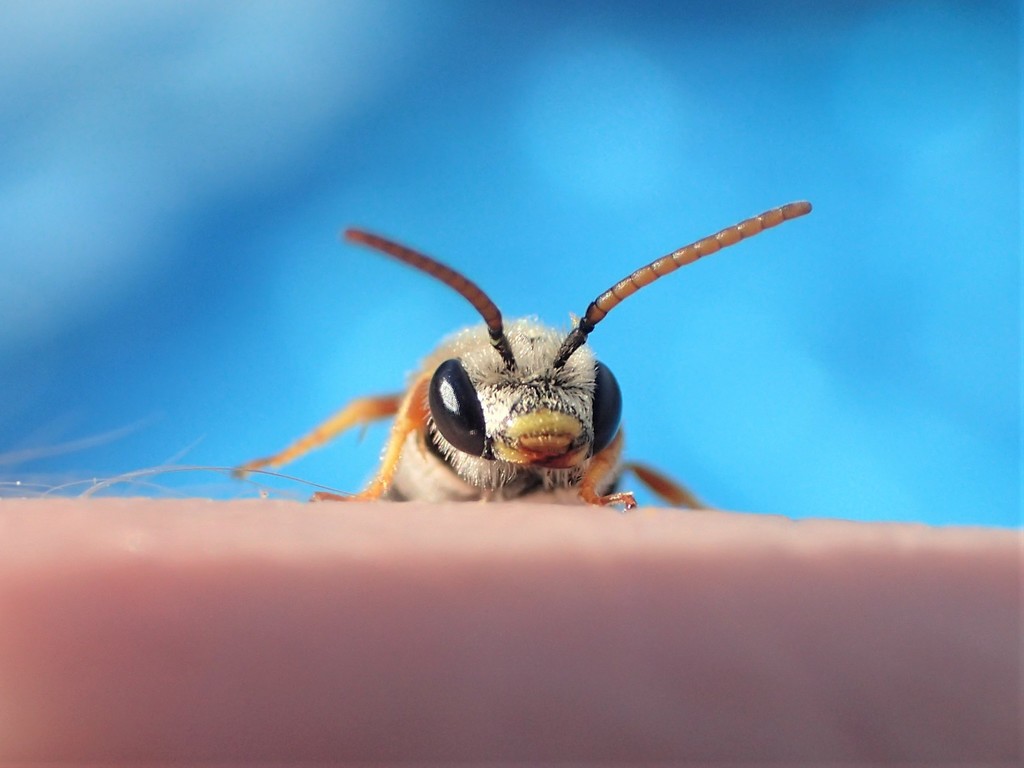
The ligated furrow bee is a ground-nesting sweat bee found across much of North America, from southern Canada to the West Indies and Colombia. Adults emerge from hibernation in late spring and stay in their overwintering burrows until late June, with development from egg to adult taking about 36 days when soils are cool.
Source: Wikipedia
How to recognize it
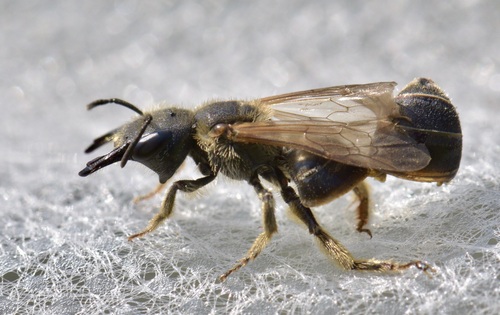
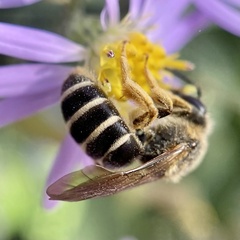
They can be told apart from similar Lasioglossum bees by pale hair bands on the rear edges of their abdominal segments. Their bodies are mostly black or brown-black and lack the faint metallic sheen seen in some related bees.
Source: Wikipedia
Where it lives
These bees nest in burrows in soil or in rotting wood.
Source: Wikipedia
Life cycle
The species has two main phases: an overwintering stage and an active stage in the warmer months. Eggs develop into adults in roughly 36 days when spring soil temperatures are low.
Source: Wikipedia
When you see it
Bees wake from hibernation between late April and early June but remain in their burrows until late June.
Source: Wikipedia
Where it comes from
They occur throughout North America, from about 50° N down to the West Indies and Colombia. Their range also includes temperate zones from the Atlantic to the Pacific, reaching southern Gulf of Mexico and southern Canada.
Source: Wikipedia
Lookalikes
Their appearance is similar to other Halictus species, making identification tricky.
Source: Wikipedia
Where it is found in the US
Recorded in 49 of 51 states and DC. Most records: California, Texas, New York, Pennsylvania, Oregon, Massachusetts, Colorado, Illinois.
Darker = more records. Counts are museum and citizen-science records, not population size.
Source: GBIF
Status: native in North America; native in United States; native in Canada. Source: iNaturalist
Months it is reported in the US
Source: GBIF
More photos
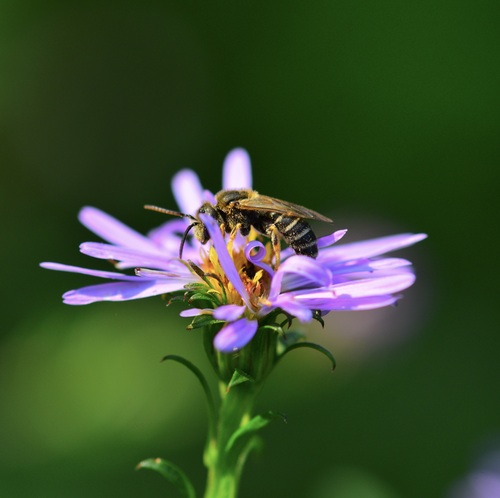
Same family (Halictidae)
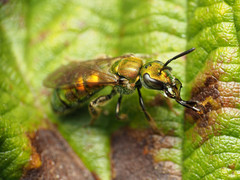
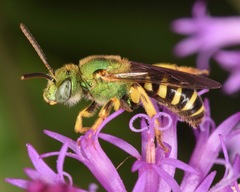
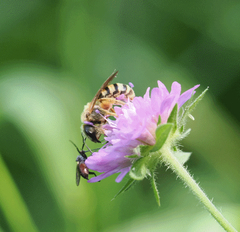


Sources
- Wikipedia: https://en.wikipedia.org/wiki/Halictus_ligatus
Look it up elsewhere: GBIF · iNaturalist · BugGuide · ITIS · Wikipedia
Text written 2026-10-22 from the sources above and checked sentence by sentence against them. Data fetched 2026-10-22.