 Bug FAQ
Little Wood Satyr
Megisto cymela · Order: Lepidoptera · Family: Nymphalidae
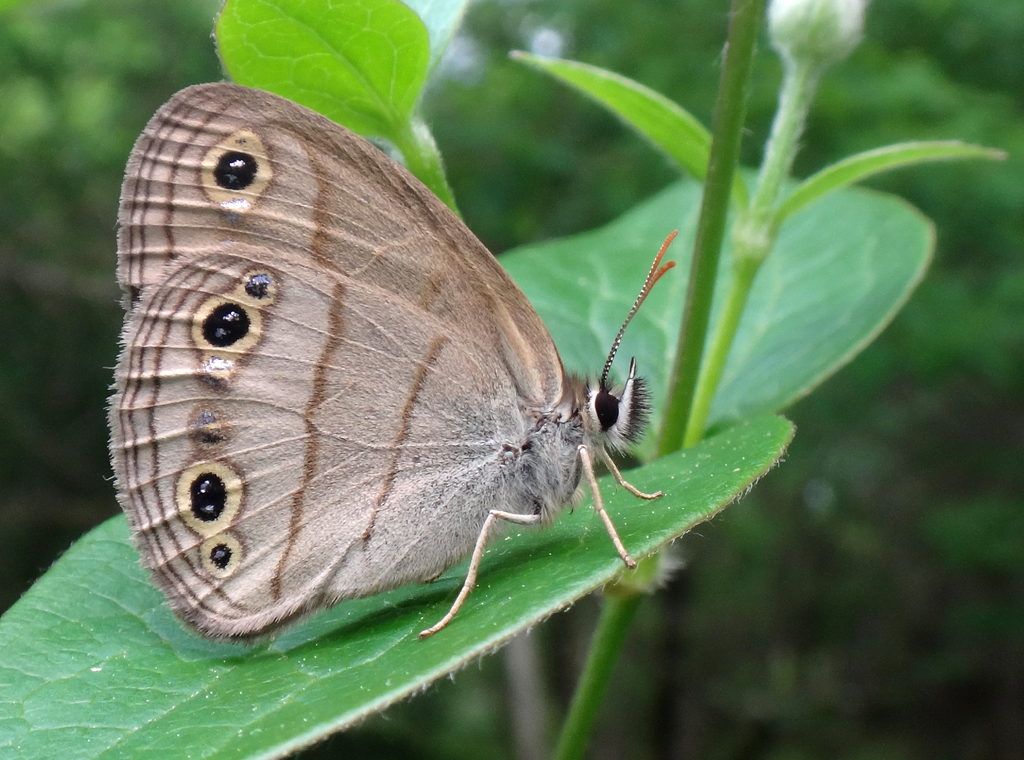
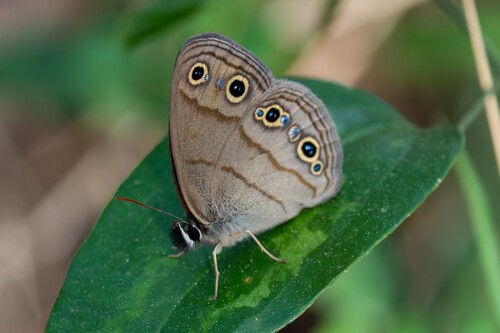
The Little Wood Satyr is a North American butterfly with a wingspan of about 3 to 5 cm and distinctive yellow-rimmed eyespots on its wings. It lives in forest edges, brushy clearings, and grassy patches between woods, and adults feed on plant sap, honeydew, and fruit.
Source: Wikipedia
How to recognize it
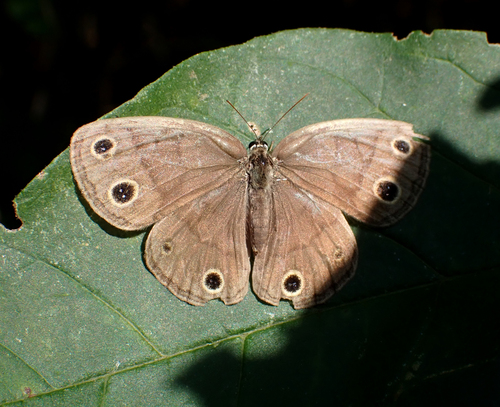
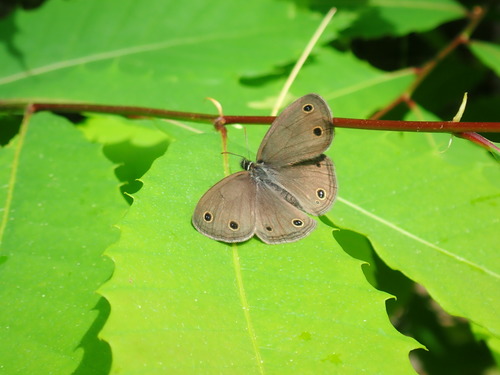
The forewing shows two black eyespots rimmed in yellow on both the top and bottom surfaces. The hindwing has two larger dorsal spots and smaller ventral spots.
Source: Wikipedia
Size
Wingspan ranges from 29 to 48 mm.
Source: Wikipedia
Where it lives
Found along forest edges, in brush-filled openings of cleared roads, and in grassy areas near woods.
Source: Wikipedia
What it eats
Adults mainly sip plant sap, aphid honeydew, and fruit. Larvae feed on grasses such as orchard grass, Kentucky bluegrass, and centipede grass.
Source: Wikipedia
Life cycle
Fourth-instar caterpillars spend winter in leaf litter and emerge in May.
Source: Wikipedia
When you see it
In the north, adults fly in June-July; in the south, they are on wing from March to September.
Source: Wikipedia
Lookalikes
It resembles the Common Satyr (Hermeuptychia sosybius) but is slightly larger.
Source: Wikipedia
Where it is found in the US
Recorded in 41 of 51 states and DC. Most records: Illinois, Texas, Vermont, Ohio, New York, Michigan, Massachusetts, Maryland.
Darker = more records. Counts are museum and citizen-science records, not population size.
Source: GBIF
Status: native in North America; native in Canada; native in United States. Source: iNaturalist
Months it is reported in the US
Source: GBIF
More photos
Same family (Nymphalidae)






Sources
- Wikipedia: https://en.wikipedia.org/wiki/Megisto_cymela
Look it up elsewhere: GBIF · iNaturalist · BugGuide · ITIS · Wikipedia
Text written 2026-10-22 from the sources above and checked sentence by sentence against them. Data fetched 2026-10-22.