 Bug FAQ
Mediterranean Spotted Chafer
Oxythyrea funesta · Order: Coleoptera · Family: Scarabaeidae
Also called: Mediterranean Spotted Chafer Beetle
Source: Wikipedia
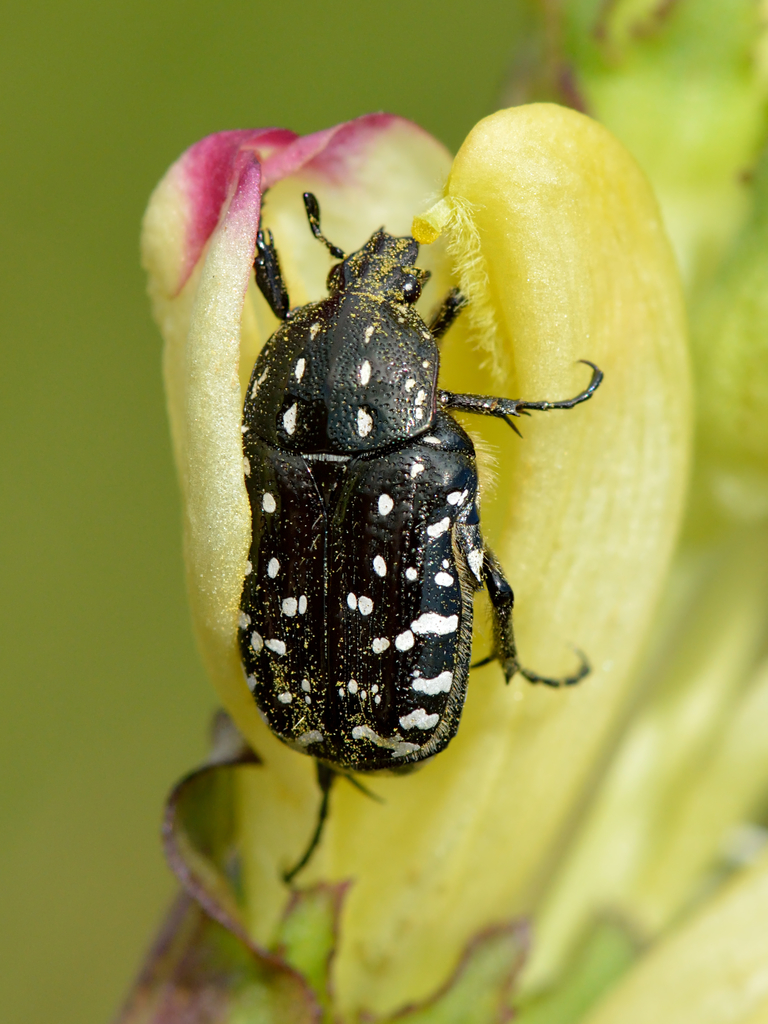
Adults are small black beetles with white spots and a covering of white hairs that wear off with age. They appear in spring, are most common from May to July, and the larvae live in soil feeding on dung and decaying material.
Source: Wikipedia
How to recognize it
The beetle is black-bronzed with six white spots on the pronotum and many more on the wing covers, and it is covered in white hairs that disappear in older individuals.
Source: Wikipedia
Size
Adults measure about 8 to 12 mm long.
Source: Wikipedia
Is it a pest in the house?
When present in large numbers they can damage orchards and ornamental plantings by eating stamens and damaging pistils.
Source: Wikipedia
How to get rid of it
Manual removal on white flowers is the main method; some commercial traps with chemical attractants exist but are not very effective.
Source: Wikipedia
What it eats
The beetle feeds on pollen and the organs of light-colored flowers, especially those of Rosaceae family plants.
Source: Wikipedia
Life cycle
Larvae are 16 to 22 mm long, live in soil, and eat dung, rotting wood, litter and soil until they emerge as adults the next spring.
Source: Wikipedia
When you see it
Adults emerge early in spring and are most often seen from May through July.
Source: Wikipedia
Where it comes from
It occurs throughout most of Europe, the western Palearctic, and the Near East, but not in the Americas.
Source: Wikipedia
Lookalikes
There are no chemical treatments; gardeners usually remove them by hand, especially on white flowers where they are easy to see.
Source: Wikipedia
More photos

Questions people ask
How can I get rid of them in my garden?
Pick them off white flowers by hand; traps are available but work poorly.
Source: Wikipedia
Same family (Scarabaeidae)
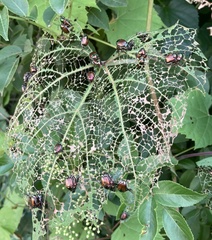 Japanese BeetlePopillia japonicaDamages trees, gardens or crops
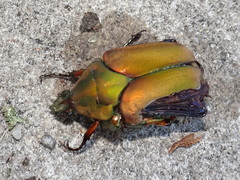 Common Green June BeetleCotinis nitidaDamages trees, gardens or crops
 Phyllophaga crinitaPhyllophaga crinitaDamages trees, gardens or crops
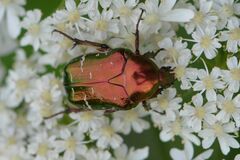 European Rose ChaferCetonia aurata
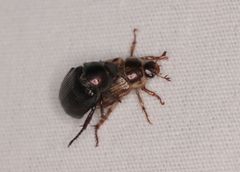 Oriental BeetleExomala orientalisDamages trees, gardens or crops
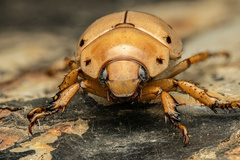 Grapevine BeetlePelidnota punctataDamages trees, gardens or crops
Sources
- Wikipedia: https://en.wikipedia.org/wiki/Oxythyrea_funesta
Look it up elsewhere: GBIF · iNaturalist · BugGuide · Wikipedia
Text written 2026-10-22 from the sources above and checked sentence by sentence against them. Data fetched 2026-10-22.