 Bug FAQ
Oriental Beetle
Exomala orientalis · Order: Coleoptera · Family: Scarabaeidae
Source: Wikipedia
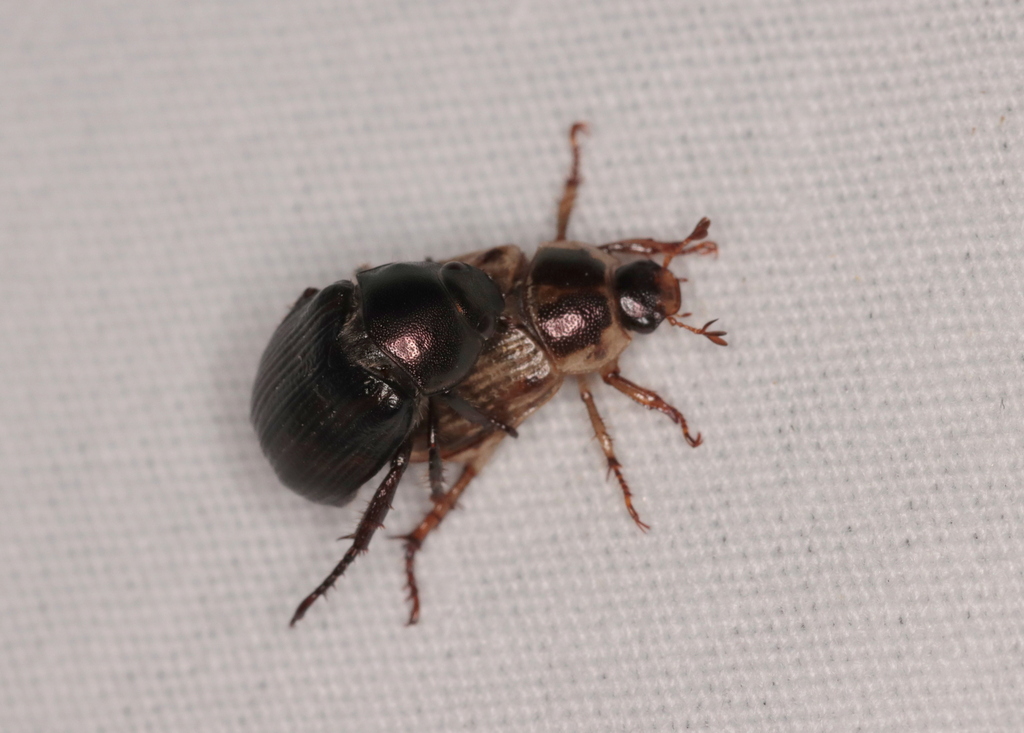
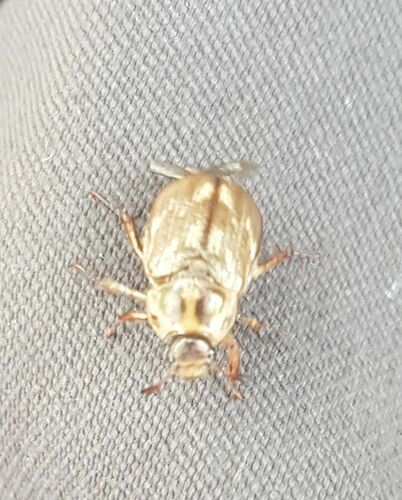
Adult oriental beetles are about 0.7 to 1.1 cm long with mottled metallic brown and black wing covers and body. The larvae live in soil, create a parallel line raster pattern, and feed on plant roots, harming fields. They breed for two months from mid-June to mid-August and stay buried deep in the ground.
Source: Wikipedia
How to recognize it
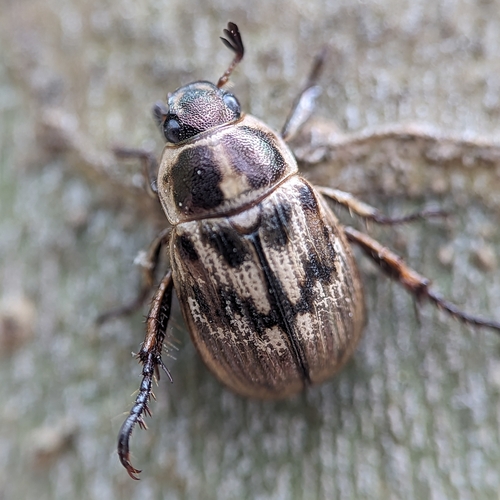
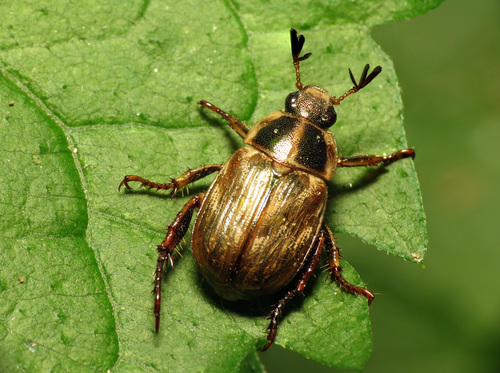
Adults have mottled metallic brown- and black-colored wing covers and a similarly colored thorax and head. Larvae show a parallel line raster pattern on their bodies.
Source: Wikipedia
Size
Adults measure between 0.7 and 1.1 cm (0.3 to 0.4 in) in length.
Source: Wikipedia
How to get rid of it
It is considered a pest, and one control method uses Korean entomopathogenic nematodes.
Source: Wikipedia
Where it lives
They live underground, burrowing in soil.
Source: Wikipedia
What it eats
Larvae move through fields underground, chewing plant roots for food.
Source: Wikipedia
Life cycle
Mating occurs over a two-month period from mid-June to mid-August.
Source: Wikipedia
When you see it
The adult beetles are active mainly during the mid-June to mid-August mating season.
Source: Wikipedia
Where it comes from
The species originates from Asia and was first recorded in Japan in 1875.
Source: Wikipedia
Lookalikes
It can be mistaken for the larger, more colorful Japanese beetle.
Source: Wikipedia
Where it is found in the US
Recorded in 33 of 51 states and DC. Most records: New York, Massachusetts, Pennsylvania, Maryland, New Jersey, Michigan, Vermont, Virginia.
Darker = more records. Counts are museum and citizen-science records, not population size.
Source: GBIF
Status: introduced in United States. Source: iNaturalist
Months it is reported in the US
Source: GBIF
More photos
Questions people ask
How can I get rid of them in my garden?
Applying Korean entomopathogenic nematodes to the soil can help reduce their numbers.
Source: Wikipedia
Same family (Scarabaeidae)
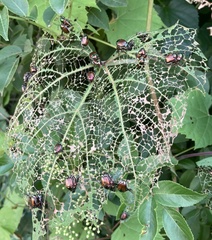 Japanese BeetlePopillia japonicaDamages trees, gardens or crops
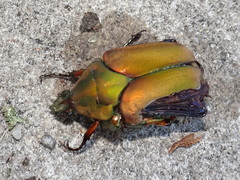 Common Green June BeetleCotinis nitidaDamages trees, gardens or crops
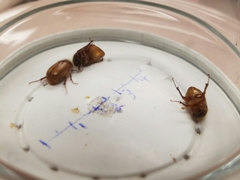 Phyllophaga crinitaPhyllophaga crinitaDamages trees, gardens or crops
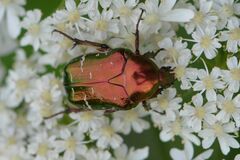 European Rose ChaferCetonia aurata
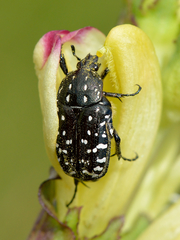 Mediterranean Spotted ChaferOxythyrea funestaDamages trees, gardens or crops
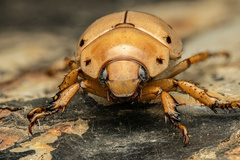 Grapevine BeetlePelidnota punctataDamages trees, gardens or crops
Sources
- Wikipedia: https://en.wikipedia.org/wiki/Anomala_orientalis
Look it up elsewhere: GBIF · iNaturalist · BugGuide · ITIS · Wikipedia
Text written 2026-10-22 from the sources above and checked sentence by sentence against them. Data fetched 2026-10-22.