 Bug FAQ
Migratory Grasshopper
Melanoplus sanguinipes · Order: Orthoptera · Family: Acrididae
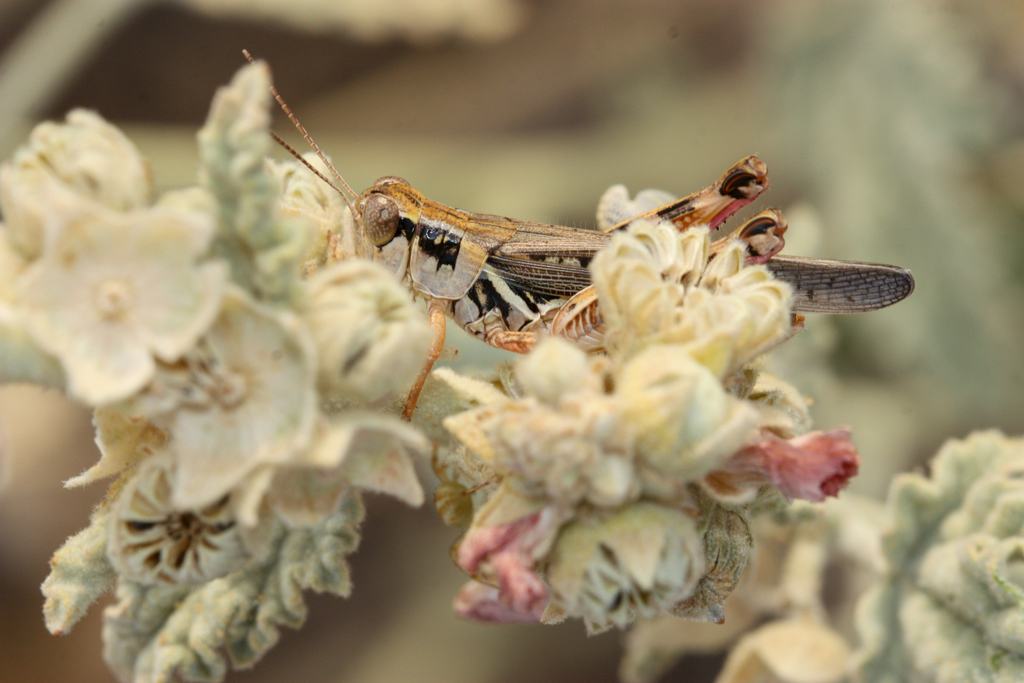
The migratory grasshopper is a medium-sized species that ranges from about 1.5 to 3 cm long. Its hind-leg tibiae are usually bright red, orange or pink, and the cerci are broad and rounded at the tip. It occurs throughout the Caribbean and North America.
Source: Wikipedia
How to recognize it
Look for the characteristic broad, rounded cerci and the colored hind tibiae, which are most often red, orange or pink but can also be blue, green or brown.
Source: Wikipedia
Size
Adults measure between 15 mm and 30 mm in length.
Source: Wikipedia
Where it lives
You will find this grasshopper in habitats across the Caribbean islands and mainland North America.
Source: Wikipedia
Where it comes from
Its native distribution includes both the Caribbean region and North America.
Source: Wikipedia
Lookalikes
It is also called the lesser migratory grasshopper, and the name red-legged grasshopper can refer to a different species.
Source: Wikipedia
Where it is found in the US
Recorded in 50 of 51 states and DC. Most records: Colorado, Michigan, Utah, Alaska, Washington, Wyoming, Arizona, North Dakota.
Darker = more records. Counts are museum and citizen-science records, not population size.
Source: GBIF
Status: native in North America; native in United States; native in Canada. Source: iNaturalist
Months it is reported in the US
Source: GBIF
More photos
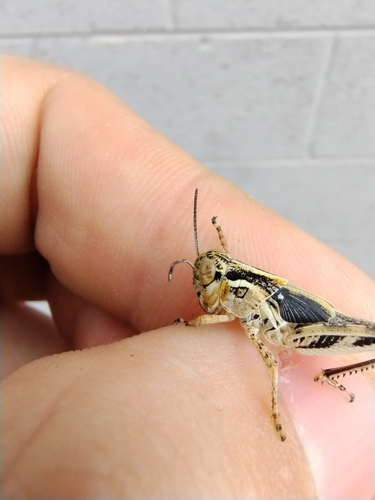
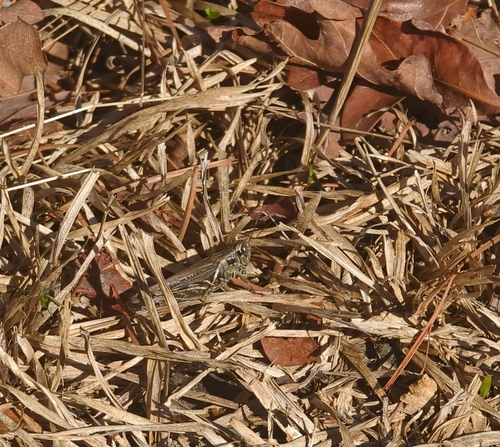
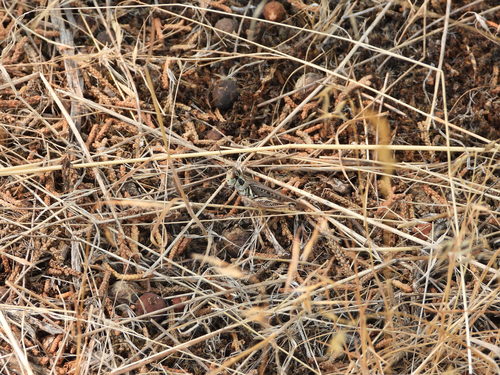
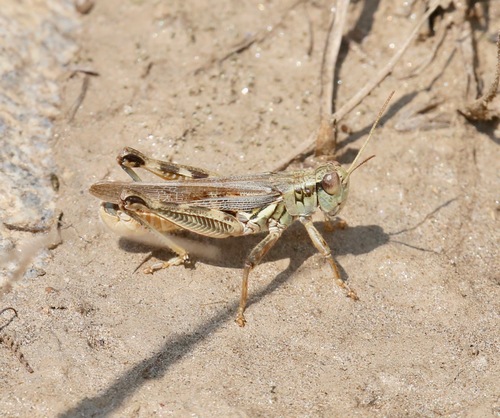
Same family (Acrididae)
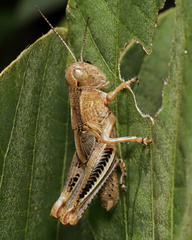 Differential GrasshopperMelanoplus differentialisDamages trees, gardens or crops
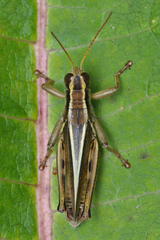 Two-striped GrasshopperMelanoplus bivittatusDamages trees, gardens or crops
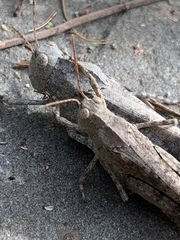 Carolina GrasshopperDissosteira carolinaDamages trees, gardens or crops
 Common Field GrasshopperChorthippus brunneus
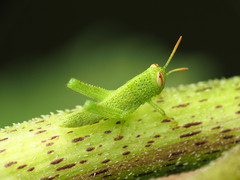 Egyptian Bird GrasshopperAnacridium aegyptium
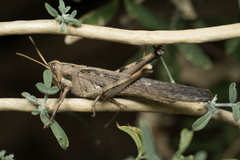 Gray Bird GrasshopperSchistocerca nitensDamages trees, gardens or crops
Sources
- Wikipedia: https://en.wikipedia.org/wiki/Melanoplus_sanguinipes
Look it up elsewhere: GBIF · iNaturalist · BugGuide · ITIS · Wikipedia
Text written 2026-10-22 from the sources above and checked sentence by sentence against them. Data fetched 2026-10-22.