 Bug FAQ
Northern Black Widow
Latrodectus variolus · Order: Araneae · Family: Theridiidae

Adult females have a shiny black body with a red hourglass on the underside of the abdomen. Bites can cause latrodectism with severe pain and may need a doctor, but are rarely fatal.
How to recognize it
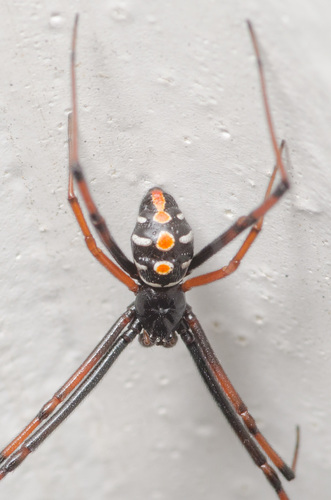
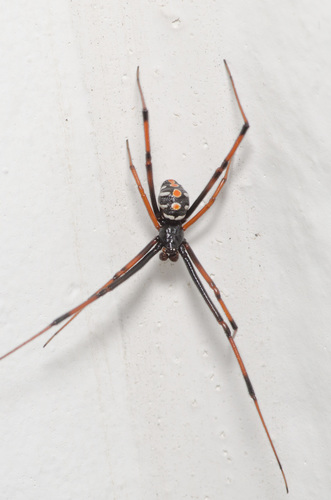
Females are glossy black with a red or orange hourglass on the belly; males are much smaller with a tiny abdomen.
Source: UC IPM
Is it a pest in the house?
Black widows usually stay outside in woodpiles or garage clutter, not inside homes. People are most often bitten when they disturb a hidden spider while cleaning or moving items.
Source: UC IPM
Does it bite or sting?
A bite may cause latrodectism with severe pain and spreading redness; seek medical help if symptoms worsen. Bites are rarely deadly, except for infants and the elderly, and most symptoms improve with treatment.
How to get rid of it
Remove webs and hiding places to keep them away. Sweep, mop, and vacuum regularly indoors to reduce spider numbers.
Source: UC IPM
Where it lives
You’ll find them in the Middle Atlantic states such as New Jersey, Delaware, Connecticut, and Maryland.
Source: Wikipedia
When you see it
They travel north along the coast in the April-May mating season, reaching as far as Massachusetts in summer.
Source: Wikipedia
Where it comes from
Their core range is the same Middle Atlantic area, but they can move north to Massachusetts and occasionally into southern Ontario, Quebec, Michigan, and parts of Wisconsin during the spring mating season.
Source: Wikipedia
Lookalikes
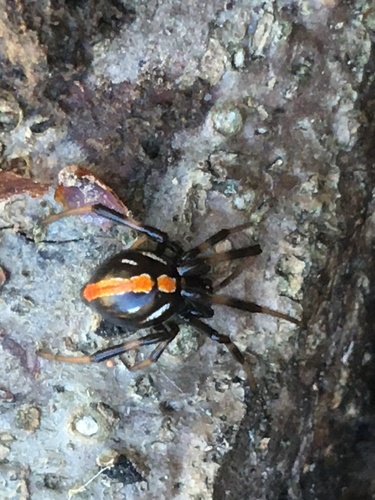
Immature and male western black widows look different, with white stripes on a tan abdomen. Adult males are only half to two-thirds the length of females and have a small abdomen, so they are often unnoticed.
Source: UC IPM
Where it is found in the US
Recorded in 39 of 51 states and DC. Most records: Virginia, Massachusetts, Maryland, North Carolina, Missouri, Tennessee, Kentucky, New Jersey.
Darker = more records. Counts are museum and citizen-science records, not population size.
Source: GBIF
Status: native in North America; native in Canada; native in United States. Source: iNaturalist
Months it is reported in the US
Source: GBIF
More photos

Questions people ask
How can I avoid being bitten by a northern black widow?
Keep woodpiles and garage clutter tidy, wear gloves when cleaning, and remove webs and hiding spots.
Source: UC IPM
What should I do if I think I was bitten?
Stay calm, clean the bite area, and seek medical advice promptly, especially if pain worsens or redness spreads.
How can I tell a female northern black widow from other spiders?
Look for a shiny black body with a red hourglass shape on the underside of the round abdomen.
Source: UC IPM
Do male northern black widows look the same as females?
No, males are much smaller with a tiny abdomen and lack the distinctive hourglass marking.
Source: UC IPM
Same family (Theridiidae)


Sources
- Wikipedia: https://en.wikipedia.org/wiki/Latrodectus_variolus
- UC IPM: https://ipm.ucanr.edu/PMG/PESTNOTES/pn7442.html
Look it up elsewhere: GBIF · iNaturalist · BugGuide · ITIS · Wikipedia
Text written 2026-10-22 from the sources above and checked sentence by sentence against them. Data fetched 2026-10-22.