 Bug FAQ
Pseudoscorpions
Pseudoscorpiones · Order: Pseudoscorpiones
Also called: book scorpions, false scorpions
Source: extension.msstate.edu

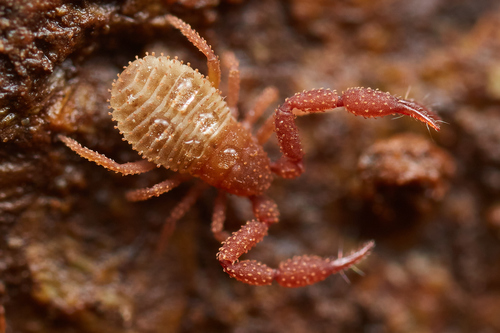
Pseudoscorpions are tiny, scorpion-like arachnids about a quarter inch long that lack a tail and stinger. They live worldwide, often in homes where they hunt tiny insects and are completely harmless to humans and pets.
Source: extension.msstate.edu, hort.extension.wisc.edu, Wikipedia
How to recognize it
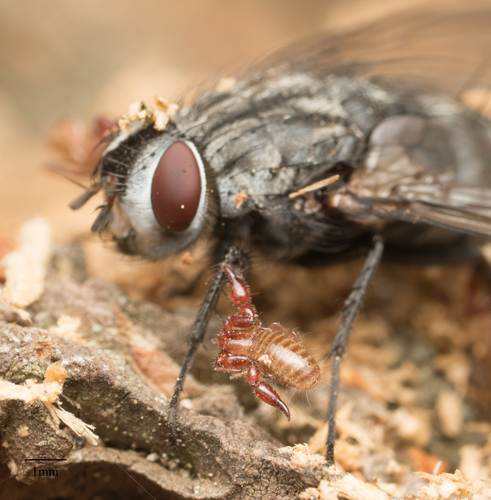
They have a flattened, oval body with large pincers and may have two, four, or no eyes. Their colour ranges from yellow-tan to dark brown, sometimes with contrasting claws.
Size
Most species are 2 to 8 mm long, but the biggest known one reaches about 12 mm.
Source: Wikipedia
Is it a pest in the house?
The common house species, Chelifer cancroides, is often found in dusty book rooms. They enter homes by hitching rides on larger insects or on firewood.
Source: Wikipedia
Does it bite or sting?
They cannot bite or sting, and any venom they produce is only used on prey and is harmless to people and pets.
Source: hort.extension.wisc.edu, University of Minnesota Extension
How to get rid of it
Control is not needed; if desired, they can be removed with sticky traps or by hand. Insecticides are unnecessary and should not be used.
Source: hort.extension.wisc.edu, University of Minnesota Extension
Where it lives
They are found everywhere, from cold regions like northern Ontario to tropical islands such as the Canaries.
Source: Wikipedia
What it eats
They help humans by preying on clothes-moth larvae, carpet beetles, booklice, ants, mites and small flies.
Source: Wikipedia
Life cycle
A female can produce 2 to 50 young per brood and may have several broods each year. The juveniles molt three times before becoming adults.
Source: Wikipedia
When you see it
They are active in warm months and hide in silk cocoons during winter.
Source: Wikipedia
Where it comes from
In North America they occur as far north as Ontario and in the Rocky Mountains of Wyoming. Two endemic species also live on the Maltese Islands.
Source: Wikipedia
Lookalikes
People often mistake them for ticks or tiny spiders because of their size and shape. They are also called false scorpions or book scorpions.
Source: Wikipedia, University of Minnesota Extension, extension.msstate.edu
Where it is found in the US
Recorded in 51 of 51 states and DC. Most records: California, Illinois, Alaska, North Carolina, Michigan, Texas, Arizona, Florida.
Darker = more records. Counts are museum and citizen-science records, not population size.
Source: GBIF
Status: native in North America; native in United States. Source: iNaturalist
Months it is reported in the US
Source: GBIF
More photos


Questions people ask
How can I get rid of them?
Physical removal or sticky traps are enough; insecticides are not needed.
Source: University of Minnesota Extension, hort.extension.wisc.edu
Why do I find them near my books?
The species Chelifer cancroides lives in dusty book areas and feeds on booklice and dust mites.
Source: Wikipedia, extension.msstate.edu
Same family ()


Sources
- extension.msstate.edu: https://extension.msstate.edu/newsletters/bugs-eye-view/2019/pseudoscorpion-vol-5-no-32
- hort.extension.wisc.edu: https://hort.extension.wisc.edu/articles/pseudoscorpions/
- Wikipedia: https://en.wikipedia.org/wiki/Pseudoscorpion
- University of Minnesota Extension: https://extension.umn.edu/household-insects/pseudoscorpions
Look it up elsewhere: GBIF · iNaturalist · BugGuide · ITIS · Wikipedia
Text written 2026-10-23 from the sources above and checked sentence by sentence against them. Data fetched 2026-10-23.