 Bug FAQ
Thrips
Thysanoptera · Order: Thysanoptera
Source: journals.flvc.org, Wikipedia
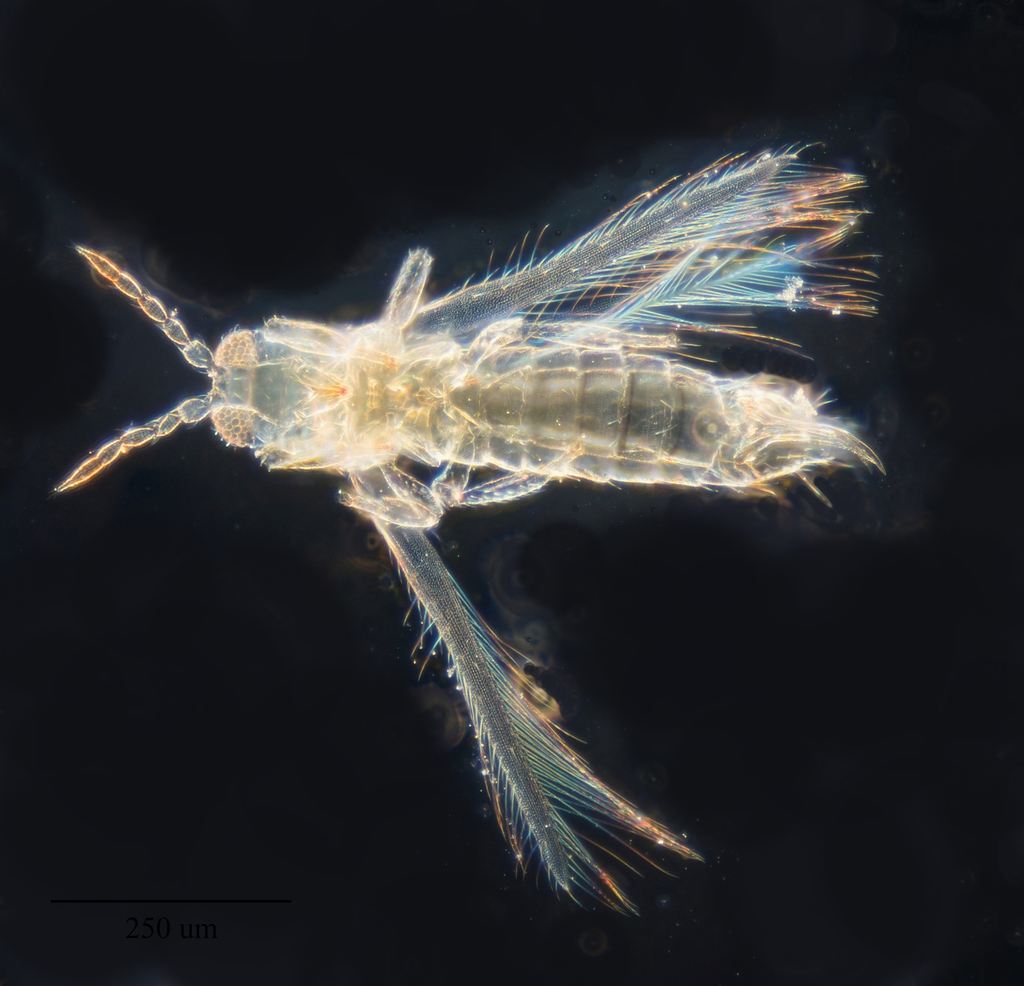
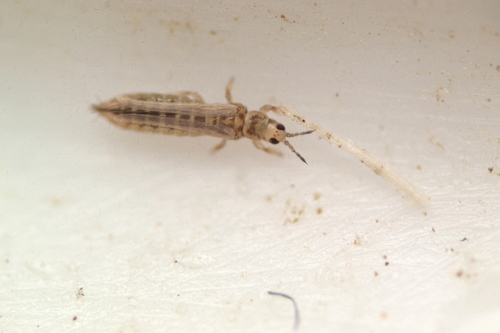
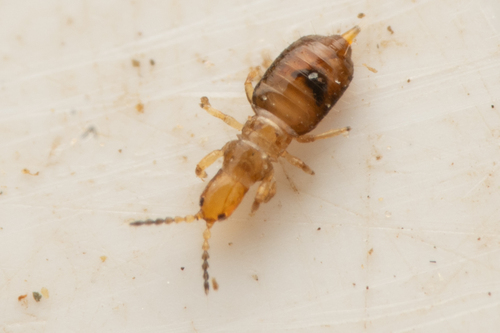
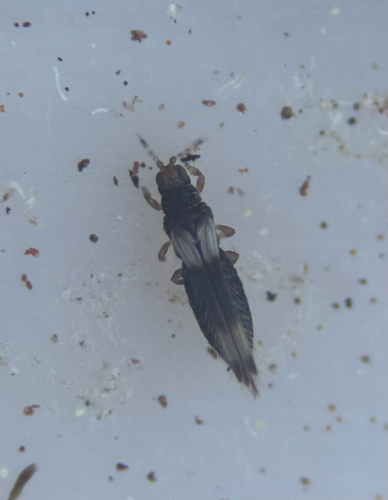
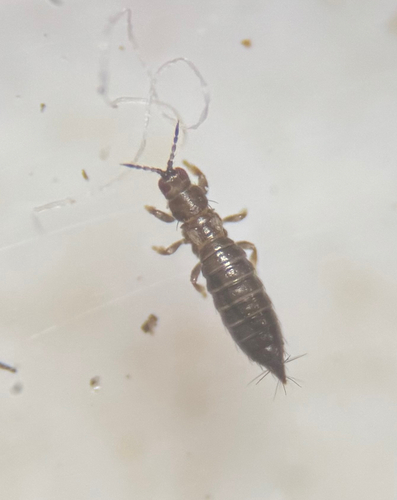
Thrips are tiny insects about 1 mm long, with a cigar-shaped body, few-ommatidia eyes and three simple eyes on the head. Many species feed on fungi and some hunt small insects or mites. A few, like Frankliniella bispinosa, bite people and can be a spring nuisance in Florida. They multiply fast, can swarm in greenhouses and pick up insecticide resistance easily.
Source: Wikipedia, journals.flvc.org
How to recognize it
Their compound eyes have only a few ommatidia and they possess three simple ocelli on the head. They have asymmetrical mouthparts that are unique to the group.
Source: Wikipedia
Size
Most thrips are about 1 mm long, though larger predatory species can reach up to 14 mm.
Source: Wikipedia
Is it a pest in the house?
Some species transmit plant viruses such as tospoviruses. Frankliniella bispinosa can bite people, producing irritation, rash and intense itching for several days.
Source: Wikipedia, journals.flvc.org
Does it bite or sting?
Species like Frankliniella tritici and Limothrips cerealium are known to bite humans under certain conditions. Frankliniella bispinosa bites can lead to rash and prolonged itching.
Source: Wikipedia, journals.flvc.org
How to get rid of it
Thrips quickly develop resistance to insecticides, making chemical control challenging. Because of their tiny size and rapid reproduction, classical biological control is difficult. Large numbers of Frankliniella bispinosa in spring can become a serious nuisance on many cultivated and weed hosts. Sticky traps of white or blue colors are strongly attractive to Frankliniella bispinosa.
Source: Wikipedia, journals.flvc.org
Where it lives
In suitable conditions such as greenhouses, thrips can multiply rapidly and form large swarms.
Source: Wikipedia
What it eats
Many thrips feed on fungi. Some predatory thrips hunt small insects or mites.
Source: Wikipedia
Life cycle
Thrips are hemimetabolic insects. Their feathery wings are weak and not suited for strong flight.
Source: Wikipedia
When you see it
In central and south Florida, populations of Frankliniella bispinosa peak between February and April, creating seasonal problems.
Source: journals.flvc.org
Where it comes from
Thrips occur worldwide, with more than 6,000 species affecting plants globally. The western flower thrips has spread to a worldwide distribution.
Source: Wikipedia
Lookalikes
Identifying thrips to species level is often difficult using standard morphology. Their unique asymmetrical mouthparts help distinguish them from other insects.
Source: Wikipedia
Where it is found in the US
Recorded in 51 of 51 states and DC. Most records: California, Montana, Alaska, New Mexico, Colorado, Utah, Florida, Texas.
Darker = more records. Counts are museum and citizen-science records, not population size.
Source: GBIF
Months it is reported in the US
Source: GBIF
More photos
Questions people ask
Do thrips bite people?
Yes, a few species do. Frankliniella bispinosa bites can cause anything from slight irritation to a rash with intense itching that lasts several days.
Source: journals.flvc.org, Wikipedia
What color sticky trap works for thrips?
White or blue. In Florida tests, both colors strongly attracted Frankliniella bispinosa, the thrips that bites people there.
Source: journals.flvc.org
Why are thrips hard to control with chemicals?
They develop insecticide resistance quickly, so chemical treatments often lose effectiveness.
Source: Wikipedia
What damage do thrips cause to crops?
They feed on developing flowers and vegetables, leading to discoloration, deformities and reduced marketability, and can also spread plant viruses.
Source: Wikipedia
Same family ()
 Bark Lice, Book Lice, and Parasitic LicePsocopteraCan damage your home
 PseudoscorpionsPseudoscorpionesHarmless
 Dead-nettle Leaf BeetleFasta fastuosa
 Dotted Paropsine Leaf BeetleParopsis atomariaDamages trees, gardens or crops
 Australian CockroachValidiblatta australasiae
 Common Mime SwallowtailPapilio clytia
Sources
- journals.flvc.org: https://journals.flvc.org/flaent/article/view/75469
- Wikipedia: https://en.wikipedia.org/wiki/Thrips
Look it up elsewhere: GBIF · iNaturalist · BugGuide · ITIS · Wikipedia
Text written 2026-10-23 from the sources above and checked sentence by sentence against them. Data fetched 2026-10-23.