 Bug FAQ
Queen
Danaus gilippus · Order: Lepidoptera · Family: Nymphalidae
Also called: Queen Butterfly
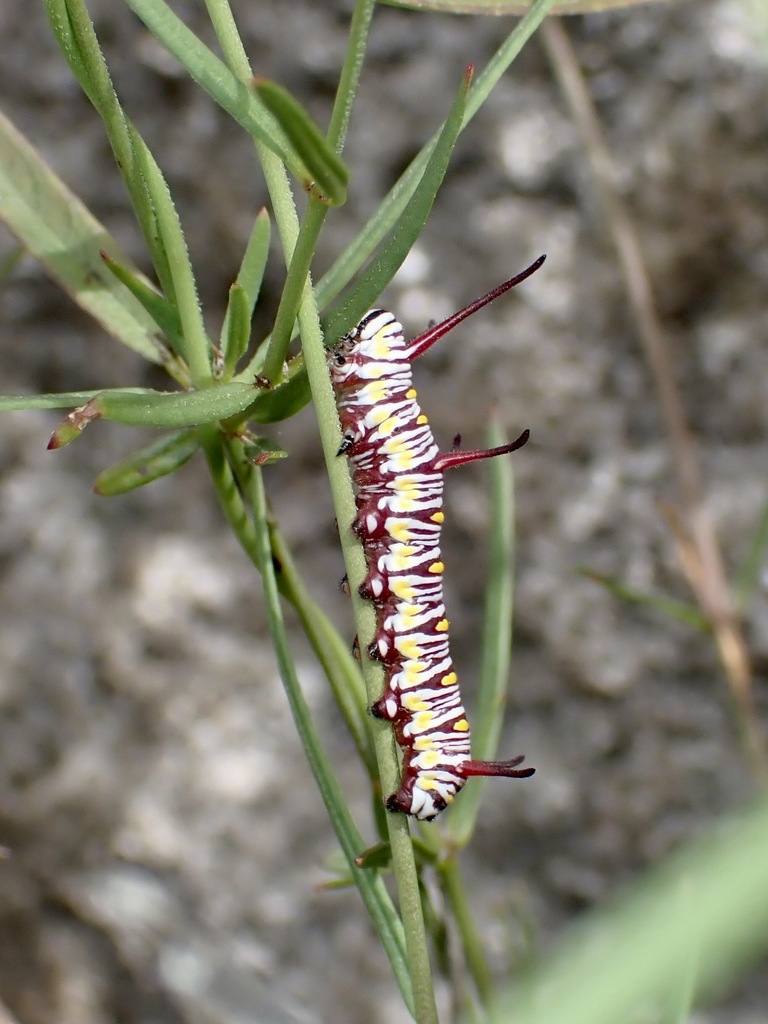
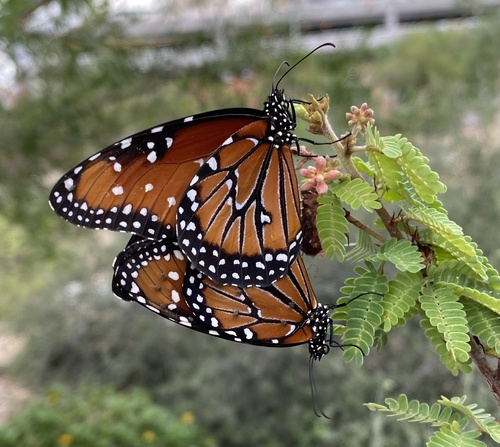
The queen butterfly has a wingspan of about 80 to 85 mm and is orange or brown with black borders and small white spots on its wings. It lives in open habitats such as meadows, fields, marshes, deserts and forest edges across the Americas from the southern United States to Argentina. Caterpillars feed on host plants and store chemicals that make them unpalatable, while adults sip nectar from flowers; the species produces several generations each year.
Source: Wikipedia
How to recognize it
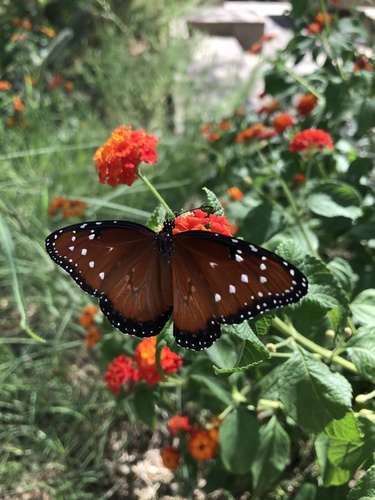
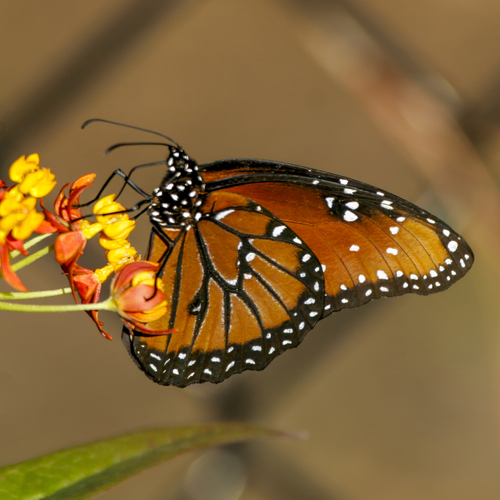
The dorsal side is orange or brown with black wing edges and tiny white spots on the forewings, while the ventral side is reddish with black veins and white spots on the hindwing border.
Source: Wikipedia
Size
Its wingspan measures roughly 80 to 85 mm (about 3 ⅛ to 3 ⅜ inches).
Source: Wikipedia
Where it lives
You can find it in meadows, fields, marshes, deserts and at forest edges.
Source: Wikipedia
What it eats
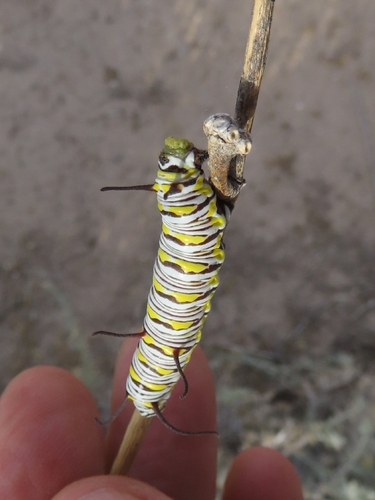
Larvae eat host plants and store chemicals that deter predators, while adults feed mainly on flower nectar.
Source: Wikipedia
Life cycle
The species produces several generations each year.
Source: Wikipedia
When you see it
In the United States it is mostly found in the southern states and makes short seasonal movements in tropical areas with a dry season.
Source: Wikipedia
Where it comes from
The queen occurs throughout tropical and temperate regions of the Americas, from southern Central America and Mexico down to Argentina.
Source: Wikipedia
Lookalikes
It has a tough, flexible chitinous exoskeleton, which is unusual for many butterflies.
Source: Wikipedia
Where it is found in the US
Recorded in 34 of 51 states and DC. Most records: Texas, Arizona, Florida, California, New Mexico, Nevada, Colorado, Oklahoma.
Darker = more records. Counts are museum and citizen-science records, not population size.
Source: GBIF
Status: native in North America; native in United States. Source: iNaturalist
Months it is reported in the US
Source: GBIF
More photos
Same family (Nymphalidae)






Sources
- Wikipedia: https://en.wikipedia.org/wiki/Queen_%28butterfly%29
Look it up elsewhere: GBIF · iNaturalist · BugGuide · ITIS · Wikipedia
Text written 2026-10-22 from the sources above and checked sentence by sentence against them. Data fetched 2026-10-22.