 Bug FAQ
Rough-haired Lagria Beetle
Lagria hirta · Order: Coleoptera · Family: Tenebrionidae
Also called: Hirta Beetle
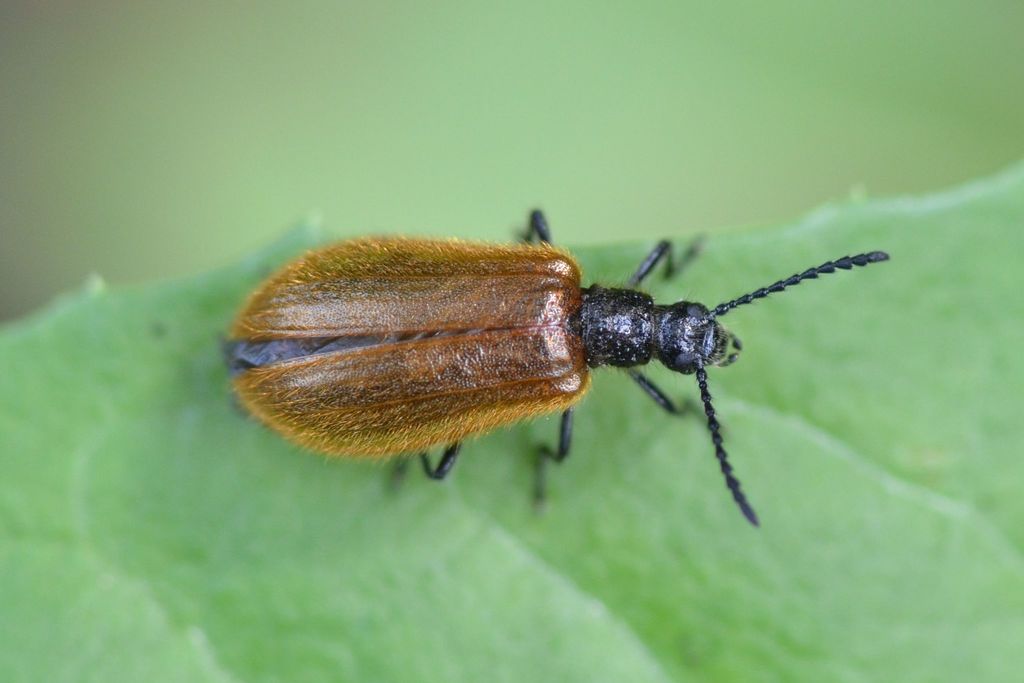
Rough-haired Lagria Beetles are small, 7 to 8 mm long insects with a soft, elongated body that is brown to black, and yellowish-brown elytra covered in fine hairs. Adults feed on nectar and pollen while larvae develop in humus eating decaying vegetable matter; females lay eggs in soil and the life cycle spans over a year.
Source: Wikipedia
How to recognize it
They have a soft, elongated body that can be brown to black, large round eyes, black antennae and legs, and elytra that are yellowish-brown and densely hairy.
Source: Wikipedia
Size
They grow to about 7 to 8 mm (0.28 to 0.31 in) in length.
Source: Wikipedia
Where it lives
They prefer sandy soils and are found in open woods, forest edges, grasslands, wet meadows, dry valleys and other similar habitats.
Source: Wikipedia
What it eats
Adult beetles feed on nectar and pollen, while the larvae live in humus and eat decaying vegetable material.
Source: Wikipedia
Life cycle
Females lay eggs in the soil; they hatch after about eight days, larvae overwinter, pupate in early summer, and new adults emerge later in the year.
Source: Wikipedia
When you see it
Fully grown beetles can be seen from late May through September.
Source: Wikipedia
More photos

Same family (Tenebrionidae)



Sources
- Wikipedia: https://en.wikipedia.org/wiki/Lagria_hirta
Look it up elsewhere: GBIF · iNaturalist · BugGuide · Wikipedia
Text written 2026-10-22 from the sources above and checked sentence by sentence against them. Data fetched 2026-10-22.