 Bug FAQ
Sulphur Beetle
Cteniopus sulphureus · Order: Coleoptera · Family: Tenebrionidae
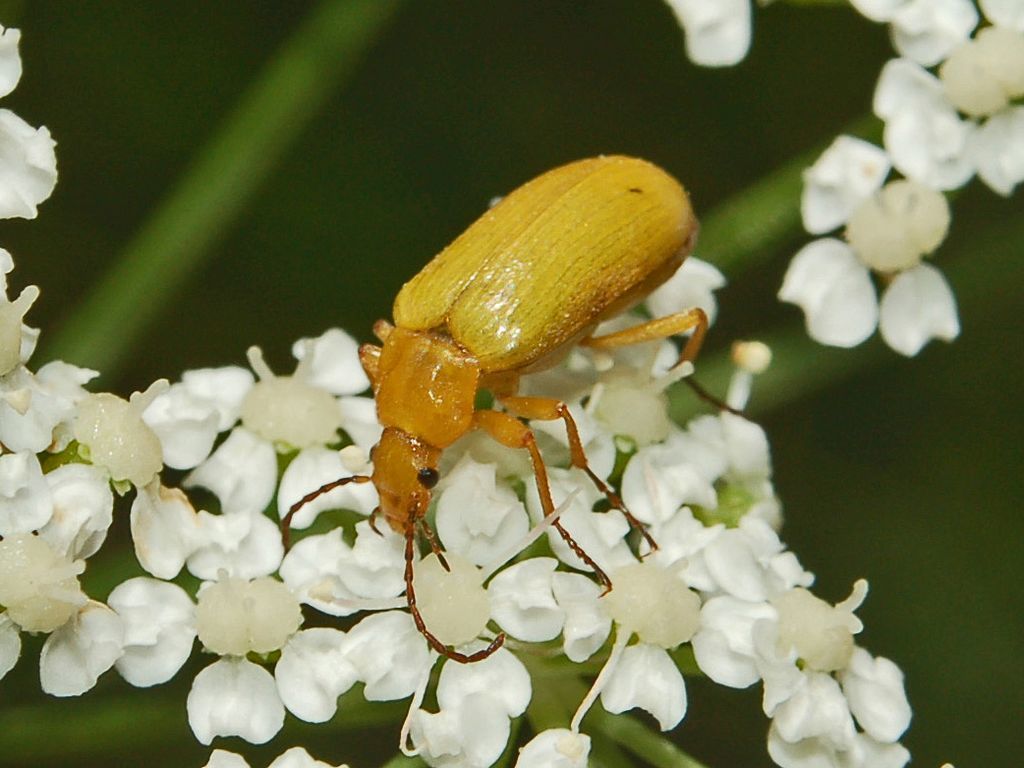
Adult sulphur beetles are about 7 to 8 mm long, with pale yellow wing covers and orange-yellow heads and pronota that project forward. They like warm, sunny spots and are most often seen on the flowers of Apiaceae and Asteraceae, especially yarrow (Achillea). Their main range includes Denmark, Finland, Slovenia, Italy and Sweden.
Source: Wikipedia
How to recognize it
The beetle’s elytra are pale yellow, while the head and pronotum are orange-yellow and the head extends forward.
Source: Wikipedia
Size
Adults grow to about 7 to 8 mm (0.28 to 0.31 in) in length.
Source: Wikipedia
Where it lives
They are thermophilic and are usually found on sunny inflorescences of Apiaceae and Asteraceae, especially Achillea species.
Source: Wikipedia
More photos

Questions people ask
How big are sulphur beetles?
Adults are about 7 to 8 mm long (roughly 0.28 to 0.31 in).
Source: Wikipedia
What do sulphur beetles look like?
They have pale yellow wing covers and orange-yellow heads and pronota, with a head that sticks out forward.
Source: Wikipedia
Where can I find sulphur beetles?
They like warm, sunny spots on the flowers of Apiaceae and Asteraceae, especially yarrow (Achillea).
Source: Wikipedia
In which countries are sulphur beetles common?
They are mainly found in Denmark, Finland, Slovenia, Italy and Sweden.
Source: Wikipedia
Same family (Tenebrionidae)



Sources
- Wikipedia: https://en.wikipedia.org/wiki/Cteniopus_sulphureus
Look it up elsewhere: GBIF · iNaturalist · BugGuide · Wikipedia
Text written 2026-10-22 from the sources above and checked sentence by sentence against them. Data fetched 2026-10-22.