 Bug FAQ
Sphex lucae
Sphex lucae · Order: Hymenoptera · Family: Sphecidae
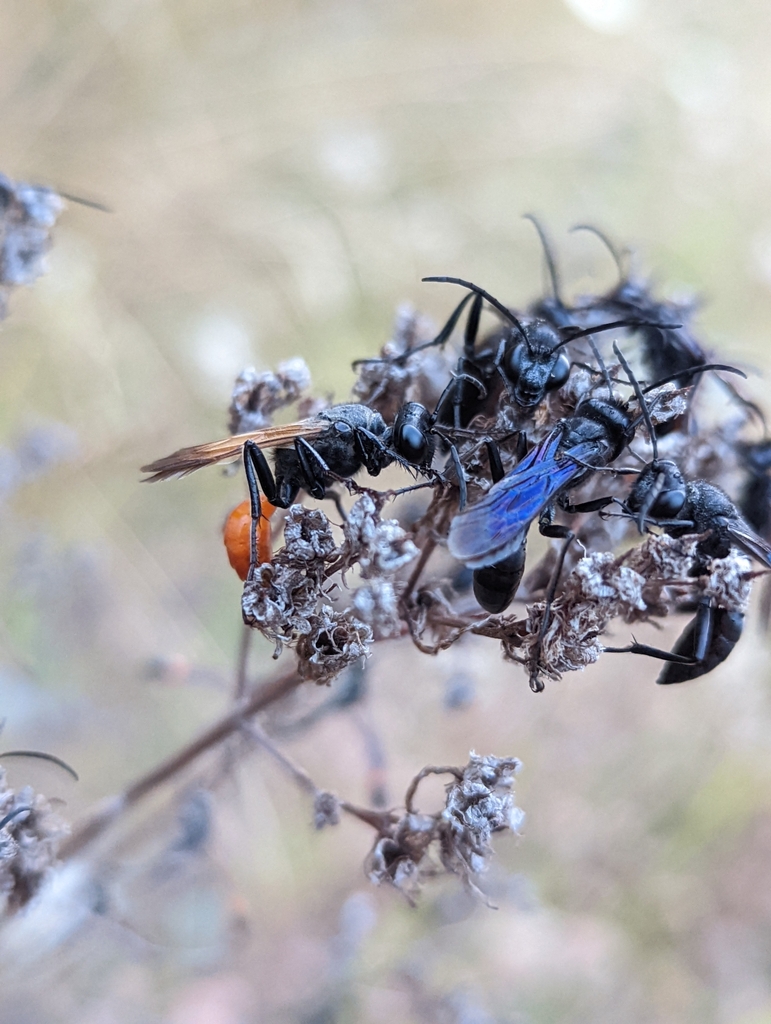
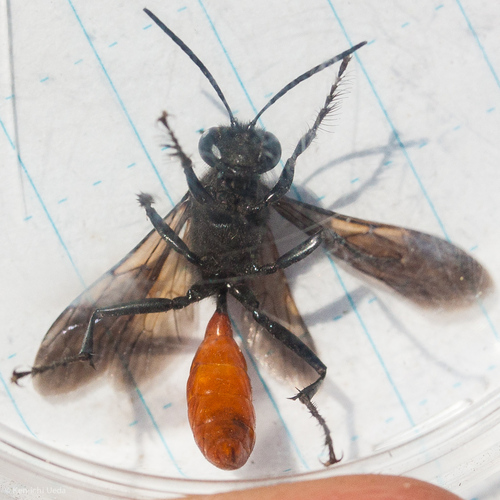
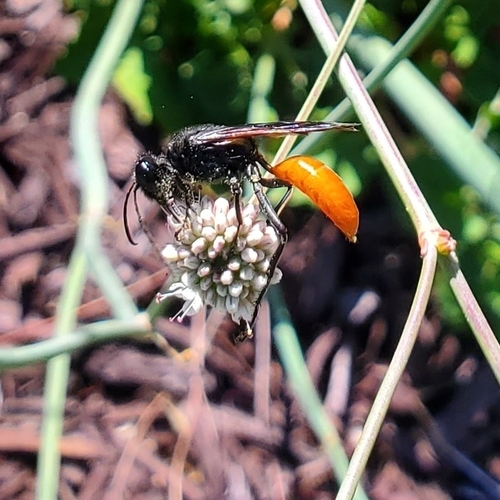
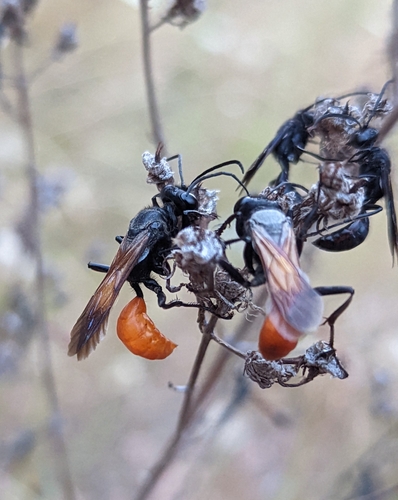
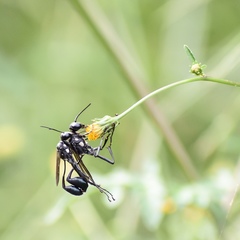
Sphex lucae is a slender wasp with a black head and thorax and an abdomen that ranges from black to red, often mixed in individuals; males are usually darker than females. Its wings vary from pale yellowish to deep dark with a violet sheen, and its legs are dark reddish-brown to black. The species is mainly found in western North America, though it has also been collected in Georgia and Florida.
Source: Wikipedia
How to recognize it
The wasp has a black head and thorax with an abdomen that can be black, red, or a mix of both; males tend to be darker.
Source: Wikipedia
Size
Body is rather slender; legs are dark ferruginous to black.
Source: Wikipedia
Where it comes from
Its main range is western North America, but it has been collected in the southeastern US states of Georgia and Florida.
Source: Wikipedia
Where it is found in the US
Recorded in 16 of 51 states and DC. Most records: California, Texas, Arizona, Colorado, Oregon, Idaho, New Mexico, Florida.
Darker = more records. Counts are museum and citizen-science records, not population size.
Source: GBIF
Status: native in North America; native in United States. Source: iNaturalist
Months it is reported in the US
Source: GBIF
More photos

Same family (Sphecidae)
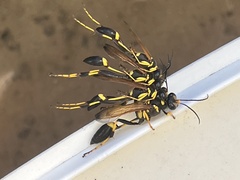 Yellow-legged Mud-dauber WaspSceliphron caementariumCan sting
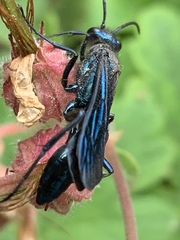 Common Blue Mud-dauber WaspChalybion californicumCan sting
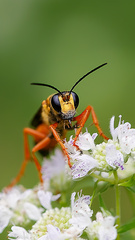 Great Golden Digger WaspSphex ichneumoneus
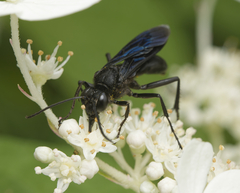 Great Black Digger WaspSphex pensylvanicusCan sting
 Gold-marked Thread-waisted WaspEremnophila aureonotata
 Mexican Grass-carrying WaspIsodontia mexicana
Sources
- Wikipedia: https://en.wikipedia.org/wiki/Sphex_lucae
Look it up elsewhere: GBIF · iNaturalist · BugGuide · ITIS · Wikipedia
Text written 2026-10-24 from the sources above and checked sentence by sentence against them. Data fetched 2026-10-24.