 Bug FAQ
Stinking Longicorn
Stenoderus suturalis · Order: Coleoptera · Family: Cerambycidae
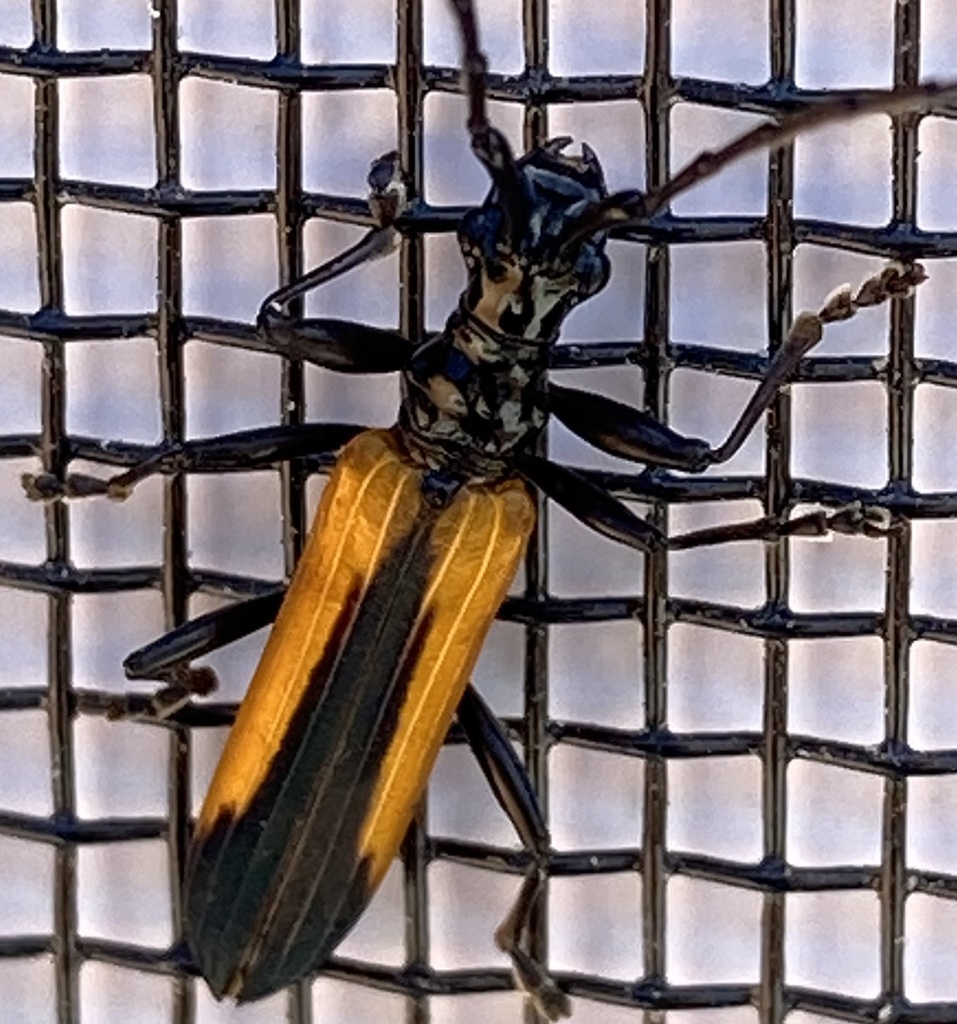
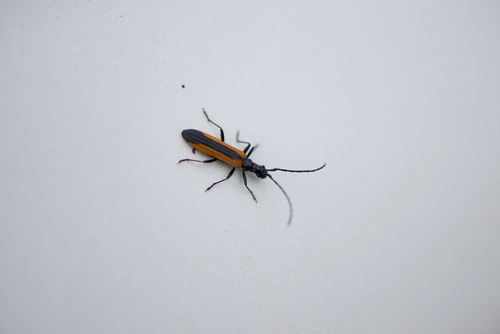
The stinking longicorn grows to about 2 cm long and has glossy black legs, head and thorax with orange-coloured wing covers. It is native to southern Australia, including Western Australia.
Source: Wikipedia
How to recognize it
Its legs, head and thorax are glossy black, while the elytra are orange.
Source: Wikipedia
Size
Adults reach about 20 mm in length.
Source: Wikipedia
Does it bite or sting?
When threatened, it can spray a foul-smelling fluid from glands near its eyes.
Source: Wikipedia
Where it comes from
It occurs in the southern parts of Australia, such as Western Australia.
Source: Wikipedia
More photos
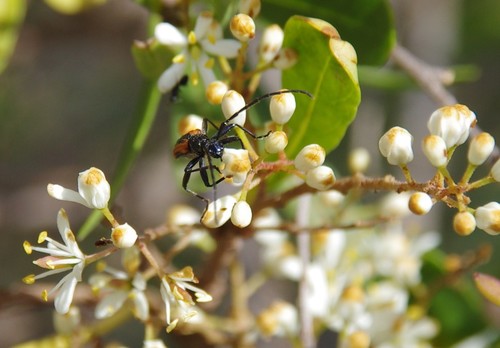
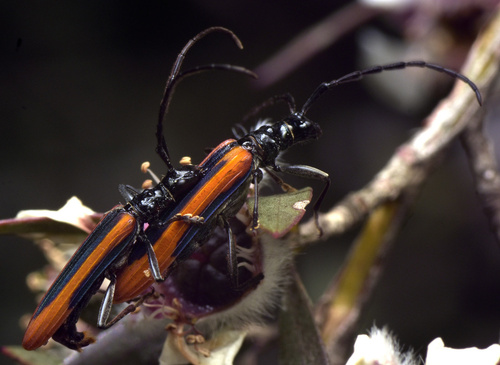
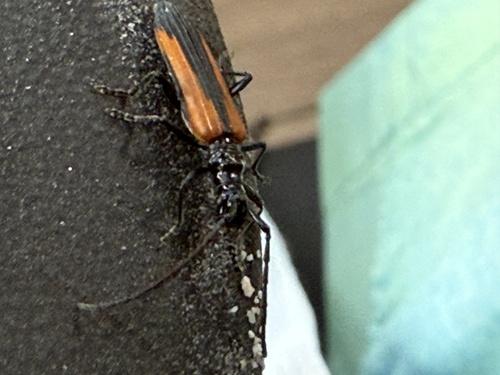
Questions people ask
How does the stinking longicorn defend itself?
If it feels threatened, it releases a stinky fluid from glands near its eyes.
Source: Wikipedia
Same family (Cerambycidae)
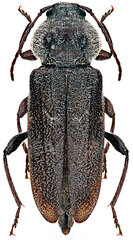 House LonghornHylotrupes bajulusCan damage your home
 Asian Longhorned BeetleAnoplophora glabripennisDamages trees, gardens or crops
 Red Milkweed BeetleTetraopes tetrophthalmus
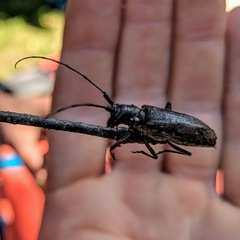 White-spotted SawyerMonochamus scutellatusCan damage your home
 Red Pine Longhorn BeetleStictoleptura rubra
 Spotted Longhorn BeetleRutpela maculata
Sources
- Wikipedia: https://en.wikipedia.org/wiki/Stenoderus_suturalis
Look it up elsewhere: GBIF · iNaturalist · BugGuide · Wikipedia
Text written 2026-10-24 from the sources above and checked sentence by sentence against them. Data fetched 2026-10-23.