 Bug FAQ
Tawny Emperor
Asterocampa clyton · Order: Lepidoptera · Family: Nymphalidae
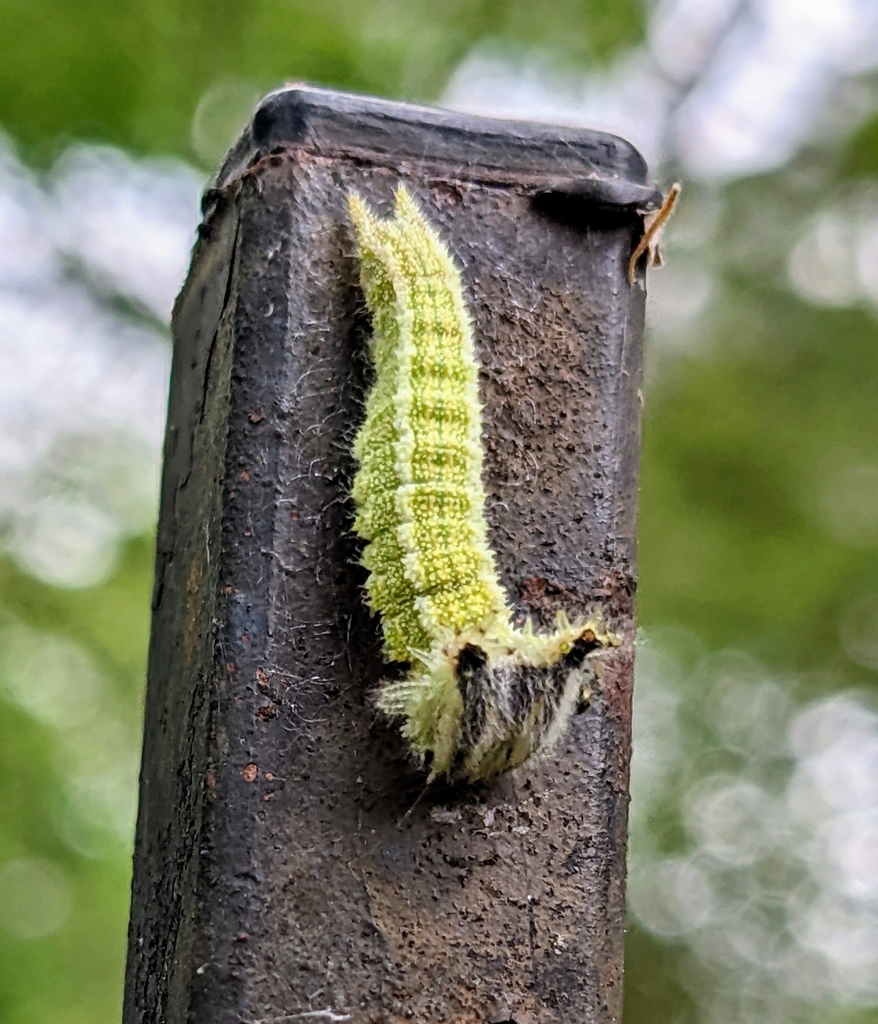
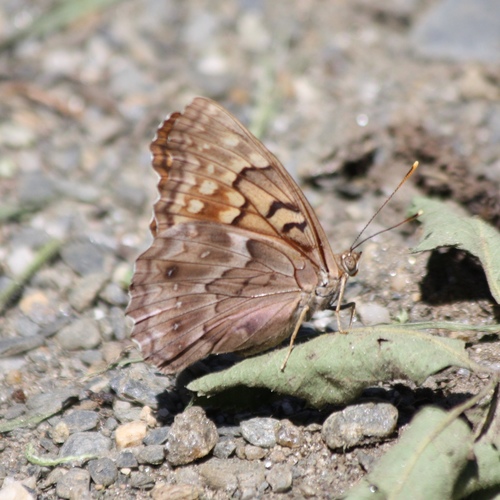
The tawny emperor is a medium-sized butterfly with a wingspan of about 2 to 2.6 inches (51 to 66 mm). Adults have dark brown upper wings, orange-brown forewings with pale orange-yellow spots, and a gray-brown underside with black and pale yellow markings. They are found near houses, driveways, water, mud, gardens and woodlands across eastern North America, and they feed on carrion, plant sap and dung rather than flowers.
Source: Wikipedia
How to recognize it
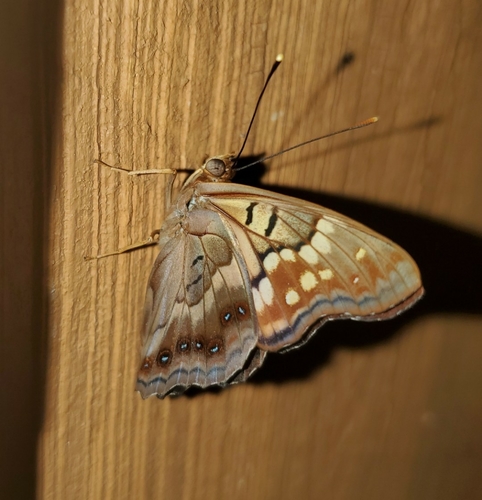
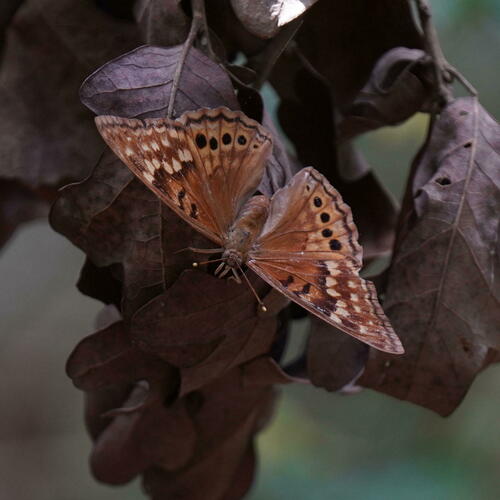
The upper side is mostly dark brown; the forewing is orange-brown with pale orange-yellow spots. The underside is gray-brown with some black and pale yellowish markings on the forewing.
Source: Wikipedia
Size
Wingspan ranges from 2 to 2.6 inches (51 to 66 mm).
Source: Wikipedia
Where it lives
Seen flying near houses, gravel driveways, water, muddy spots, gardens and woodlands.
Source: Wikipedia
What it eats
The only larval host plant is hackberry trees.
Source: Wikipedia
Life cycle
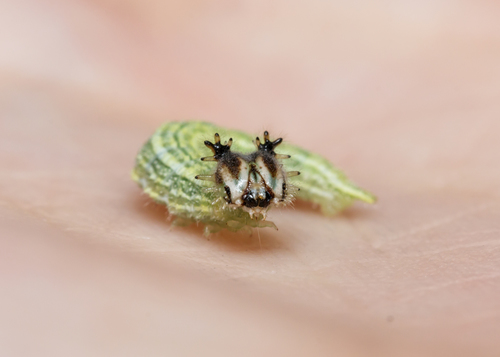
Females lay clusters of green eggs on hackberry leaves. Caterpillars are green with yellow, white, or greenish stripes.
Source: Wikipedia
Where it comes from
Native to eastern North America, from Canada down to northern Mexico.
Source: Wikipedia
Lookalikes
Do not confuse it with the hackberry emperor, which has white spots near the forewing tip and a black eyespot lower on the forewing edge.
Source: Wikipedia
Where it is found in the US
Recorded in 39 of 51 states and DC. Most records: Texas, Virginia, Tennessee, Florida, Ohio, Kentucky, Oklahoma, North Carolina.
Darker = more records. Counts are museum and citizen-science records, not population size.
Source: GBIF
Status: native in North America; native in United States; native in Canada. Source: iNaturalist
Months it is reported in the US
Source: GBIF
More photos
Questions people ask
Where might I see a tawny emperor?
Around houses, driveways, near water, mud, gardens and woodlands in eastern North America.
Source: Wikipedia
Same family (Nymphalidae)






Sources
- Wikipedia: https://en.wikipedia.org/wiki/Asterocampa_clyton
Look it up elsewhere: GBIF · iNaturalist · BugGuide · ITIS · Wikipedia
Text written 2026-10-22 from the sources above and checked sentence by sentence against them. Data fetched 2026-10-22.