 Bug FAQ
Two-spined Spur-throat Grasshopper
Melanoplus bispinosus · Order: Orthoptera · Family: Acrididae
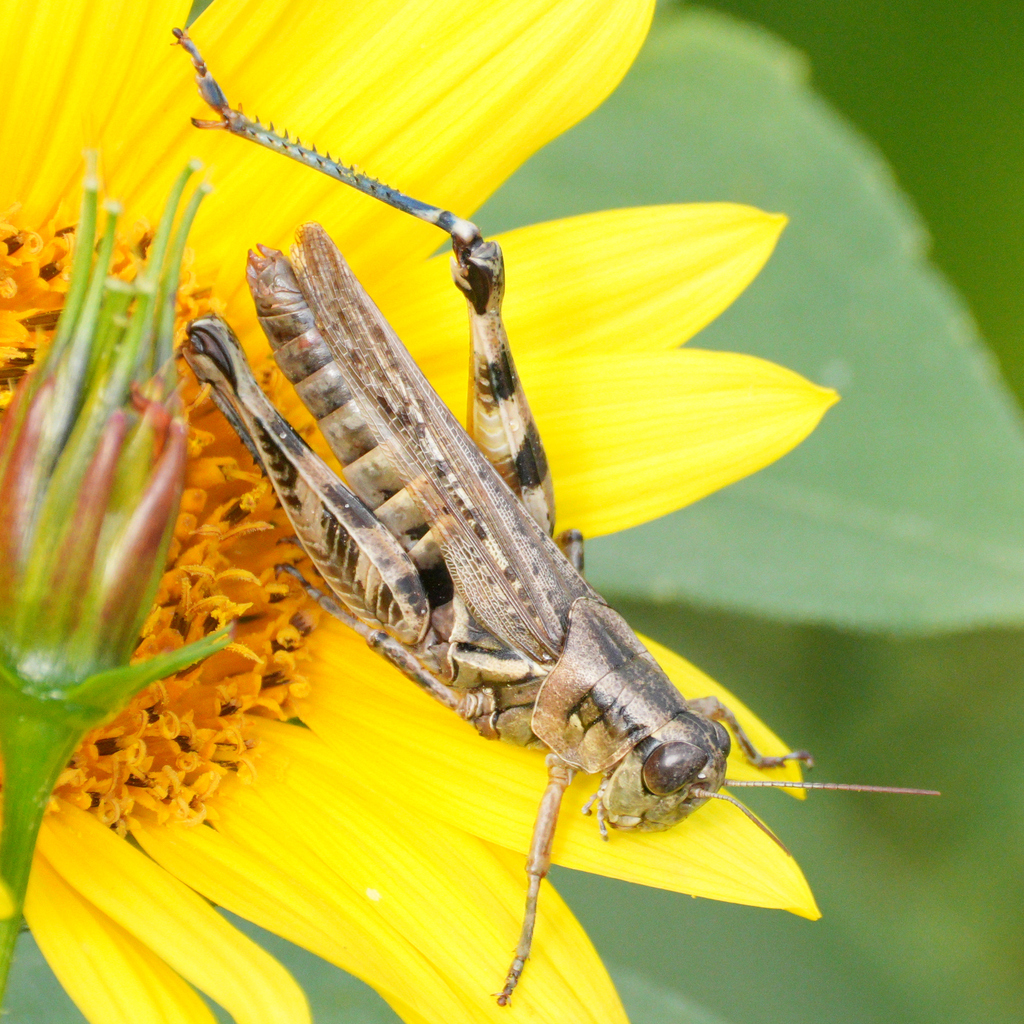
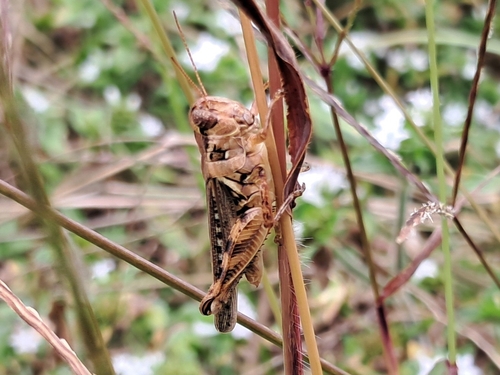
The two-spined spur-throat grasshopper is a medium-sized, grayish-brown to reddish-brown insect with a dark stripe from eye to pronotum and dark spots on its forewings and hind legs. Adults are seen from summer through fall and they live in open, disturbed areas such as roadside fields dominated by grasses and forbs.
Source: Wikipedia
How to recognize it
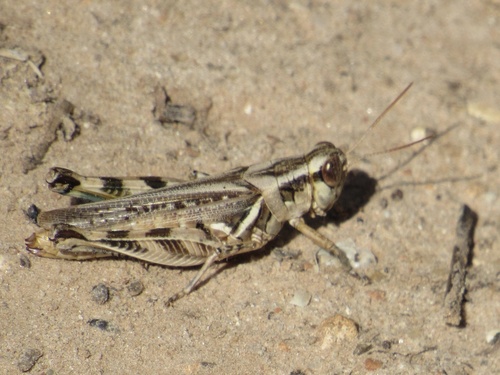
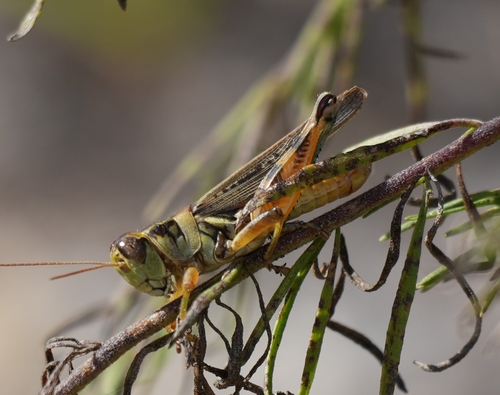
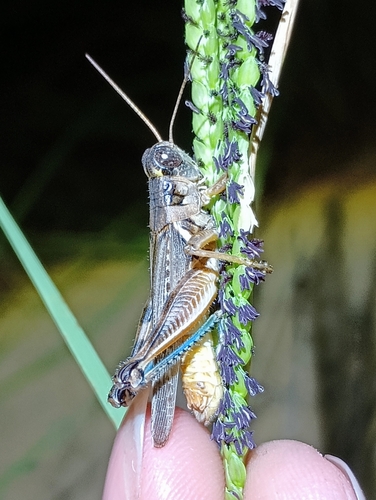
It is grayish-brown to reddish-brown with a dark stripe running from the eye to the pronotum. A row of dark spots runs along the forewing up to the abdomen. The hind femora have large dark bands and the hind tibiae are blue-green.
Source: Wikipedia
Size
Males are about 24.5 mm long, while females are roughly 31.5 mm.
Source: Wikipedia
Where it lives
It occurs in woody habitats but prefers open, disturbed sites like roadsides and early-successional fields. These areas are usually dominated by grasses and forbs.
Source: Wikipedia
What it eats
It feeds on a mix of grasses and forbs found in its habitat.
Source: Wikipedia
Life cycle
Adults are present throughout the summer and into the fall.
Source: Wikipedia
When you see it
You can find adults from summer through fall.
Source: Wikipedia
Where it comes from
The species is native to the United States.
Source: Wikipedia
Where it is found in the US
Recorded in 18 of 51 states and DC. Most records: Texas, Oklahoma, Florida, North Carolina, Georgia, Nebraska, Arkansas, Kansas.
Darker = more records. Counts are museum and citizen-science records, not population size.
Source: GBIF
Months it is reported in the US
Source: GBIF
More photos
Questions people ask
When are two-spined spur-throat grasshoppers active?
Adults are active from summer into the fall.
Source: Wikipedia
Where are they commonly found?
They live in open, disturbed areas such as roadside fields with grasses and forbs.
Source: Wikipedia
Same family (Acrididae)
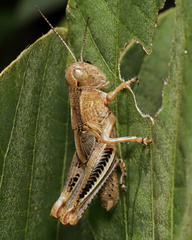 Differential GrasshopperMelanoplus differentialisDamages trees, gardens or crops
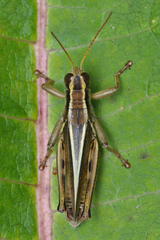 Two-striped GrasshopperMelanoplus bivittatusDamages trees, gardens or crops
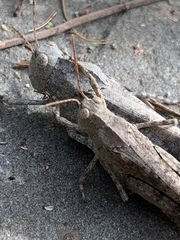 Carolina GrasshopperDissosteira carolinaDamages trees, gardens or crops
 Common Field GrasshopperChorthippus brunneus
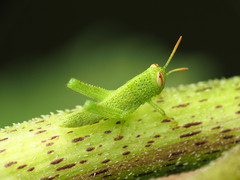 Egyptian Bird GrasshopperAnacridium aegyptium
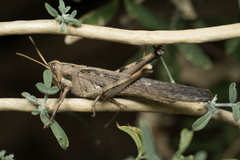 Gray Bird GrasshopperSchistocerca nitensDamages trees, gardens or crops
Sources
- Wikipedia: https://en.wikipedia.org/wiki/Melanoplus_bispinosus
Look it up elsewhere: GBIF · iNaturalist · BugGuide · ITIS · Wikipedia
Text written 2026-10-24 from the sources above and checked sentence by sentence against them. Data fetched 2026-10-24.