 Bug FAQ
Asian Tiger Mosquito
Aedes albopictus · Order: Diptera · Family: Culicidae
Also called: Aedes mosquito, Forest Mosquito, Tiger mosquito, forest day mosquito
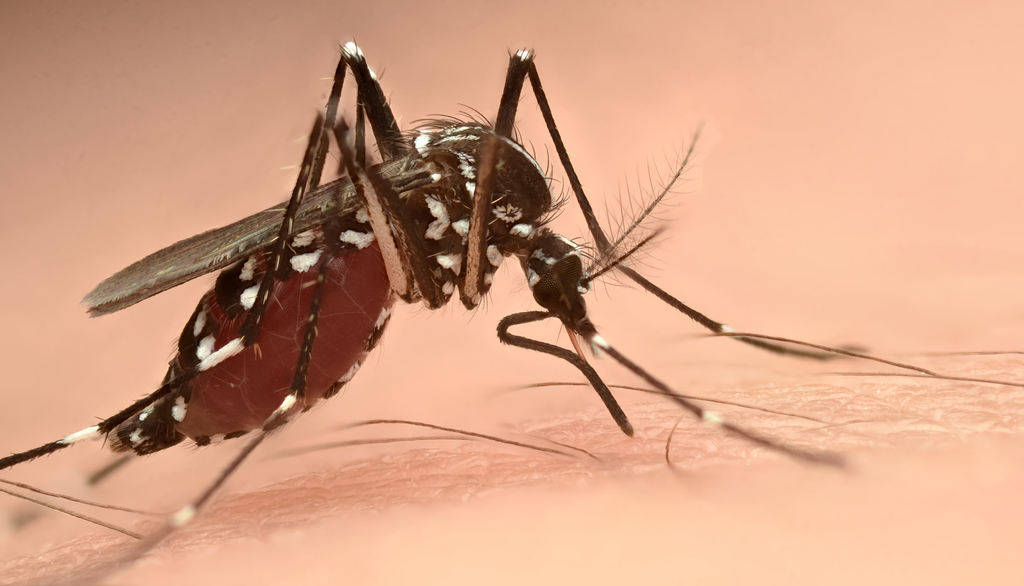
It has distinctive white bands on its legs and body, but lacks the white line on the head-thorax that other tiger mosquitoes have. Females bite to get blood for egg production, while males feed on nectar and do not bite. Because it feeds on many hosts during the day, it can act as a bridge vector for pathogens such as West Nile virus.
How to recognize it
White bands on the legs and body give it the name “tiger mosquito”.
Source: Wikipedia
Is it a pest in the house?
It is a common nuisance around homes because it lives near people and feeds during the day. It also bites other mammals and birds, not just humans.
Source: Wikipedia
Does it bite or sting?
Its bite is quick and the mosquito can evade swats easily. Bites are usually not painful but are more noticeable than those of many other mosquitoes. Only females bite to obtain blood. Mosquito bites can transmit germs and pathogens.
How to get rid of it
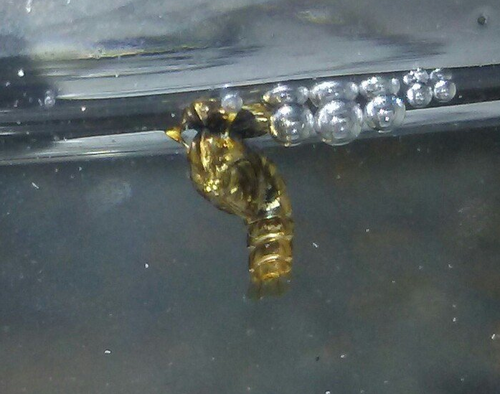
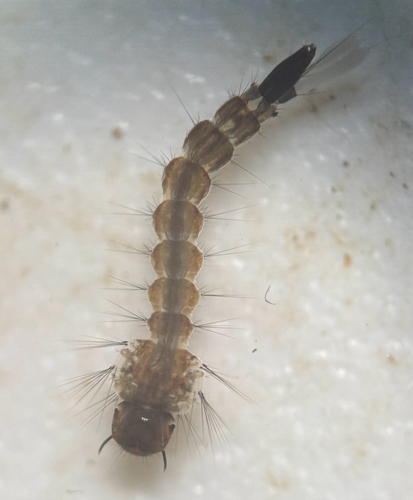
Paramecia such as Lambornella stegomyiae can affect its larvae. Predatory copepods from the Cyclopidae family will eat the larvae if given the chance. General mosquito control steps are recommended.
Where it lives
It lives in tropical and subtropical regions worldwide. It often lives close to humans and is active in daylight as well as at dusk and dawn.
Source: Wikipedia
What it eats
Female mosquitoes bite to obtain blood for egg development. Males feed on nectar and do not bite.
Life cycle
Its biting of many host species lets it potentially transmit diseases between species. When adults emerge from pupae, they leave any water-borne parasites behind, ending that infection stage.
Source: Wikipedia
When you see it
It is most active during the day, at dusk and dawn, and rests during early morning and night.
Source: Wikipedia
Where it comes from
The species originates from tropical and subtropical areas of the world.
Source: Wikipedia
Lookalikes
In North America, Ochlerotatus canadensis has a similar leg pattern.
Source: Wikipedia
Where it is found in the US
Recorded in 40 of 51 states and DC. Most records: Florida, Texas, Virginia, Maryland, North Carolina, Indiana, Alabama, Tennessee.
Darker = more records. Counts are museum and citizen-science records, not population size.
Source: GBIF
Status: introduced in North America; introduced in Canada; introduced in United States. Source: iNaturalist
Months it is reported in the US
Source: GBIF
More photos

Questions people ask
Do Asian tiger mosquitoes bite?
Yes, only the females bite to get blood for egg production.
Can they spread disease?
Their habit of biting many hosts makes them capable of transmitting diseases like West Nile virus.
How can I tell them apart from other mosquitoes?
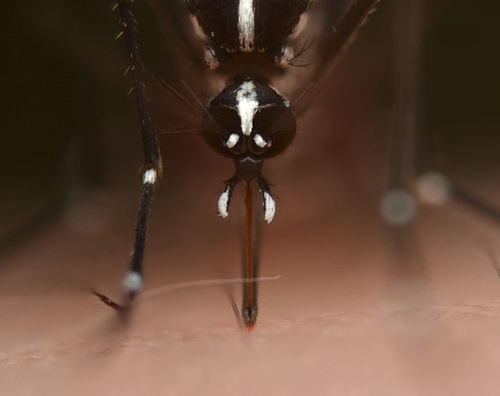
Look for white bands on the legs and body, and note the absence of a white line on the head-thorax.
Source: Wikipedia
Same family (Culicidae)
 House Mosquito ComplexCulex pipiensCan spread germs or disease
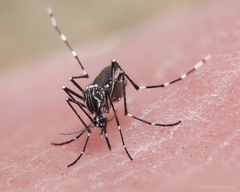 Yellow Fever MosquitoAedes aegyptiCan spread germs or disease
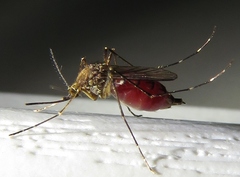 Inland Floodwater MosquitoAedes vexansCan spread germs or disease
 Asian Bush MosquitoAedes japonicusCan bite
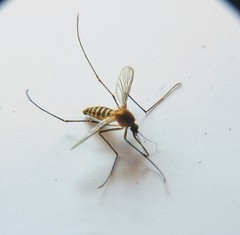 Southern House MosquitoCulex quinquefasciatusCan spread germs or disease
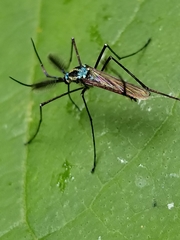 Elephant MosquitoToxorhynchites rutilusHarmless
Sources
- Wikipedia: https://en.wikipedia.org/wiki/Aedes_albopictus
- CDC: https://www.cdc.gov/mosquitoes/about/index.html
Look it up elsewhere: GBIF · iNaturalist · BugGuide · ITIS · Wikipedia
Text written 2026-10-22 from the sources above and checked sentence by sentence against them. Data fetched 2026-10-22.