 Bug FAQ
Inland Floodwater Mosquito
Aedes vexans · Order: Diptera · Family: Culicidae
Also called: Floodwater Mosquito, Vexans Mosquito
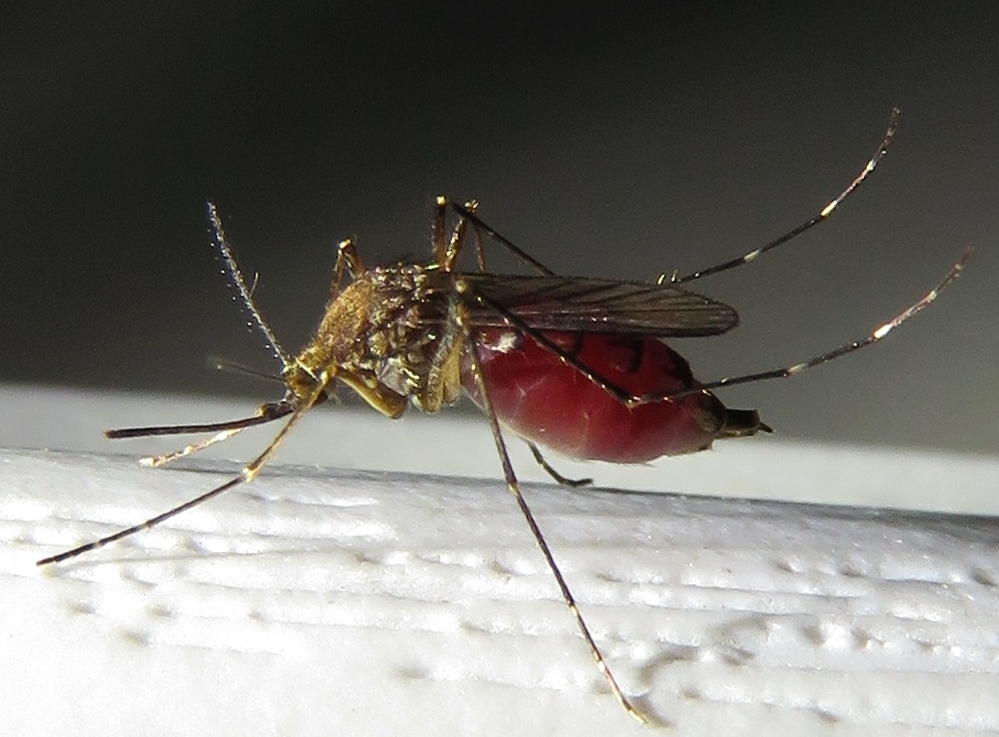
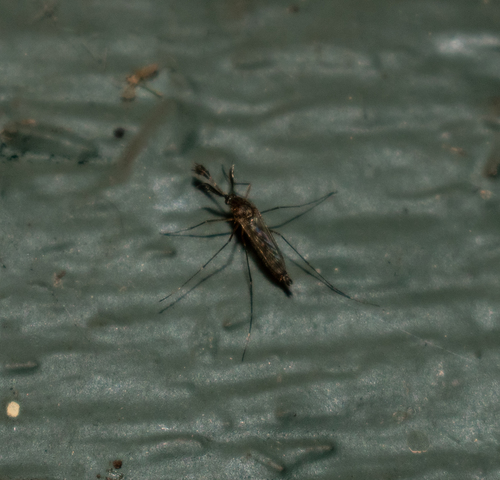
Aedes vexans females have a band-less proboscis, white ventral scales and B-shaped markings on each abdominal segment, making them identifiable as mosquitoes. They breed in temporary water like grassy pools, ditches and flooded fields; larvae appear April-September and adults are active May-October in temperate zones. Removing standing water and emptying containers helps reduce their numbers.
How to recognize it
Female A. vexans show a bandless proboscis, white ventral scales and B-shaped markings on each abdominal tergite.
Source: Wikipedia
Does it bite or sting?
Only females bite, preferring humans and cattle, and can transmit disease-causing viruses.
How to get rid of it
Eliminate standing water and empty unused containers to reduce breeding sites.
Source: UC IPM
Where it lives
They are commonly found near grassy or partially shaded pools, roadside ditches and cultivated fields.
Source: Wikipedia
What it eats
Females need blood from humans or cattle, while males feed on nectar, honeydew and plant sap.
Life cycle
After a blood meal the female lays eggs in flood-prone areas; the eggs stay dormant until water covers them, then hatch.
Source: Wikipedia
Where it comes from
This species occurs across North America, Europe, Asia and Africa.
Source: Wikipedia
Lookalikes
Mosquitoes differ from similar insects by their long slender proboscis and the tiny scales covering their wings.
Source: UC IPM
Where it is found in the US
Recorded in 51 of 51 states and DC. Most records: Iowa, Illinois, North Dakota, Indiana, Idaho, Virginia, Ohio, Maryland.
Darker = more records. Counts are museum and citizen-science records, not population size.
Source: GBIF
Status: native in North America; native in Canada; native in United States. Source: iNaturalist
Months it is reported in the US
Source: GBIF
More photos
Questions people ask
Do inland floodwater mosquitoes bite?
Yes, only the females bite humans and livestock for blood.
Can they spread disease?
Female A. vexans can transmit viruses such as West Nile, St. Louis encephalitis and Western equine encephalomyelitis.
Source: UC IPM
When are they most active?
Adults are active from May through October in temperate areas.
Source: Wikipedia
How can I reduce their numbers?
Remove standing water and empty containers that can hold water.
Source: UC IPM
Same family (Culicidae)
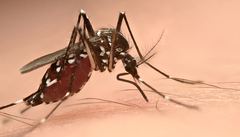 Asian Tiger MosquitoAedes albopictusCan spread germs or disease
 House Mosquito ComplexCulex pipiensCan spread germs or disease
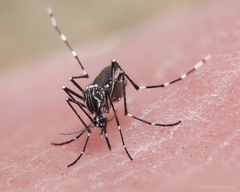 Yellow Fever MosquitoAedes aegyptiCan spread germs or disease
 Asian Bush MosquitoAedes japonicusCan bite
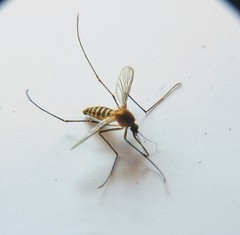 Southern House MosquitoCulex quinquefasciatusCan spread germs or disease
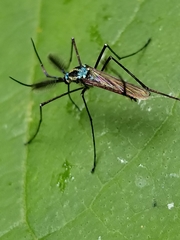 Elephant MosquitoToxorhynchites rutilusHarmless
Sources
- Wikipedia: https://en.wikipedia.org/wiki/Aedes_vexans
- UC IPM: https://ipm.ucanr.edu/PMG/PESTNOTES/pn7451.html
Look it up elsewhere: GBIF · iNaturalist · BugGuide · ITIS · Wikipedia
Text written 2026-10-22 from the sources above and checked sentence by sentence against them. Data fetched 2026-10-22.