 Bug FAQ
Azure Damselfly
Coenagrion puella · Order: Odonata · Family: Coenagrionidae
Also called: Azure Bluet, Common Coenagrion
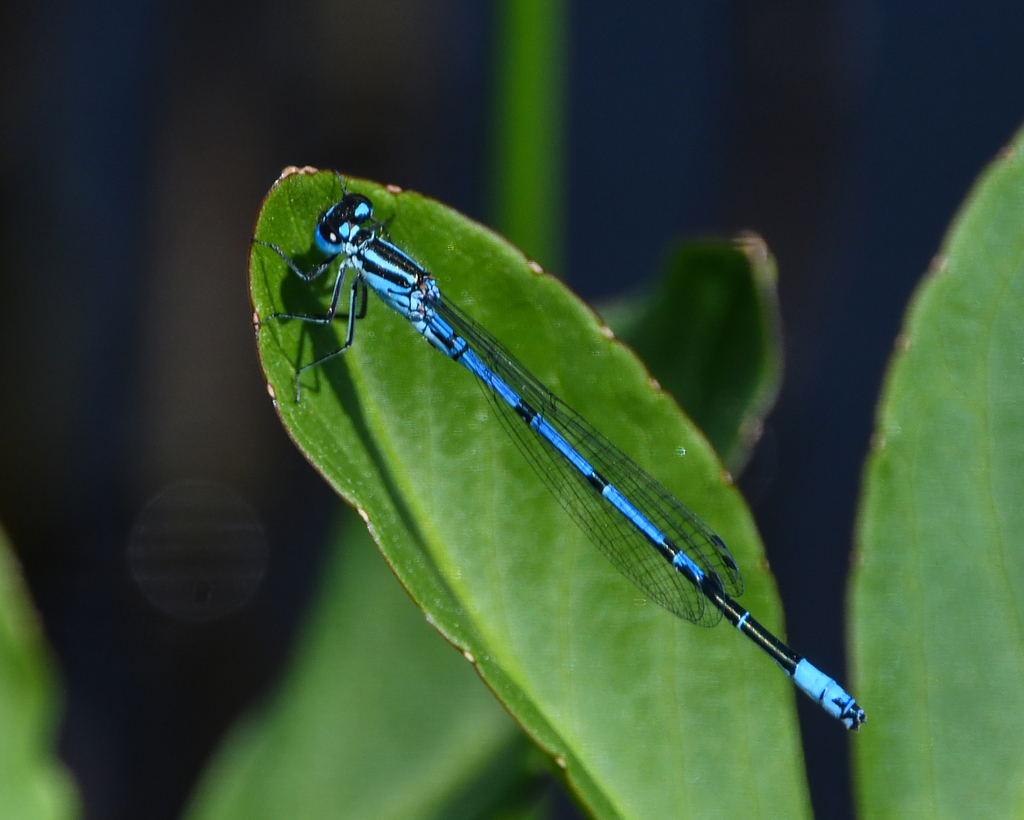
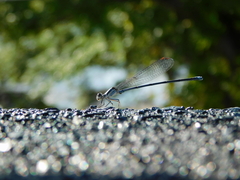
Male Azure damselflies have a blue and black patterned head and thorax and an azure abdomen with black markings. They are common around ponds and lakes, staying close to vegetation, and are most abundant from June to July. The species is found throughout most of Europe.
Source: Wikipedia
How to recognize it
Males show blue and black patterning on the head and thorax. Their abdomen is azure blue with black markings.
Source: Wikipedia
Where it lives
They are typically seen near ponds and lakesides during summer. They stay close to the vegetation around the water.
Source: Wikipedia
Life cycle
Adult damselflies are often observed mating and laying eggs.
Source: Wikipedia
When you see it
They fly from May to September, with peak numbers in June and July.
Source: Wikipedia
Where it comes from
Azure damselflies occur in most of Europe.
Source: Wikipedia
Lookalikes
They look very similar to the common blue damselfly.
Source: Wikipedia
Where it is found in the US
Recorded in 2 of 51 states and DC. Most records: Kansas, Kentucky.
Darker = more records. Counts are museum and citizen-science records, not population size.
Source: GBIF
Same family (Coenagrionidae)


Sources
- Wikipedia: https://en.wikipedia.org/wiki/Azure_damselfly
Look it up elsewhere: GBIF · iNaturalist · BugGuide · Wikipedia
Text written 2026-10-22 from the sources above and checked sentence by sentence against them. Data fetched 2026-10-22.