 Bug FAQ
Blue-tailed Damselfly
Ischnura elegans · Order: Odonata · Family: Coenagrionidae
Also called: Common Bluetail, Common Ischnura
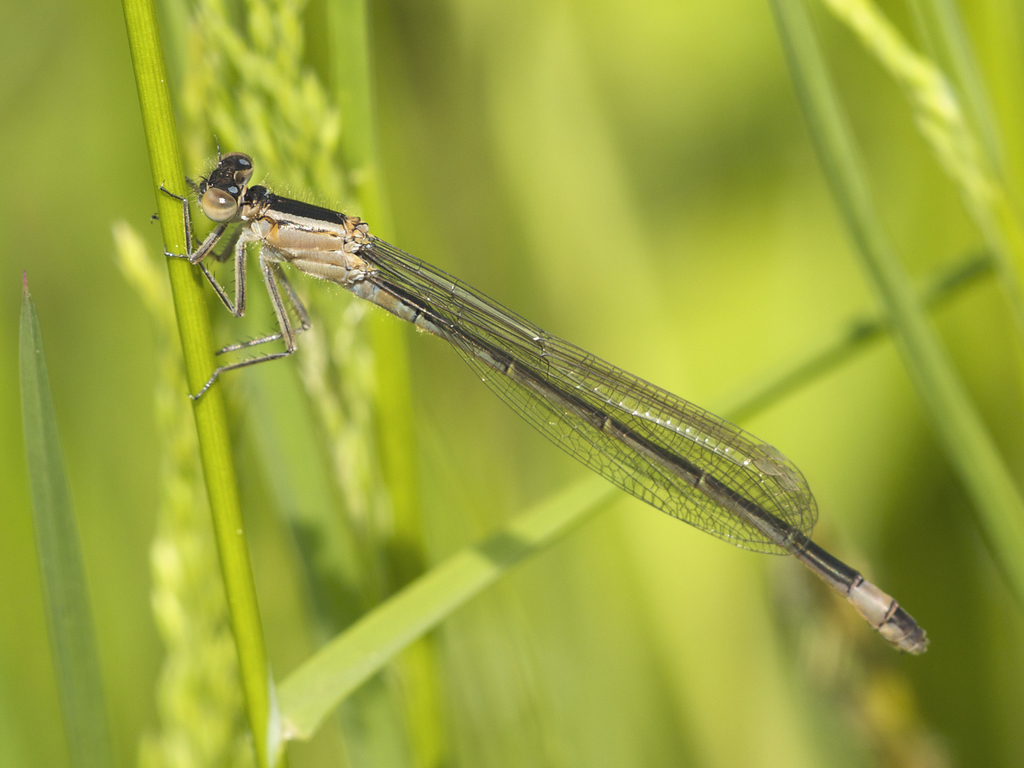
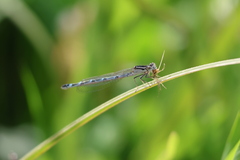
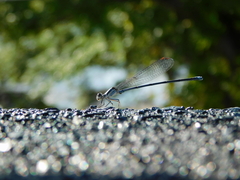
Blue-tailed damselflies are small insects about 27 to 35 mm long with a wingspan near 35 mm. Males have blue and black heads and thoraxes, blue eyes, a mostly black abdomen with a completely pale blue segment eight, and a two-coloured spot on each front wing. They live near standing or slow-moving water, even in brackish or polluted lowland sites, and are found across most of Europe and the Middle East.
Source: Wikipedia
How to recognize it
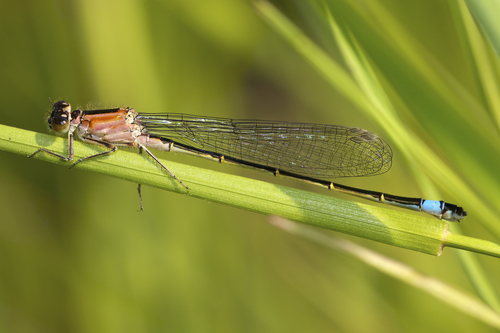
Males show blue and black coloration on the head and thorax, blue eyes, a largely black abdomen with narrow pale segment borders, and a fully pale blue segment eight; the front wings have a bi-coloured pterostigma.
Source: Wikipedia
Size
Body length ranges from 27 to 35 mm and wingspan is about 35 mm.
Source: Wikipedia
Where it lives
They are found in a variety of lowland habitats with still or slow-flowing water, including brackish and polluted water.
Source: Wikipedia
When you see it
Adults are on the wing from April through September, sometimes into early October.
Source: Wikipedia
Where it comes from
The species occurs throughout most of Europe and the Middle East.
Source: Wikipedia
More photos
Questions people ask
Where can I see blue-tailed damselflies?
Look near still or slow-moving water in lowland areas, even if the water is brackish or polluted, from spring through early autumn.
Source: Wikipedia
Same family (Coenagrionidae)


Sources
- Wikipedia: https://en.wikipedia.org/wiki/Blue-tailed_damselfly
Look it up elsewhere: GBIF · iNaturalist · BugGuide · Wikipedia
Text written 2026-10-22 from the sources above and checked sentence by sentence against them. Data fetched 2026-10-22.