 Bug FAQ
Black Saltmarsh Mosquito
Aedes taeniorhynchus · Order: Diptera · Family: Culicidae
Also called: Black Salt Marsh Mosquito, black salt marsh mosquitto
Source: Wikipedia
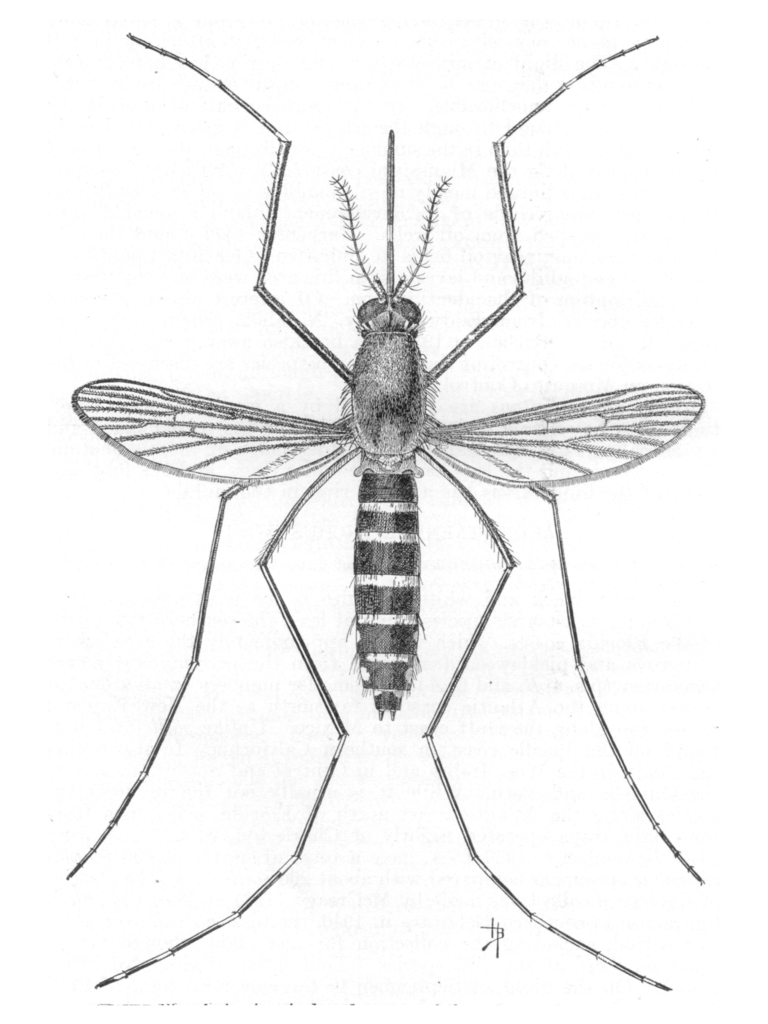
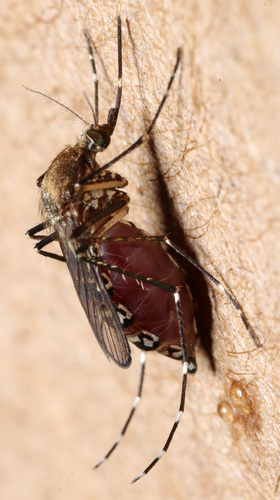
Adult Black Saltmarsh Mosquitoes are mostly black with distinct white bands on the proboscis and legs. They live throughout the Americas, feed on blood and sugar, and females need a blood meal to lay eggs. Females can bite and spread encephalitic viruses and Dirofilaria heartworm, affecting people and pets.
Source: Wikipedia
How to recognize it
A single white band runs across the middle of the proboscis. Multiple white bands appear on the distal ends of the legs, with the last hind-leg joints completely white. Overall the adult is black with areas of white banding.
Source: Wikipedia
Does it bite or sting?
It can carry encephalitic viruses such as Venezuelan equine encephalitis and transmit the heartworm parasite Dirofilaria immitis.
Source: Wikipedia
How to get rid of it
Control methods have been developed for this species. Copper acetoarsenite (Paris green) is used as an insecticide against its larvae at breeding sites.
Source: Wikipedia
Where it lives
It resides in the Americas.
Source: Wikipedia
What it eats
Adults feed on both blood and sugar; males rely on sugar while females need blood before laying eggs.
Source: Wikipedia
Life cycle
Eggs can remain dormant for years under dry, cold conditions. Female mosquitoes live and lay eggs for about three to four weeks.
Source: Wikipedia
When you see it
Adults start biting on day 4 and follow a five-day biting cycle until they die. Peak biting intensity in females occurs at ages 4, 9 and 14 days.
Source: Wikipedia
Where it comes from
Its native range is the Americas.
Source: Wikipedia
Lookalikes
It looks similar to Aedes sollicitans but differs in subtle larval and adult traits. The main distinguishing feature is the extensive white banding on several body parts.
Source: Wikipedia
Where it is found in the US
Recorded in 23 of 51 states and DC. Most records: Florida, Virginia, Maryland, South Carolina, Rhode Island, Texas, Massachusetts, California.
Darker = more records. Counts are museum and citizen-science records, not population size.
Source: GBIF
Months it is reported in the US
Source: GBIF
More photos
Questions people ask
Do they bite people or pets?
Yes, females bite and can transmit encephalitic viruses and heartworm to people and animals.
Source: Wikipedia
How can I control Black Saltmarsh Mosquitoes?
Larvae can be treated with copper acetoarsenite (Paris green) at breeding sites, and other control methods exist.
Source: Wikipedia
What do they look like?
Adults are mostly black with a white band on the proboscis and white bands on the leg joints, especially the hind legs.
Source: Wikipedia
Same family (Culicidae)
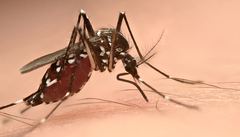 Asian Tiger MosquitoAedes albopictusCan spread germs or disease
 House Mosquito ComplexCulex pipiensCan spread germs or disease
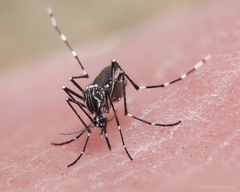 Yellow Fever MosquitoAedes aegyptiCan spread germs or disease
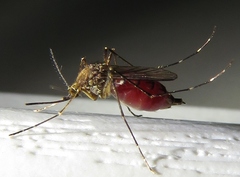 Inland Floodwater MosquitoAedes vexansCan spread germs or disease
 Asian Bush MosquitoAedes japonicusCan bite
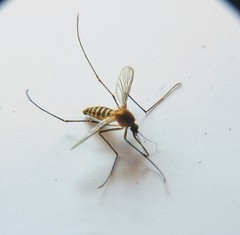 Southern House MosquitoCulex quinquefasciatusCan spread germs or disease
Sources
- Wikipedia: https://en.wikipedia.org/wiki/Aedes_taeniorhynchus
Look it up elsewhere: GBIF · iNaturalist · BugGuide · ITIS · Wikipedia
Text written 2026-10-23 from the sources above and checked sentence by sentence against them. Data fetched 2026-10-23.