 Bug FAQ
Black Swallowtail
Papilio polyxenes · Order: Lepidoptera · Family: Papilionidae
Also called: American Black Swallowtail, American Swallowtail, Eastern Black Swallowtail, Parsnip Swallowtail
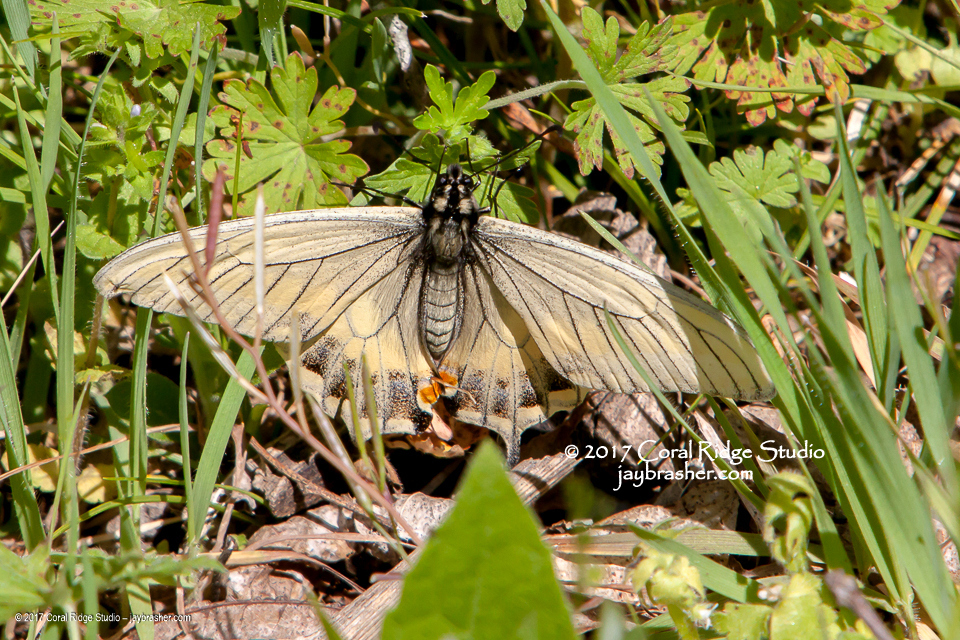
The black swallowtail has a wingspan of about 7 to 8 cm, with females a bit larger than males. It lives in open fields, parks, marshes and deserts across southern Canada to South America, mainly east of the Rockies. Caterpillars feed on parsley and other herbs in the carrot family, while adults emerge in spring after overwintering as chrysalises.
Source: Wikipedia
How to recognize it
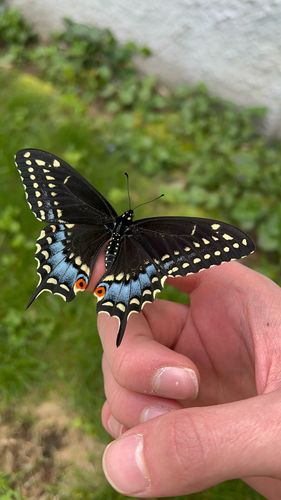
Upper wings are black with two rows of yellow spots; males have larger bright spots, females have smaller lighter ones and a noticeable blue patch between the rows.
Source: Wikipedia
Size
Wingspan ranges from 6.9 to 8.4 cm, females usually larger.
Source: Wikipedia
Where it lives
Found in open habitats such as fields, parks, marshes and deserts, preferring tropical or temperate climates.
Source: Wikipedia
What it eats
Caterpillars, called parsleyworms, eat parsley and other Apiaceae herbs.
Source: Wikipedia
Life cycle
Eggs hatch in 4 to 9 days, larvae develop for 10 to 30 days, then pupate for about 18 days. The species overwinters as a chrysalis and adults emerge in spring.
Source: Wikipedia
When you see it
First generation flies from mid-May to late June, second from early July to late August, with occasional partial third broods later.
Source: Wikipedia
Where it comes from
Range extends from southern Canada through the United States east of the Rockies down to South America.
Source: Wikipedia
Lookalikes
Similar species include Old World swallowtail, Indra swallowtail, Short-tailed swallowtail, and Anise swallowtail (-).
Source: Wikipedia
Where it is found in the US
Recorded in 48 of 51 states and DC. Most records: Texas, Illinois, Ohio, New York, Florida, Pennsylvania, Vermont, Virginia.
Darker = more records. Counts are museum and citizen-science records, not population size.
Source: GBIF
Status: native in North America; native in Canada; native in United States. Source: iNaturalist
Months it is reported in the US
Source: GBIF
More photos
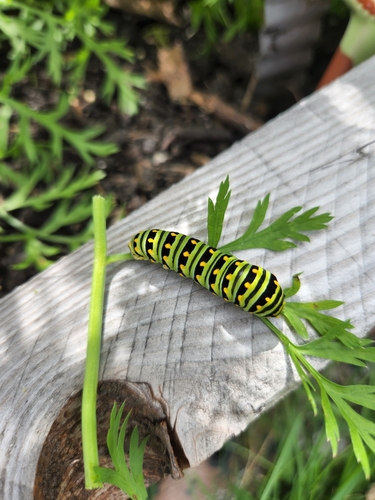
Same family (Papilionidae)
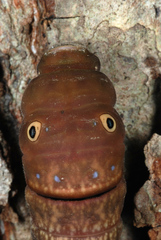
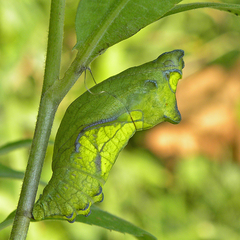
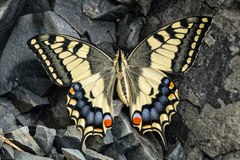
Sources
- Wikipedia: https://en.wikipedia.org/wiki/Papilio_polyxenes
Look it up elsewhere: GBIF · iNaturalist · BugGuide · ITIS · Wikipedia
Text written 2026-10-22 from the sources above and checked sentence by sentence against them. Data fetched 2026-10-22.