 Bug FAQ
Spicebush Swallowtail
Papilio troilus · Order: Lepidoptera · Family: Papilionidae
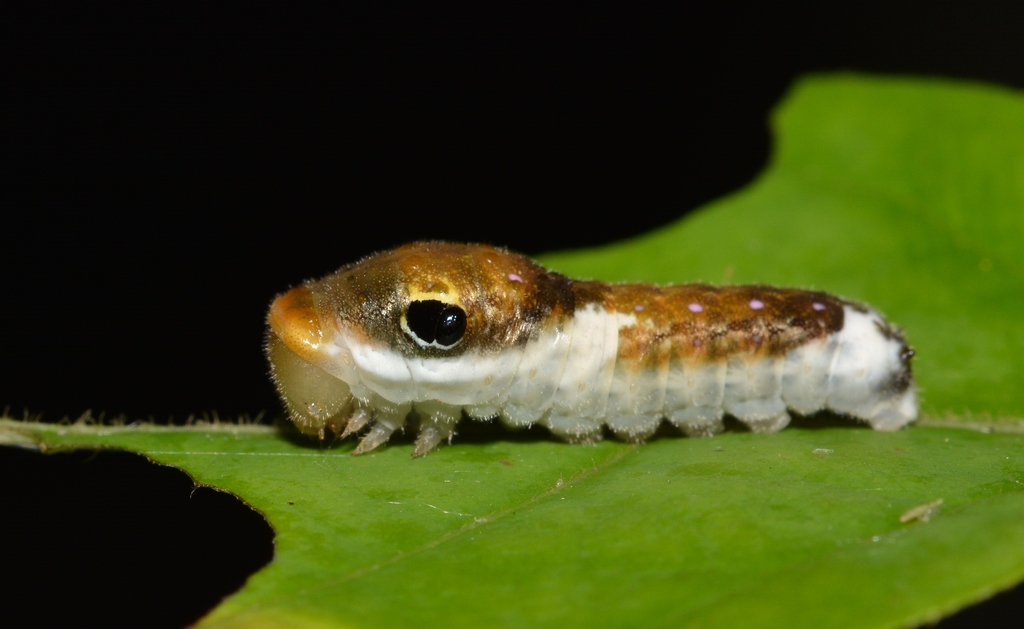
Spicebush swallowtails are black swallowtail butterflies found in the eastern United States and southern Ontario, with two subspecies, one of which lives mainly in Florida. They live in deciduous woods, woody swamps, and open plains, with males preferring swampy areas and females more often in open fields. The caterpillars feed on spicebush or white sassafras, both members of the Lauraceae family, and the eggs are laid singly or in pairs on spicebush leaves.
Source: Wikipedia
Size
Spicebush swallowtails belong to the swallowtail family, which includes the largest butterflies in the world.
Source: Wikipedia
Where it lives
They are usually seen flying low and fast in shaded deciduous woods or woody swamps. Males tend to stay in swampy areas while females are more often found in open plains.
Source: Wikipedia
What it eats
These host plants are members of the Lauraceae family.
Source: Wikipedia
Life cycle
Females lay large greenish-white eggs one or two at a time on spicebush leaves. When the larvae hatch they eat the leaf from the edge toward the midrib, stopping about three-quarters of an inch from the tip.
Source: Wikipedia
When you see it
Adult butterflies fly wherever water, nectar, and mates are available within their range. Disturbed larvae can release a foul-smelling substance.
Source: Wikipedia
Where it comes from
The species is common in North America, limited to the eastern United States and southern Ontario.
Source: Wikipedia
Lookalikes
Unlike many swallowtails, spicebush swallowtails usually fly low to the ground rather than high in the air.
Source: Wikipedia
Where it is found in the US
Recorded in 39 of 51 states and DC. Most records: Florida, Virginia, Pennsylvania, Ohio, Maryland, New York, North Carolina, Illinois.
Darker = more records. Counts are museum and citizen-science records, not population size.
Source: GBIF
Status: native in North America; native in United States; native in Canada. Source: iNaturalist
Months it is reported in the US
Source: GBIF
More photos
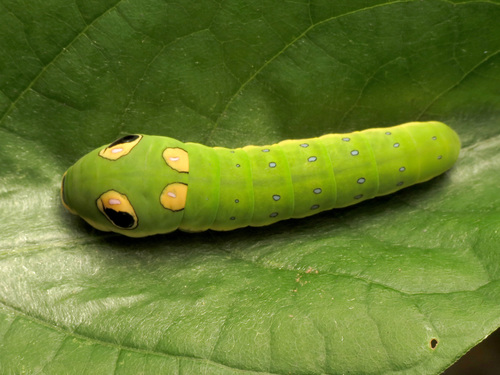
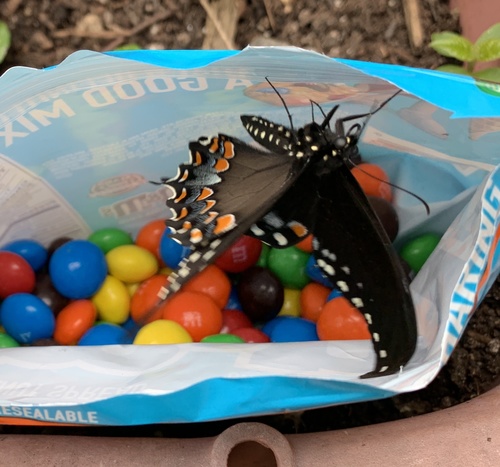
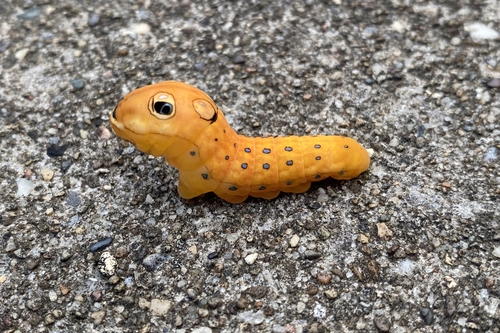
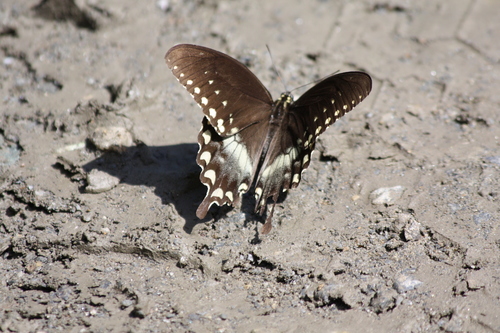
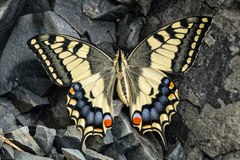
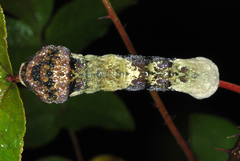
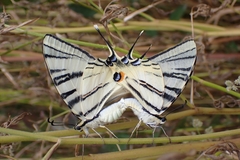
Same family (Papilionidae)
Sources
- Wikipedia: https://en.wikipedia.org/wiki/Papilio_troilus
Look it up elsewhere: GBIF · iNaturalist · BugGuide · ITIS · Wikipedia
Text written 2026-10-22 from the sources above and checked sentence by sentence against them. Data fetched 2026-10-22.