 Bug FAQ
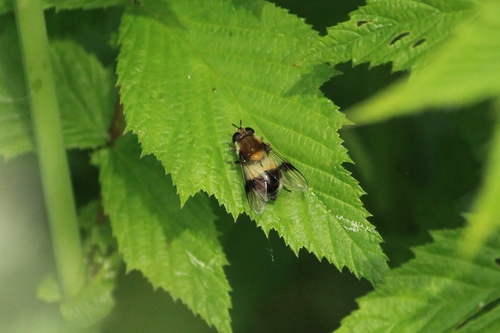
Blotch-winged Hoverfly
Leucozona lucorum · Order: Diptera · Family: Syrphidae
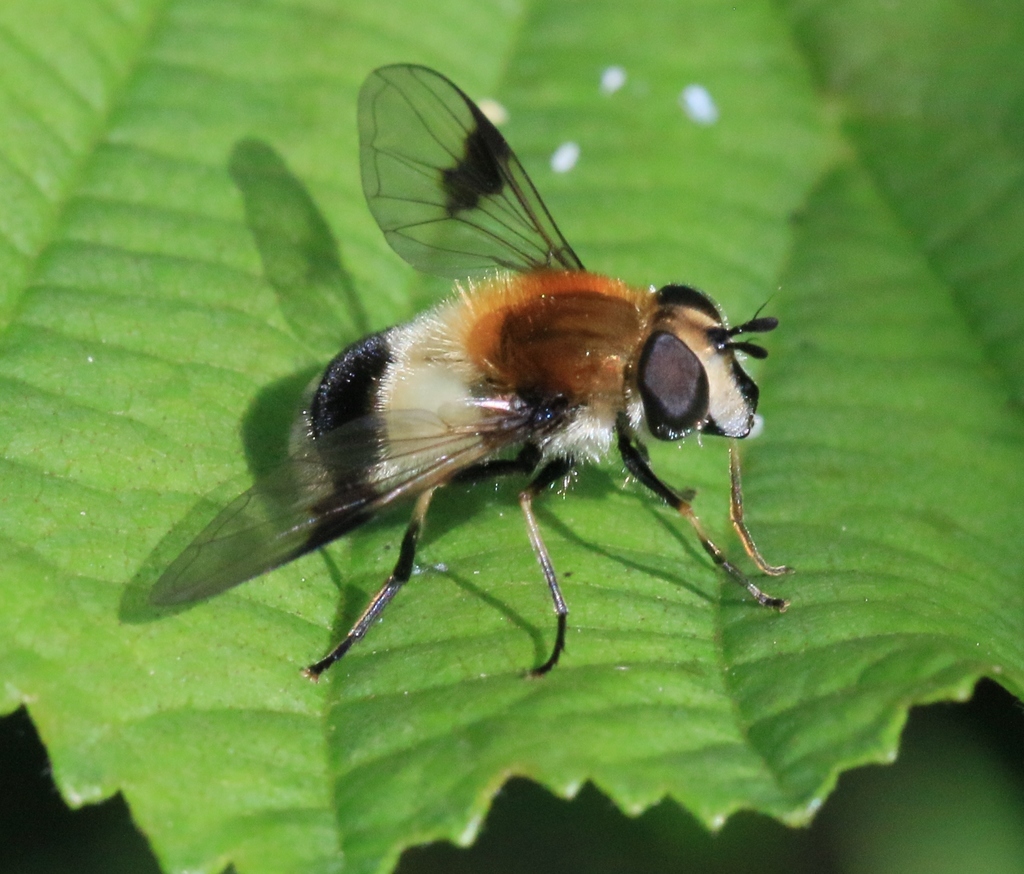
The blotch-winged hoverfly has a wing length of about 7.8 to 10 mm and shows a yellow-dusted face with a brown spot on each wing. It lives in deciduous forest edges and montane grassland across much of Europe and Asia and also from Alaska down to Oregon and New York in North America. Adults visit many flowers while the larvae eat aphids on ground plants; they fly from May to August, peaking in June.
Source: Wikipedia
How to recognize it
The face is yellow-dusted on both sides of a shiny black middle area. Each wing bears a noticeable brown spot.
Source: Wikipedia
Size
Wing length ranges from 7.75 to 10 mm.
Source: Wikipedia
Where it lives
Typical habitats are deciduous forest rides, edges, and unimproved montane grassland.
Source: Wikipedia
What it eats
Larvae feed on aphids found on ground-level vegetation. Adults visit flowers such as white umbellifers, maple, knapweed, thistles, spurge, meadowsweet, knotweed, brambles, rowan and dandelion.
Source: Wikipedia
Life cycle
Adults are on the wing from May through August, with numbers usually highest in June.
Source: Wikipedia
When you see it
The flight period spans May to August, peaking in June.
Source: Wikipedia
Where it is found in the US
Recorded in 2 of 51 states and DC. Most records: Alaska, Colorado.
Darker = more records. Counts are museum and citizen-science records, not population size.
Source: GBIF
More photos
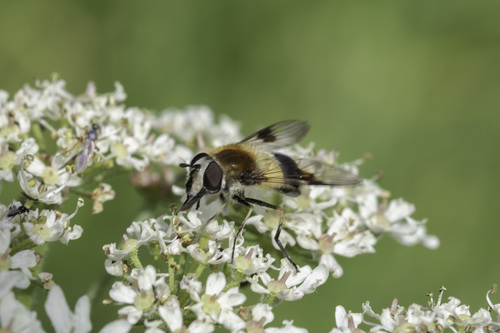
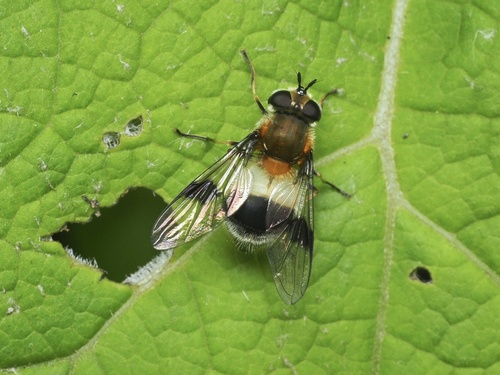
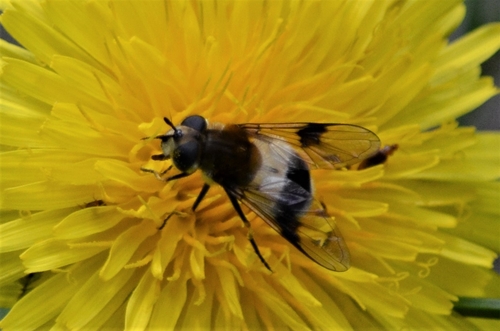
Questions people ask
When are blotch-winged hoverflies active?
They fly from May to August, with the greatest numbers in June.
Source: Wikipedia
Same family (Syrphidae)






Sources
- Wikipedia: https://en.wikipedia.org/wiki/Leucozona_lucorum
Look it up elsewhere: GBIF · iNaturalist · BugGuide · ITIS · Wikipedia
Text written 2026-10-24 from the sources above and checked sentence by sentence against them. Data fetched 2026-10-23.