 Bug FAQ
Camel Crickets
Ceuthophilus · Order: Orthoptera · Family: Rhaphidophoridae
Also called: North American Camel Crickets
Source: yardandgarden.extension.iastate.edu, extension.umaine.edu

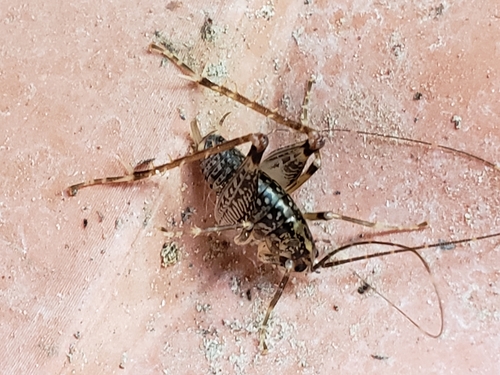
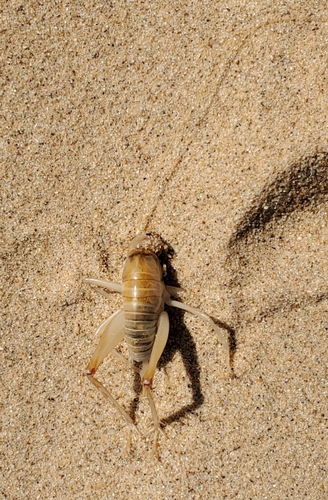
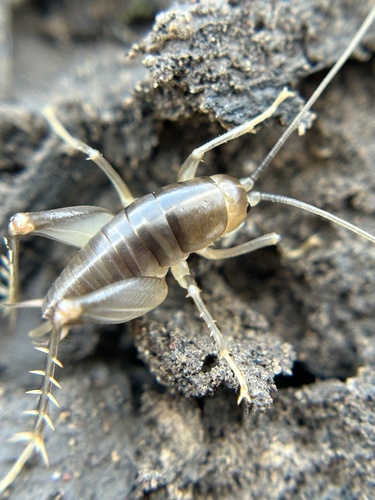
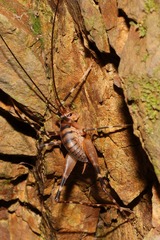
Camel crickets are brownish, hump-backed, wingless insects about three-quarters to one inch long with long antennae and large hind legs. They live in cool, dark, moist places such as basements, crawlspaces, garages and storage areas and may wander indoors from nearby habitats. Control includes reducing moisture, sealing entry points, removing hiding spots, applying residual insecticide outdoors, and using sticky traps where they are seen.
Source: yardandgarden.extension.iastate.edu, University of Minnesota Extension, Wikipedia, extension.umaine.edu
How to recognize it
They have a hump-backed, brownish body and an oval head with long, tapering antennae. Their hind legs are large and spiny, especially in males.
Size
Adults are up to about one inch long, roughly three-quarters of an inch on average.
Source: yardandgarden.extension.iastate.edu, University of Minnesota Extension
Is it a pest in the house?
They are of little economic importance and are mainly a nuisance when they enter homes, especially basements. They usually wander indoors accidentally from nearby suitable habitats.
Source: yardandgarden.extension.iastate.edu, extension.umaine.edu
How to get rid of it
Eliminate outdoor breeding and hiding sites as much as possible. Apply a residual insecticide barrier around the house to reach breeding sites. Seal cracks and gaps to limit entry into the building. Place sticky traps where crickets are observed.
Source: yardandgarden.extension.iastate.edu, University of Minnesota Extension
Where it lives
They prefer cool, dark, moist environments like basements, crawlspaces, garages, and storage buildings.
Source: extension.umaine.edu
What it eats
They are omnivorous scavengers that eat a wide range of organic matter, including dead insects, fungi, pet food, and human waste.
Source: Wikipedia
Lookalikes
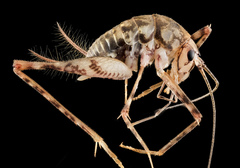
Camel crickets are also called cave crickets and are related to field and house crickets.
Source: yardandgarden.extension.iastate.edu, University of Minnesota Extension
Where it is found in the US
Recorded in 46 of 51 states and DC. Most records: Texas, California, Colorado, Indiana, New Mexico, Missouri, Arizona, Michigan.
Darker = more records. Counts are museum and citizen-science records, not population size.
Source: GBIF
Months it is reported in the US
Source: GBIF
More photos

Questions people ask
Why are camel crickets in my basement?
They are attracted to cool, dark, moist areas and often wander in from nearby habitats.
Source: extension.umaine.edu, yardandgarden.extension.iastate.edu
What do camel crickets eat?
They are omnivorous scavengers that consume dead insects, fungi, pet food, and other organic waste.
Source: Wikipedia
Same family (Rhaphidophoridae)

Sources
- yardandgarden.extension.iastate.edu: https://yardandgarden.extension.iastate.edu/encyclopedia/camel-cricket
- extension.umaine.edu: https://extension.umaine.edu/home-and-garden-ipm/common-name-listing/camel-cricket/
- University of Minnesota Extension: https://extension.umn.edu/nuisance-insects/crickets
- Wikipedia: https://en.wikipedia.org/wiki/Ceuthophilus
Look it up elsewhere: GBIF · iNaturalist · BugGuide · ITIS · Wikipedia
Text written 2026-10-23 from the sources above and checked sentence by sentence against them. Data fetched 2026-10-23.