 Bug FAQ
Isoplectron armatum
Isoplectron armatum · Order: Orthoptera · Family: Rhaphidophoridae
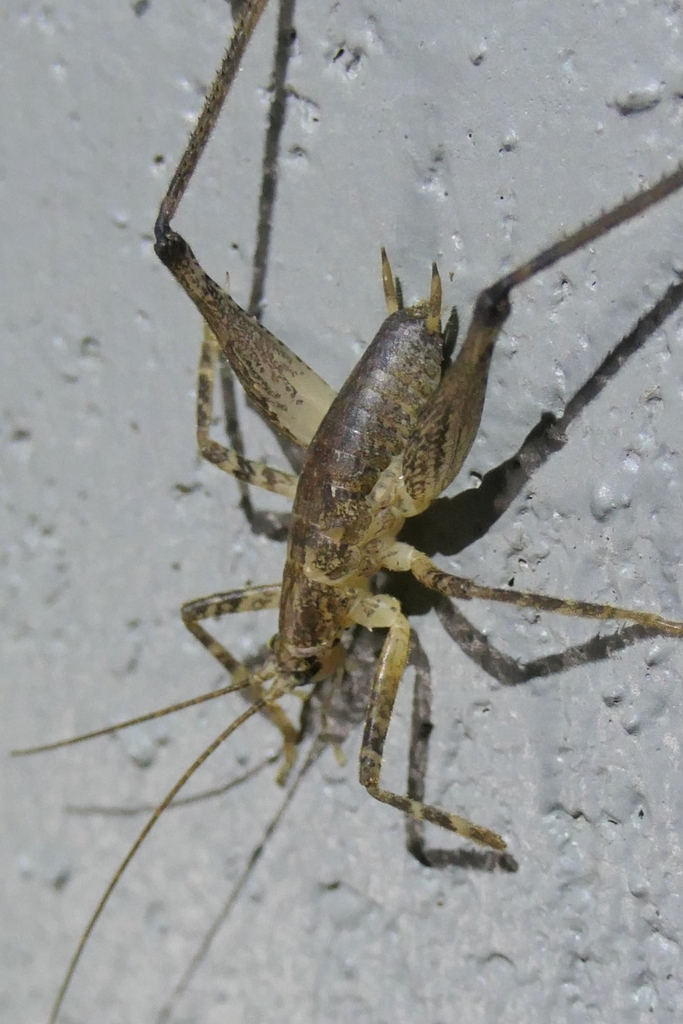
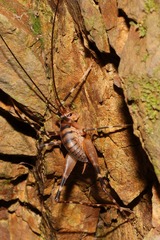
Adult Isoplectron armatum are between about 9 and 17 mm long. They are light rusty-brown with dark marbling on the back, dark markings on the abdomen and thorax, and green eyes. In New Zealand they hide under bark or in artificial shelters during the day, often in groups of up to ten.
Source: Wikipedia
How to recognize it
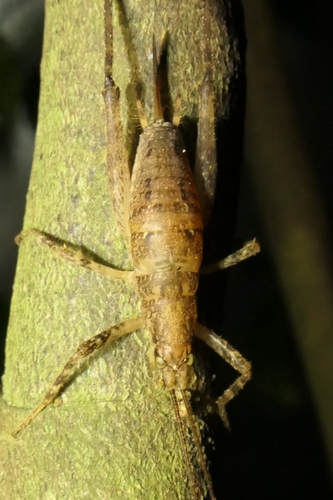
The body is light rusty brown with dark marbling on the dorsal side. Abdomen and thorax show dark markings and the eyes are green.
Source: Wikipedia
Size
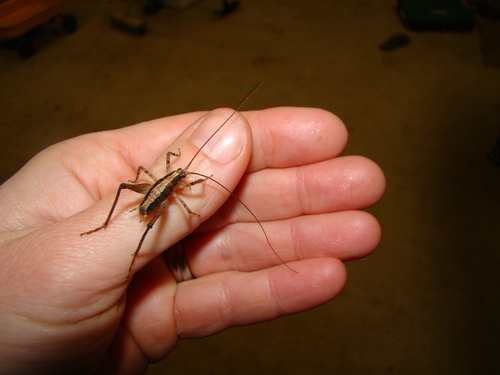
Adults measure from about 8.5 mm up to 16.8 mm in length.
Source: Wikipedia
Where it lives
During daylight they are found under tree bark or inside artificial refuges, usually in groups of up to ten individuals.
Source: Wikipedia
Where it comes from
The species is native to New Zealand. It is the most common Isoplectron species, occurring south of Taupō on the North Island and throughout the South Island.
Source: Wikipedia
More photos
Questions people ask
Where does Isoplectron armatum live?
It is only known from New Zealand, especially south of Taupō on the North Island and across the South Island.
Source: Wikipedia
How big are adult Isoplectron armatum?
Adults range from about 8.5 mm to 16.8 mm long.
Source: Wikipedia
What does Isoplectron armatum look like?
They are light rusty brown with dark marbling on the back, have dark markings on the abdomen and thorax, and green eyes.
Source: Wikipedia
Where can I find them during the day?
During daylight they hide under tree bark or in artificial refuges, often in groups of up to ten.
Source: Wikipedia
Same family (Rhaphidophoridae)

Sources
- Wikipedia: https://en.wikipedia.org/wiki/Isoplectron_armatum
Look it up elsewhere: GBIF · iNaturalist · BugGuide · Wikipedia
Text written 2026-10-23 from the sources above and checked sentence by sentence against them. Data fetched 2026-10-23.