 Bug FAQ
Pachyrhamma edwardsii
Pachyrhamma edwardsii · Order: Orthoptera · Family: Rhaphidophoridae
Source: Wikipedia
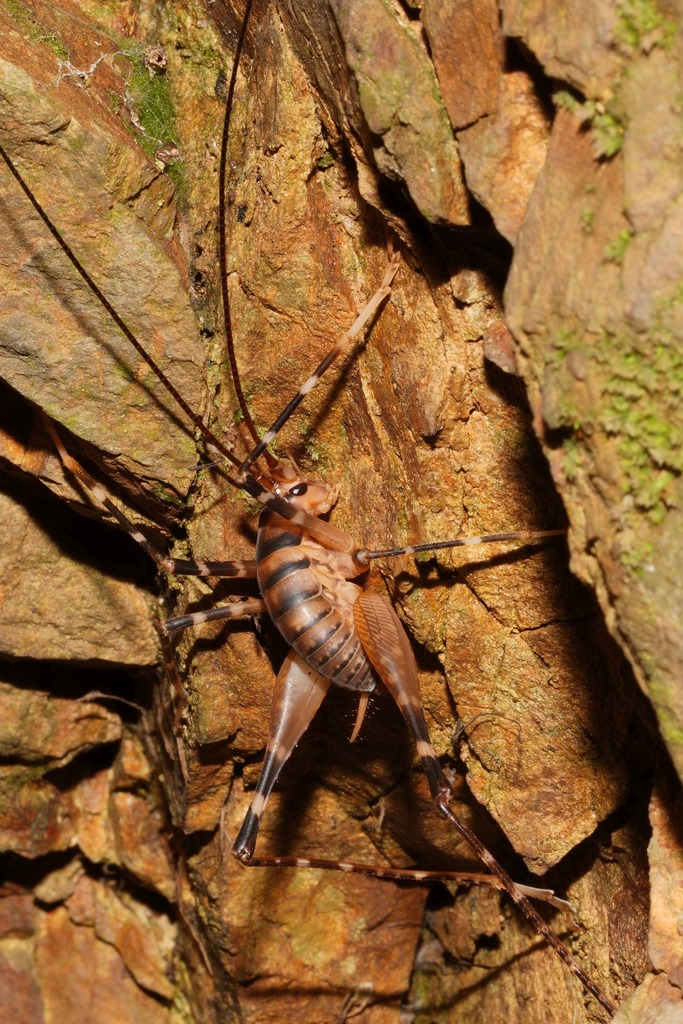
Pachyrhamma edwardsii is a small, brown cave wētā about 35 mm long, with dark bands on its abdomen and golden hairs covering its body. It lives in humid caves and similar cavities, as well as on offshore islands near Wellington, and it feeds on plants, fungi, lichens and dead animal material. The insect is nocturnal, staying still on walls or under stones by day and becoming active at night; its bite is harmless and it seldom tries to bite.
Source: Wikipedia
How to recognize it
Adults are brown with dark bands across the rear edges of their abdominal segments and have sparse golden setae. Their antennae are medium brown and the ovipositor is a deep reddish-brown.
Source: Wikipedia
Size
Body length ranges up to about 41 mm, averaging around 35 mm. Newly hatched nymphs are the size of a rice grain.
Source: Wikipedia
Does it bite or sting?
Its bite is harmless and it seldom attempts to bite; the hind-leg spines are too small to cause a painful scratch.
Source: Wikipedia
Where it lives
Found in caves or large humid cavities with little other life. Also occurs on offshore islands of the Marlborough Sounds and on Mana and Kapiti Islands near Wellington.
Source: Wikipedia
Life cycle
First-instar nymphs are tiny, about the size of a rice grain, and already show the slender legs and beginning adult coloration.
Source: Wikipedia
Where it comes from
It is endemic to New Zealand.
Source: Wikipedia
Questions people ask
Where do they live?
They live in humid caves and similar cavities, as well as on offshore islands near Wellington in New Zealand.
Source: Wikipedia
What do they eat?
They feed on a variety of plants, fungi, lichens and dead animal material.
Source: Wikipedia
Same family (Rhaphidophoridae)


Sources
- Wikipedia: https://en.wikipedia.org/wiki/Pachyrhamma_edwardsii
Look it up elsewhere: GBIF · iNaturalist · BugGuide · Wikipedia
Text written 2026-10-23 from the sources above and checked sentence by sentence against them. Data fetched 2026-10-23.