 Bug FAQ
Greenhouse Camel Cricket
Diestrammena asynamora · Order: Orthoptera · Family: Rhaphidophoridae
Also called: Green-house Camel-cricket, Greenhouse Stone Cricket
Source: Wikipedia
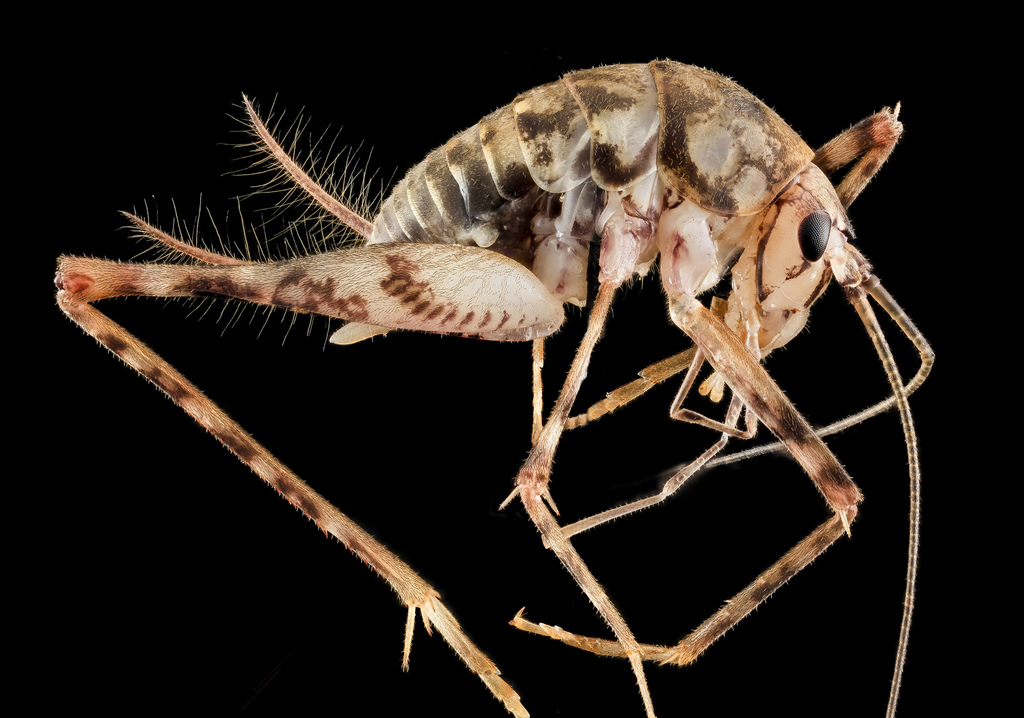
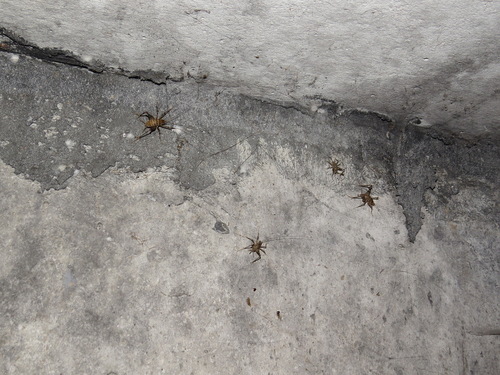
They are gray to reddish-brown with dark spots on the abdomen and dark-ringed legs. They live in warm, moist places such as greenhouses, cellars and caves, and are active at night.
Source: Wikipedia
How to recognize it
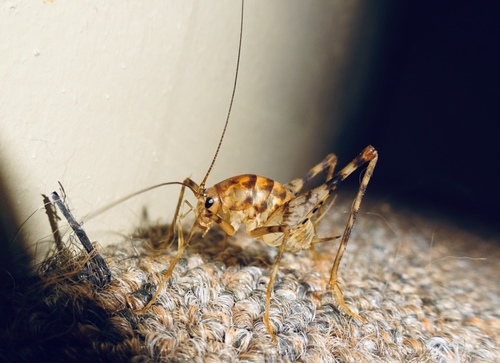
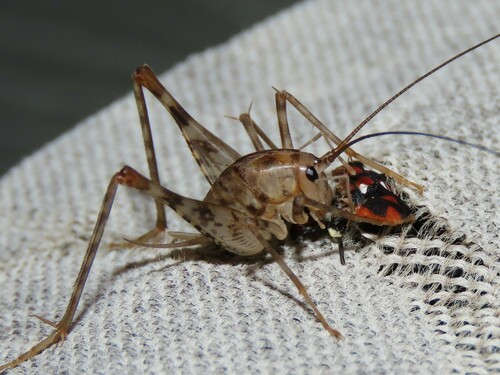
Their colour ranges from gray to yellow-brown or reddish-brown, with dark brown spots and stripes on the abdomen. The pronotum has a dark edge and the legs are dark with light rings, especially visible on the hind legs.
Source: Wikipedia
Size
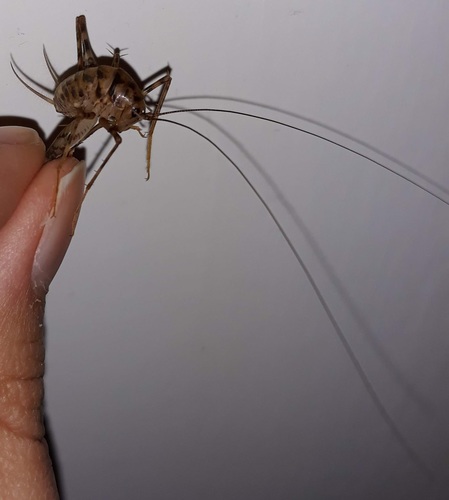
Body length is between 11.3 and 14.6 mm (about 0.4 to 0.6 in). Antennae are 70 to 80 mm long, roughly four times the body length.
Source: Wikipedia
Is it a pest in the house?
Large numbers can damage greenhouse plants, especially during hot periods. They are crepuscular and nocturnal, moving around at night.
Source: Wikipedia
How to get rid of it
Targeted control in botanical gardens has reduced their numbers. In the U.S., people have been asked to collect specimens for research.
Source: Wikipedia
Where it lives
They prefer warm, moist habitats with hiding places, such as greenhouses and warm cellars.
Source: Wikipedia
What it eats
They eat small insects, fruits, seeds, seedlings, young leaves and flowers, acting as omnivores and scavengers.
Source: Wikipedia
Life cycle
They reproduce continuously throughout the year because they live close to humans.
Source: Wikipedia
When you see it
They are active at dusk and night, hide during the day, and in temperate areas are only seen outdoors in very hot summers.
Source: Wikipedia
Where it comes from
They are native to eastern Asia, including Korea, and originally come from caves.
Source: Wikipedia
Lookalikes
They can be mistaken for Kollar's cave cricket, but differ by spines on the front and middle legs and a uniformly tapering ovipositor in females.
Source: Wikipedia
Where it is found in the US
Recorded in 34 of 51 states and DC. Most records: Maryland, Virginia, North Carolina, New York, Pennsylvania, Illinois, New Jersey, Tennessee.
Darker = more records. Counts are museum and citizen-science records, not population size.
Source: GBIF
Months it is reported in the US
Source: GBIF
More photos
Questions people ask
Can they damage my garden?
Yes, they can feed on seedlings, young leaves and fruits, causing damage to greenhouse and garden plants.
Source: Wikipedia
Where are they likely to be found?
In warm, moist places like greenhouses, cellars, and caves, especially in eastern Asia where they are native.
Source: Wikipedia
How can I tell them apart from similar crickets?
Look for spines on the front and middle legs and a smoothly tapering ovipositor in females; these features differ from Kollar's cave cricket.
Source: Wikipedia
Same family (Rhaphidophoridae)


Sources
- Wikipedia: https://en.wikipedia.org/wiki/Tachycines_asynamorus
Look it up elsewhere: GBIF · iNaturalist · BugGuide · ITIS · Wikipedia
Text written 2026-10-22 from the sources above and checked sentence by sentence against them. Data fetched 2026-10-22.