 Bug FAQ
Clouded Silver
Lomographa temerata · Order: Lepidoptera · Family: Geometridae
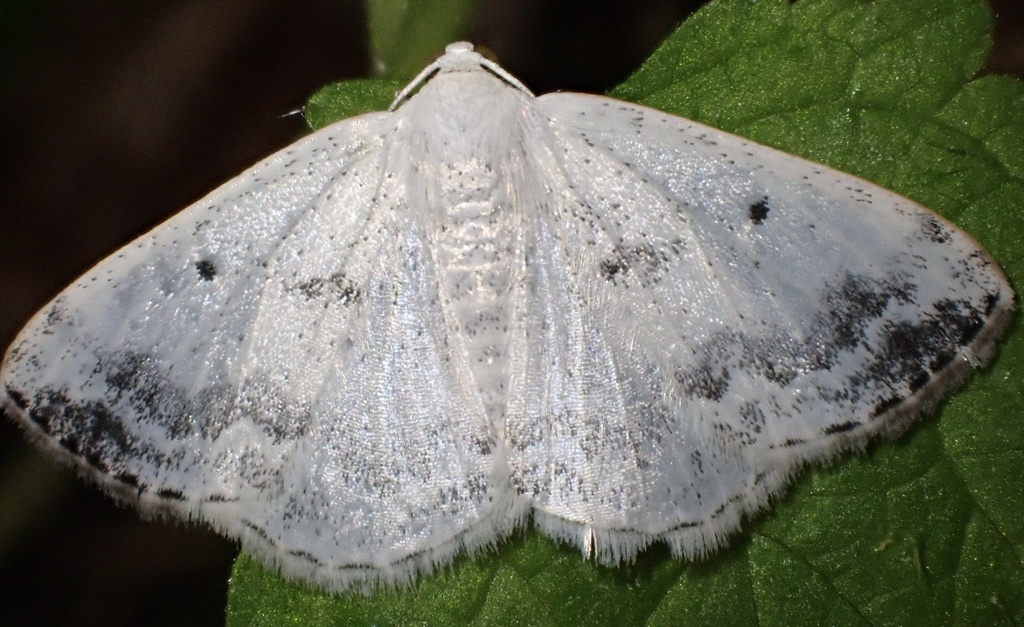
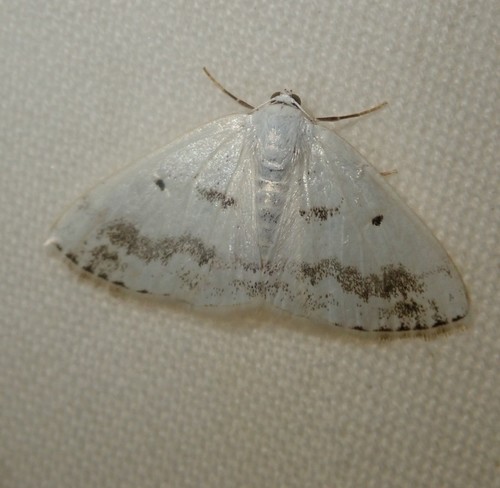
The clouded silver moth has a wingspan of about 22 to 26 mm and a whitish wing colour with a silky sheen. Its forewings show a black discoid spot, short black-brown markings near the base, and a variable dark clouding that leaves a broad white dentate subterminal line. The larvae feed on the leaves of many trees and shrubs, including hawthorn, blackthorn, various Prunus species, apple, maple, beech, rose, willow, rowan, birch and oak.
Source: Wikipedia
How to recognize it
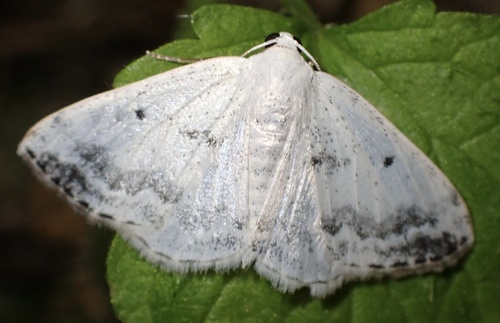
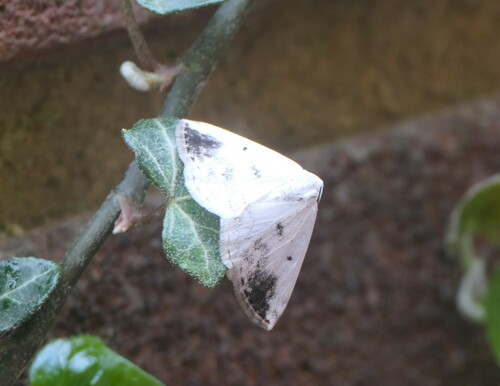
The forewings have a black discoid spot, short black-brown markings at the base, and a dark clouded area that leaves a broad white dentate subterminal line. The hindwings have a small black central spot and faint grey bands, and the black spots appear on both upper and lower sides.
Source: Wikipedia
Size
Wingspan ranges from 22 to 26 mm.
Source: Wikipedia
What it eats
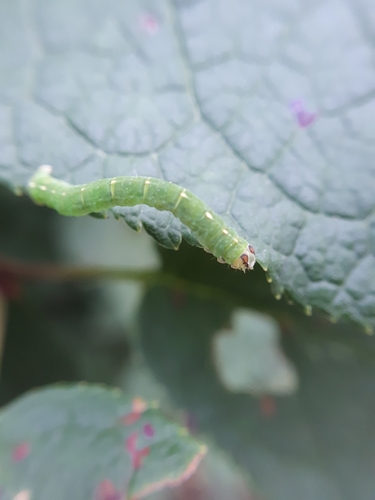
Larvae feed on leaves of many trees and shrubs such as hawthorn, blackthorn, wild and bird cherry, various plums, apple, field maple, beech, dog rose, willow, rowan, impatiens, birch and oak.
Source: Wikipedia
Life cycle
Adults fly in May and June, producing one generation per year. The species overwinters as a pupa.
Source: Wikipedia
When you see it
Flight period is from May to June.
Source: Wikipedia
Where it comes from
The species occurs in Asia and Europe.
Source: Wikipedia
More photos
Questions people ask
What do the caterpillars eat?
They feed on the leaves of many trees and shrubs, including hawthorn, blackthorn, cherries, plums, apple, maple, beech, rose, willow, rowan, birch and oak.
Source: Wikipedia
Same family (Geometridae)





Sources
- Wikipedia: https://en.wikipedia.org/wiki/Lomographa_temerata
Look it up elsewhere: GBIF · iNaturalist · BugGuide · Wikipedia
Text written 2026-10-24 from the sources above and checked sentence by sentence against them. Data fetched 2026-10-22.