 Bug FAQ
Pale Beauty
Campaea perlata · Order: Lepidoptera · Family: Geometridae
Also called: American Light Emerald, American Light Emerald Moth, Fringed Looper, Light Emerald
Source: Wikipedia
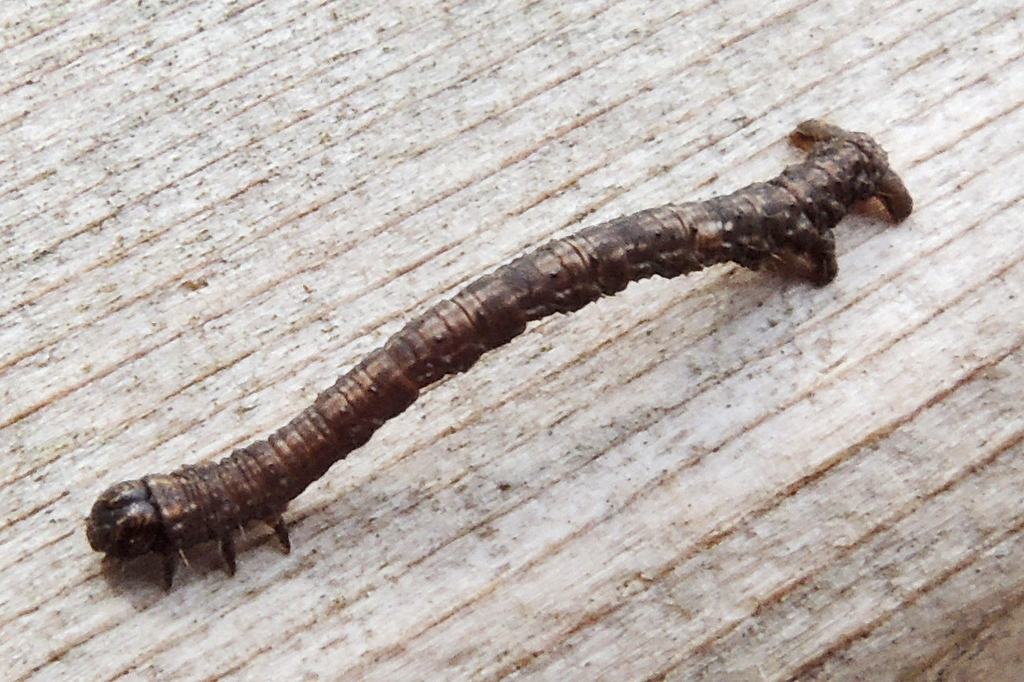
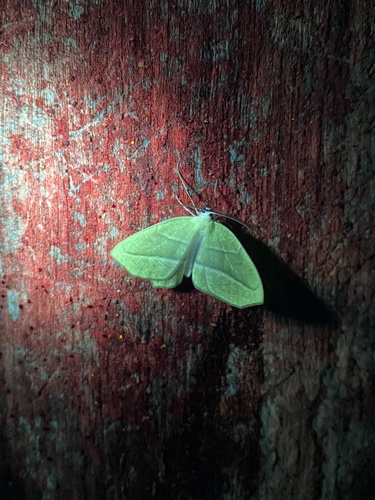
Pale Beauty moths have a wingspan of roughly 28 to 51 mm and are pale greenish-white with faint crosswise lines on both wings. Their caterpillars are about 4 cm long, mottled gray to reddish, and can survive winter thanks to antifreeze proteins.
Source: Wikipedia
How to recognize it
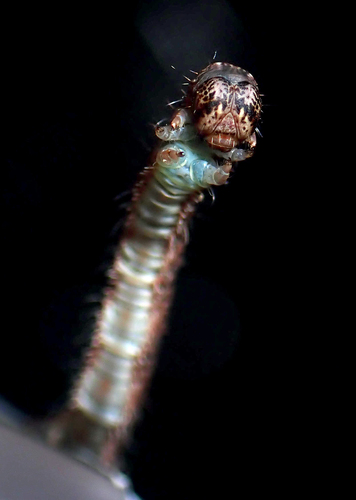
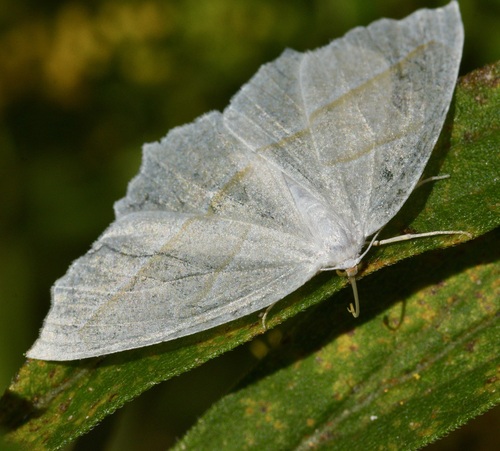
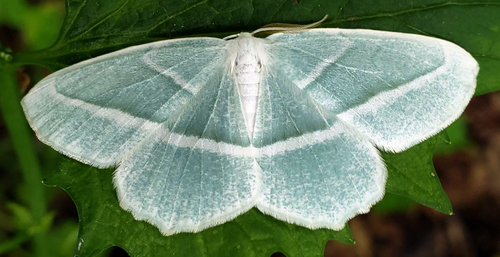
Adults are pale greenish to white with faint postmedial and antemedial lines across fore- and hindwings. Caterpillars are about 4 cm, mottled gray-red, pale underneath, with a dark head-to-eye band.
Source: Wikipedia
Size
The moth is medium-sized, its wingspan ranging from 28 to 51 mm.
Source: Wikipedia
What it eats
They are generalist feeders, recorded on about 65 species of shrubs and trees.
Source: Wikipedia
Life cycle
There are two generations each year: one that overwinters and a summer generation. When fully grown, the larva pupates inside a light-green cocoon.
Source: Wikipedia
When you see it
Adults are on the wing from June through September, depending on location.
Source: Wikipedia
Lookalikes
It is sometimes called the light emerald, though that name can be confused with the European Campaea margaritata.
Source: Wikipedia
Where it is found in the US
Recorded in 43 of 51 states and DC. Most records: New York, Pennsylvania, Michigan, Massachusetts, Ohio, Vermont, Wisconsin, Connecticut.
Darker = more records. Counts are museum and citizen-science records, not population size.
Source: GBIF
Status: native in North America; native in Canada; native in United States. Source: iNaturalist
Months it is reported in the US
Source: GBIF
More photos
Questions people ask
Can they damage my garden?
Yes, the caterpillars feed on many kinds of shrubs and trees, so they can cause damage in gardens and forests.
Source: Wikipedia
Same family (Geometridae)




Sources
- Wikipedia: https://en.wikipedia.org/wiki/Campaea_perlata
Look it up elsewhere: GBIF · iNaturalist · BugGuide · ITIS · Wikipedia
Text written 2026-10-22 from the sources above and checked sentence by sentence against them. Data fetched 2026-10-22.