 Bug FAQ
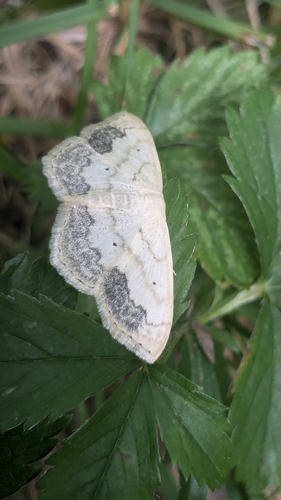
Large Lace-border Moth
Scopula limboundata · Order: Lepidoptera · Family: Geometridae
Also called: Large Lace-bordered Wave Moth, Large Lace Border, Large Lace-bordered Wave
Source: Wikipedia
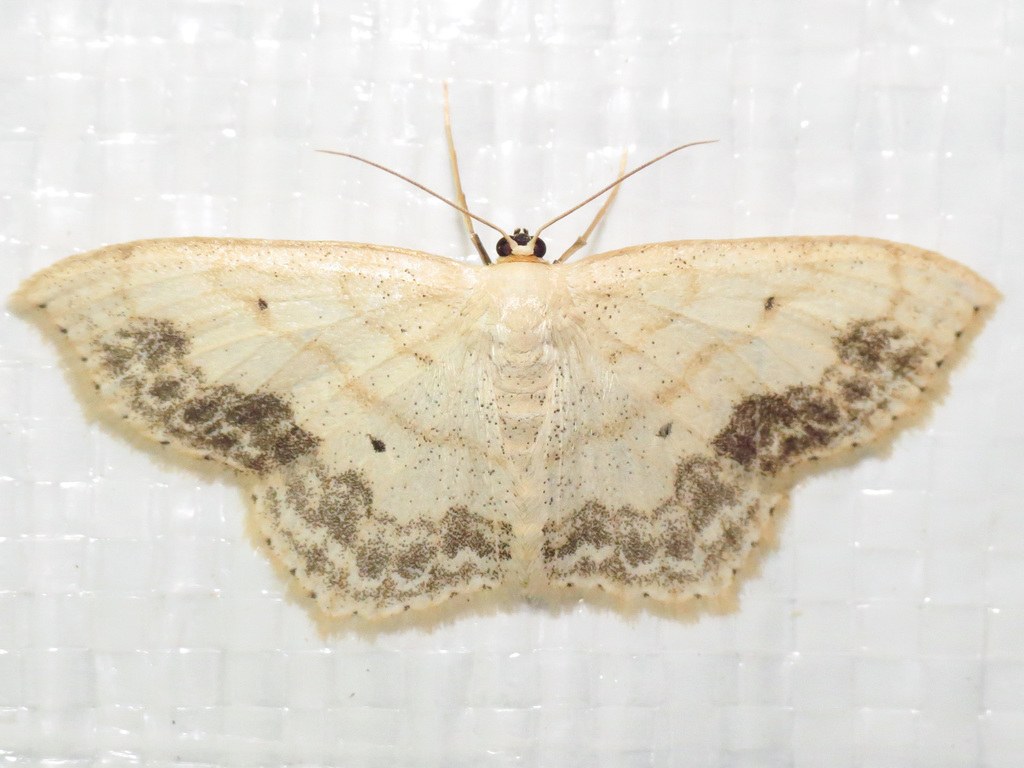
The large lace-border moth has a wingspan of about 25 to 30 mm and belongs to the Geometridae family. It lives east of the Rocky Mountains in North America and flies from late May through August.
Source: Wikipedia
How to recognize it
Scopula limboundata, called the large lace-border, is a moth in the Geometridae family.
Source: Wikipedia
Size
Its wingspan measures roughly 25 to 30 mm (about 1 inch).
Source: Wikipedia
Life cycle
The species was first described by Adrian Hardy Haworth in 1809.
Source: Wikipedia
When you see it
Adult moths are active from late May until late August or early September.
Source: Wikipedia
Where it comes from
Its native range is the same area east of the Rocky Mountains in North America.
Source: Wikipedia
Where it is found in the US
Recorded in 42 of 51 states and DC. Most records: Pennsylvania, Ohio, Maryland, Virginia, North Carolina, Alabama, Michigan, New York.
Darker = more records. Counts are museum and citizen-science records, not population size.
Source: GBIF
Status: native in North America; native in Canada; native in United States. Source: iNaturalist
Months it is reported in the US
Source: GBIF
More photos
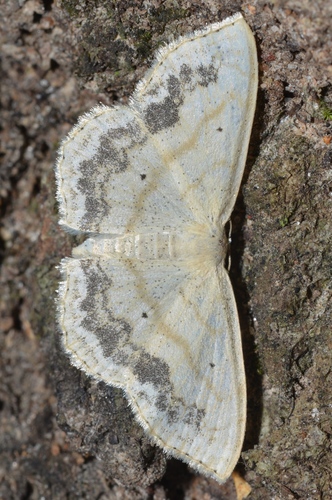
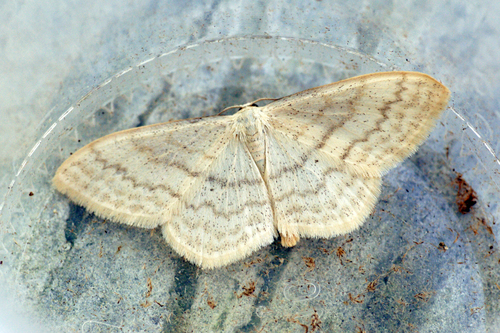
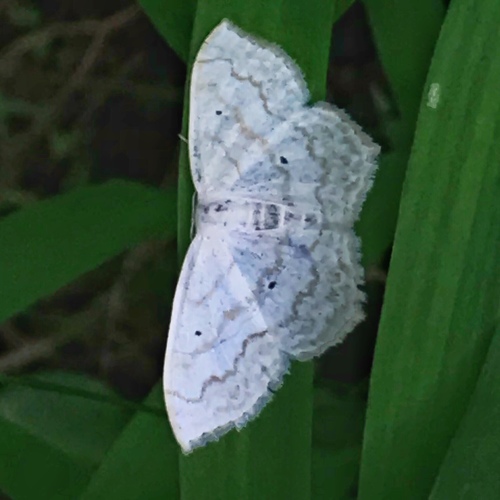
Questions people ask
Are they a problem for my garden?
Yes, the larvae can feed on several garden and orchard plants, potentially causing damage.
Source: Wikipedia
Same family (Geometridae)



Sources
- Wikipedia: https://en.wikipedia.org/wiki/Scopula_limboundata
Look it up elsewhere: GBIF · iNaturalist · BugGuide · ITIS · Wikipedia
Text written 2026-10-22 from the sources above and checked sentence by sentence against them. Data fetched 2026-10-22.