 Bug FAQ
Riband Wave
Idaea aversata · Order: Lepidoptera · Family: Geometridae
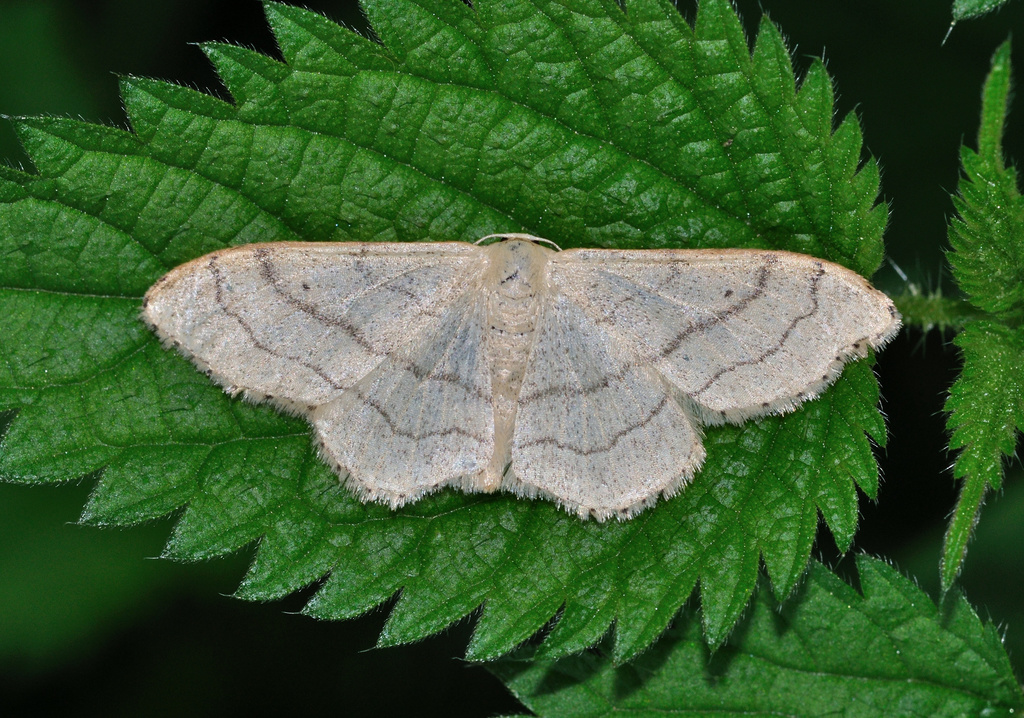
Riband Wave (Idaea aversata) is a small moth with a wingspan of about 30 to 35 mm and pale yellow-to-ochre wings marked by dark brown bands. It is common across Europe, the Near East, North Africa and much of the Palearctic, flying at night from June to August, and its larvae feed on various low plants such as bedstraw and dandelion.
Source: Wikipedia
How to recognize it
The wings are a buff or cream colour with distinct dark brown bands. Ground colour ranges from whitish-yellow to ochre, sometimes showing a red-orange tint, with clearly visible dark pattern elements.
Source: Wikipedia
Size
Wingspan measures 30 to 35 mm.
Source: Wikipedia
Where it lives
The species overwinters as a small larva.
Source: Wikipedia
What it eats
Larvae eat a variety of low plants, including bedstraw, chickweed, dandelion and knotgrass.
Source: Wikipedia
Life cycle
Overwinters as a small larva and adults are active at night from June to August, sometimes later.
Source: Wikipedia
When you see it
In the British Isles the moth flies at night from June to August, but timing may differ elsewhere.
Source: Wikipedia
Where it comes from
It is abundant throughout Europe, the Near East, North Africa and across the Palearctic to Japan.
Source: Wikipedia
More photos


Same family (Geometridae)
 Willow BeautyPeribatodes rhomboidaria
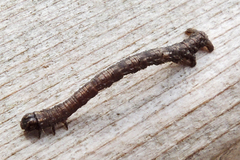 Pale BeautyCampaea perlataDamages trees, gardens or crops
 Large Lace-border MothScopula limboundataDamages trees, gardens or crops
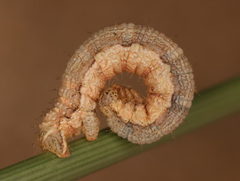 Yellow Shell MothCamptogramma bilineata
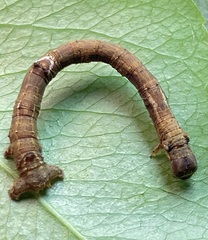 Large Maple Spanworm MothProchoerodes lineolaDamages trees, gardens or crops
 Common Carpet MothEpirrhoe alternata
Sources
- Wikipedia: https://en.wikipedia.org/wiki/Riband_wave
Look it up elsewhere: GBIF · iNaturalist · BugGuide · Wikipedia
Text written 2026-10-22 from the sources above and checked sentence by sentence against them. Data fetched 2026-10-22.