 Bug FAQ
Clouded Yellow
Colias crocea · Order: Lepidoptera · Family: Pieridae
Also called: Clouded Yellow Butterfly
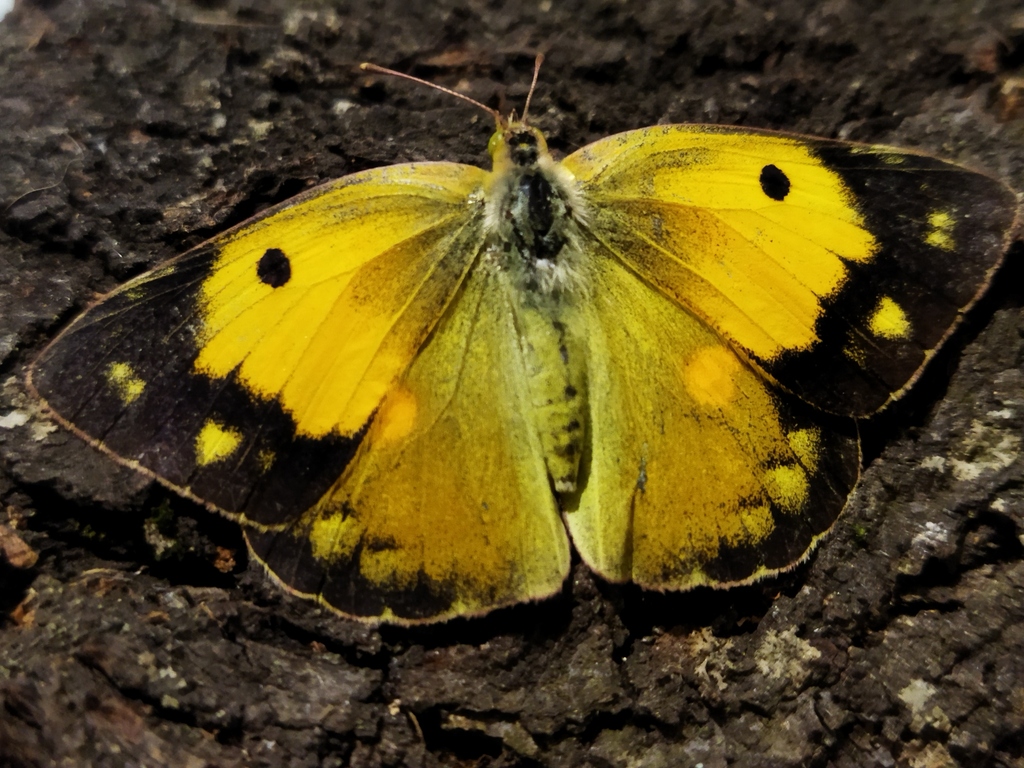
The clouded yellow has a wingspan of about 45 to 54 mm and bright orange-yellow upper wings with a broad black border and a single black spot on each forewing. It lives in open countryside such as downland, cliffs and fields up to 1,600 m, breeds from North Africa through southern Europe to the Middle East, and may appear as a summer migrant across Europe. Adults fly from March to October, sometimes producing up to three generations with some individuals still on the wing in early November.
Source: Wikipedia
How to recognize it
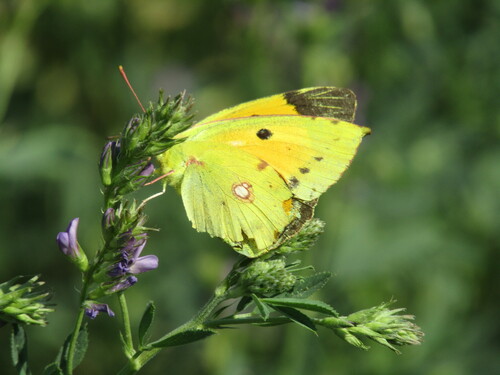
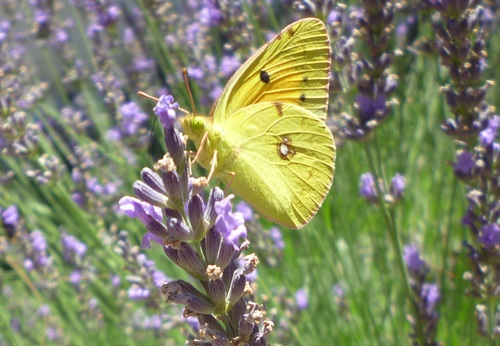
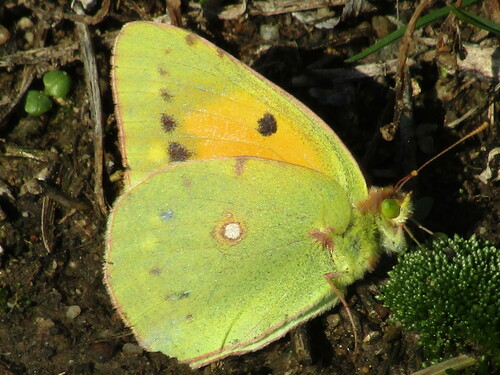
Upper side bright orange-yellow with a wide black edge on all wings and a single black spot near the middle of the forewing. Underside lacks the black border, appears lighter with a greenish hue especially on the forewings.
Source: Wikipedia
Size
Wingspan measures about 45 to 54 mm (1.8 to 2.1 in).
Source: Wikipedia
Where it lives
They live in open countryside spots such as downland, coastal cliffs and fields with host plants, up to 1,600 m elevation.
Source: Wikipedia
What it eats
Caterpillars feed on many legume species including various clovers, alfalfa and vetches. Adults mainly sip nectar from thistles, knapweeds, dandelion, fleabane, marjoram, ragwort and vetches.
Source: Wikipedia
Life cycle
Adults are on the wing from March through October. In good years up to three generations may develop, with some adults still flying in early November.
Source: Wikipedia
When you see it
Flight period extends from March to October.
Source: Wikipedia
Where it comes from
Their breeding range covers North Africa, southern Europe and extends east through Turkey into the Middle East, and they appear as summer migrants across much of Europe.
Source: Wikipedia
Lookalikes
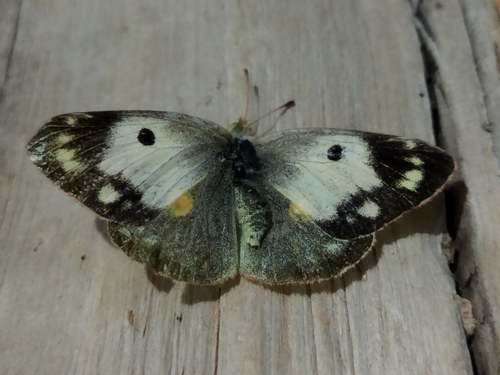
It can be confused with several other Colias species such as C. myrmidone, C. chrysotheme, C. erate, C. hyale and C. alfacariensis. Pale forms may also be mistaken for Berger’s clouded yellow and the rarer pale clouded yellow.
Source: Wikipedia
Where it is found in the US
Recorded in 2 of 51 states and DC. Most records: New Jersey, Utah.
Darker = more records. Counts are museum and citizen-science records, not population size.
Source: GBIF
More photos
Questions people ask
When are clouded yellows active?
They fly from March until October, sometimes into early November in strong years.
Source: Wikipedia
How many generations can they produce each year?
In favorable conditions up to three generations may be produced, with the last adults appearing in early November.
Source: Wikipedia
What do the caterpillars eat?
The larvae feed on a range of leguminous plants such as clovers, alfalfa and vetches.
Source: Wikipedia
What flowers do the adults visit?
Adults mainly take nectar from thistles, knapweeds, dandelion, fleabane, marjoram, ragwort and vetches.
Source: Wikipedia
Same family (Pieridae)



Sources
- Wikipedia: https://en.wikipedia.org/wiki/Colias_croceus
Look it up elsewhere: GBIF · iNaturalist · BugGuide · Wikipedia
Text written 2026-10-24 from the sources above and checked sentence by sentence against them. Data fetched 2026-10-22.