 Bug FAQ
Common Carder Bumble Bee
Bombus pascuorum · Order: Hymenoptera · Family: Apidae
Also called: Common Carder Bee, Common Carder Bumblebee
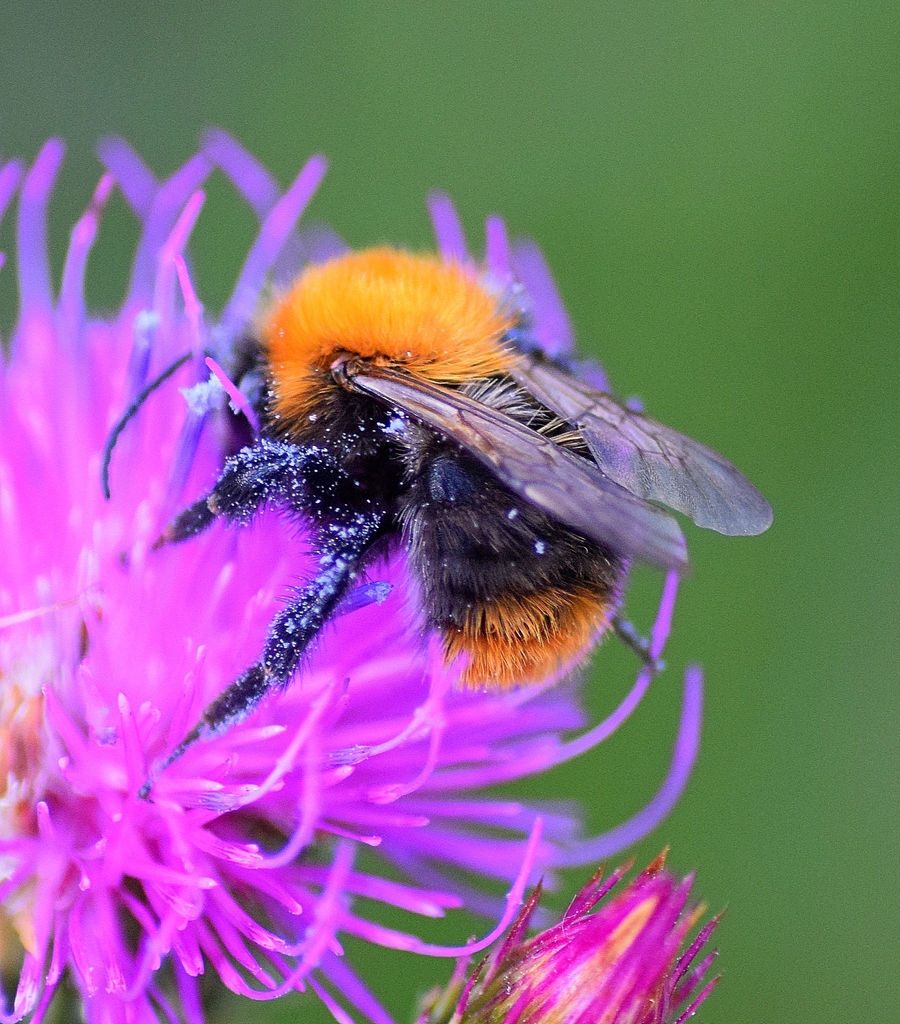
The common carder bumble bee lives across most of Europe in many open habitats and builds nests in old mouse or bird nests, barns or sheds. Queens are 15 to 18 mm long and appear in early spring; workers are smaller, 24 to 27 mm wing-to-wing, and are active through mid-October. It can be told apart by a yellowish or reddish-brown thorax and gray hair on the first four abdominal segments, with yellowish/red-brown hair on the last two.
Source: Wikipedia
How to recognize it
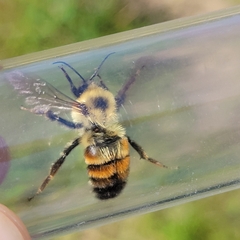
The thorax is yellowish or reddish-brown. The first four abdominal segments have gray hair; the fifth and sixth have yellowish or reddish-brown hair.
Source: Wikipedia
Size
Queens measure 15 to 18 mm in body length. Workers span 24 to 27 mm from wing tip to wing tip.
Source: Wikipedia
Where it lives
Found in meadows, pastures, waste ground, ditches, roadsides, field margins, gardens, parks, forests and forest edges. Nests are made in old mouse nests, bird nests, barns or sheds, above or below ground.
Source: Wikipedia
What it eats
Feeds on many wild flowers such as nettles, motherwort, Himalayan balsam, cabbage thistle, knapweed, clovers, monkshood and fruit trees.
Source: Wikipedia
Life cycle
Queens emerge early April to mid-May; workers appear late April/early May and are active to mid-October. Workers are about half the queen’s length and have non-functioning ovaries.
Source: Wikipedia
When you see it
Young queens and drones can be seen from mid-August to late October.
Source: Wikipedia
Where it comes from
Present in most of Europe.
Source: Wikipedia
Lookalikes
Looks similar to Bombus muscorum and is replacing it in northern Britain.
Source: Wikipedia
Where it is found in the US
Recorded in 5 of 51 states and DC. Most records: Alaska, Illinois, Ohio, Minnesota, North Carolina.
Darker = more records. Counts are museum and citizen-science records, not population size.
Source: GBIF
Months it is reported in the US
Source: GBIF
Questions people ask
When can I see them?
Queens appear from early April to mid-May, workers from late April to mid-October, and young queens and drones from mid-August to late October.
Source: Wikipedia
How can I tell them apart from similar bees?
Look for a yellowish or reddish-brown thorax and gray hair on the first four abdominal segments, with yellowish/red-brown hair on the last two segments.
Source: Wikipedia
Same family (Apidae)


Sources
- Wikipedia: https://en.wikipedia.org/wiki/Bombus_pascuorum
Look it up elsewhere: GBIF · iNaturalist · BugGuide · ITIS · Wikipedia
Text written 2026-10-22 from the sources above and checked sentence by sentence against them. Data fetched 2026-10-22.