 Bug FAQ
Common Gull
Cepora nerissa · Order: Lepidoptera · Family: Pieridae

It lives in the Himalayas, Nepal, Bhutan, parts of India and Sri Lanka, feeding on Capparis plants.
Source: Wikipedia
How to recognize it
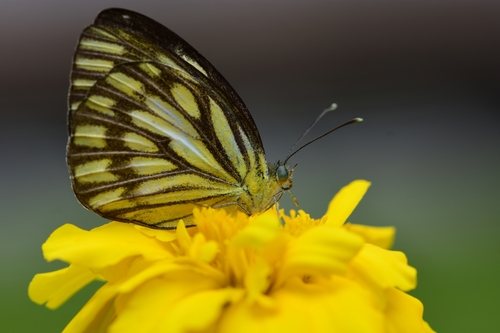
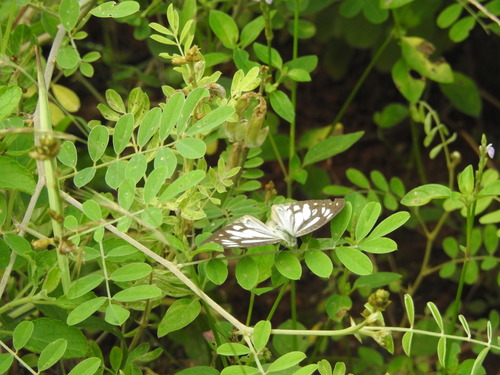
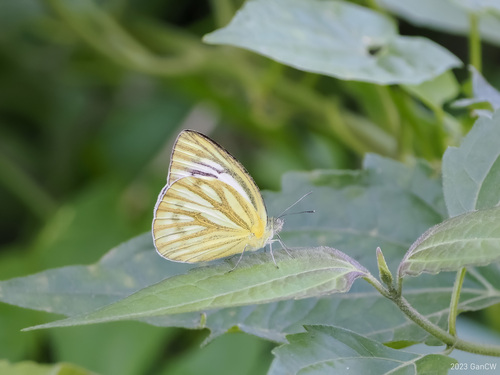
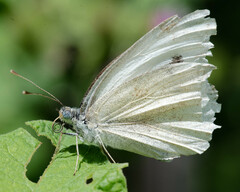
Males have white upper wings with a grey-blue tint near the base and along the veins, visible because dark markings show through from below. The underside of the forewing is white with broad dark margins along the veins.
Source: Wikipedia
Size
It is a small to medium-sized butterfly.
Source: Wikipedia
Where it lives
It inhabits the north-western Himalayas up to about 1,200 m and is also found in Nepal, Sikkim, Bhutan, central, western and southern India, and Sri Lanka.
Source: Wikipedia
What it eats
The species feeds on plants of the genus Capparis.
Source: Wikipedia
Life cycle
It has a wet-season brood. It also produces a dry-season brood.
Source: Wikipedia
Lookalikes
It is itself a small to medium Pieridae butterfly, matching its own description.
Source: Wikipedia
More photos
Questions people ask
What does the common gull look like?
Males have white upper wings with a grey-blue tint near the base and dark veins that show through, and the underside of the forewing is white with dark margins along the veins.
Source: Wikipedia
Where can I find the common gull?
It lives in the Himalayas up to 1,200 m and in Nepal, Bhutan, parts of India and Sri Lanka.
Source: Wikipedia
Does the common gull have different seasonal forms?
Yes, it produces a wet-season brood and a dry-season brood.
Source: Wikipedia
Same family (Pieridae)


Sources
- Wikipedia: https://en.wikipedia.org/wiki/Cepora_nerissa
Look it up elsewhere: GBIF · iNaturalist · BugGuide · Wikipedia
Text written 2026-10-24 from the sources above and checked sentence by sentence against them. Data fetched 2026-10-22.