 Bug FAQ
Desert Ironclad Beetle
Asbolus verrucosus · Order: Coleoptera · Family: Tenebrionidae
Also called: Blue Death Feigning Beetle
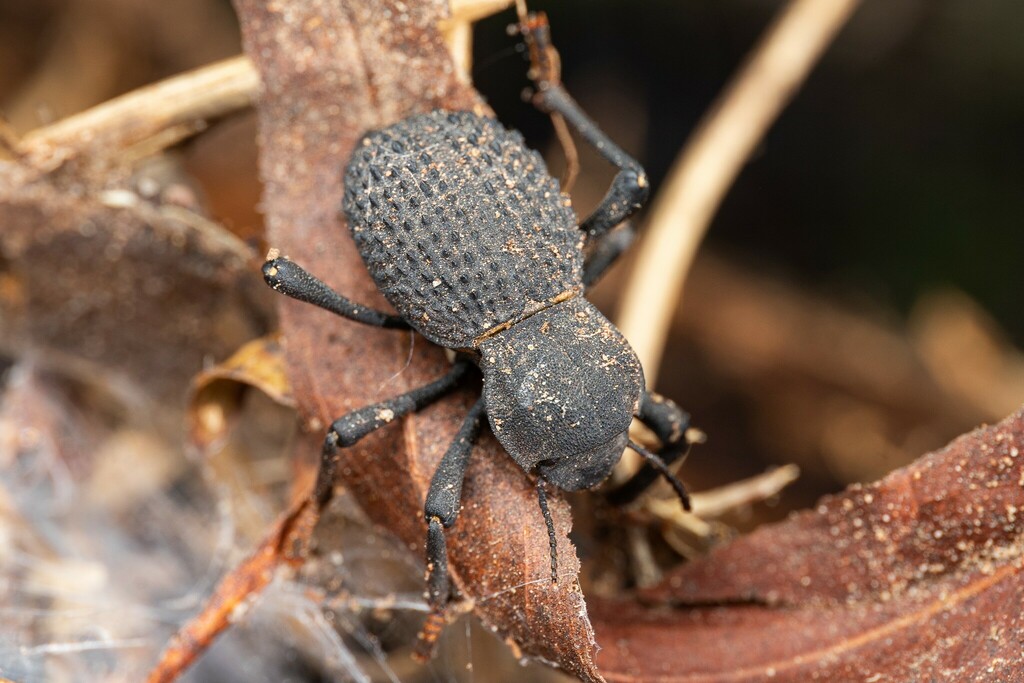
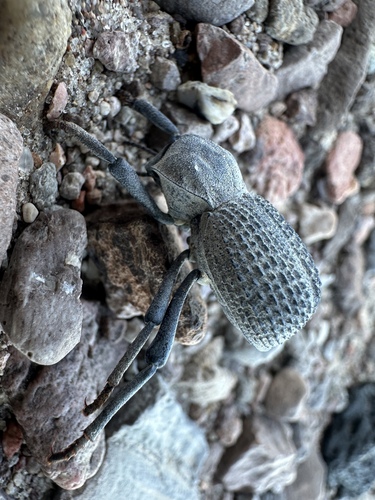
The desert ironclad beetle is about 18 to 21 mm long and has a powdery blue wax that keeps it from drying out. It lives in dry, sandy deserts such as the Sonoran and Mojave and is most active at dawn and dusk. Breeding this beetle in captivity is hard; the first adult was only reared after four years of effort.
Source: Wikipedia
How to recognize it
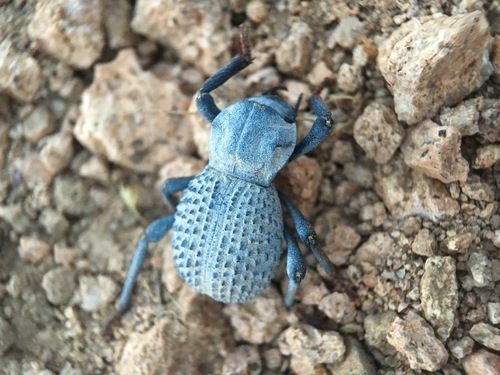
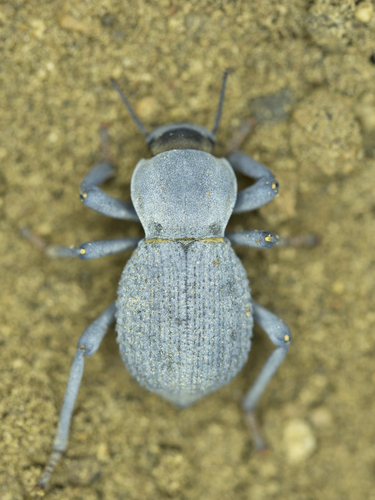
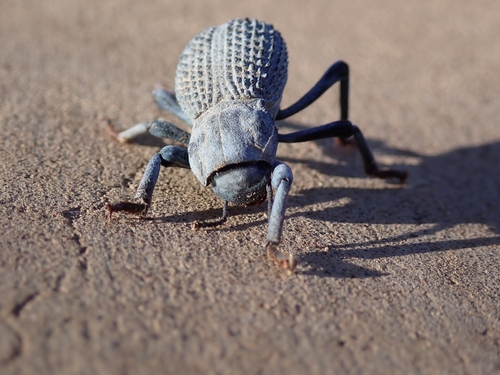
A waxy blue coating gives the beetle its color and helps retain moisture. The species name means “warty,” referring to the bumps on its wing covers.
Source: Wikipedia
Size
Adults measure roughly 18 to 21 mm in length.
Source: Wikipedia
Where it lives
It inhabits dry, sandy environments like the Sonoran and Mojave deserts.
Source: Wikipedia
Life cycle
Raising this species to adulthood in captivity is notoriously difficult. Researchers finally succeeded in producing an adult after beginning breeding in 2014.
Source: Wikipedia
When you see it
The beetle is crepuscular, being most active at sunrise and sunset.
Source: Wikipedia
Where it is found in the US
Recorded in 5 of 51 states and DC. Most records: California, Arizona, Nevada, Utah, New Mexico.
Darker = more records. Counts are museum and citizen-science records, not population size.
Source: GBIF
Status: native in North America; native in United States. Source: iNaturalist
Months it is reported in the US
Source: GBIF
More photos
Questions people ask
Why are they blue?
A wax coating on their bodies gives them a powdery blue hue and helps prevent moisture loss.
Source: Wikipedia
Is it hard to breed them in captivity?
Yes, they are notoriously difficult to rear to adulthood; the first captive adult was produced after four years of effort.
Source: Wikipedia
Same family (Tenebrionidae)


Sources
- Wikipedia: https://en.wikipedia.org/wiki/Asbolus_verrucosus
Look it up elsewhere: GBIF · iNaturalist · BugGuide · Wikipedia
Text written 2026-10-23 from the sources above and checked sentence by sentence against them. Data fetched 2026-10-23.