 Bug FAQ
Eastern Saltmarsh Mosquito
Aedes sollicitans · Order: Diptera · Family: Culicidae
Also called: Jersey mosquito, Saltmarsh Mosquito
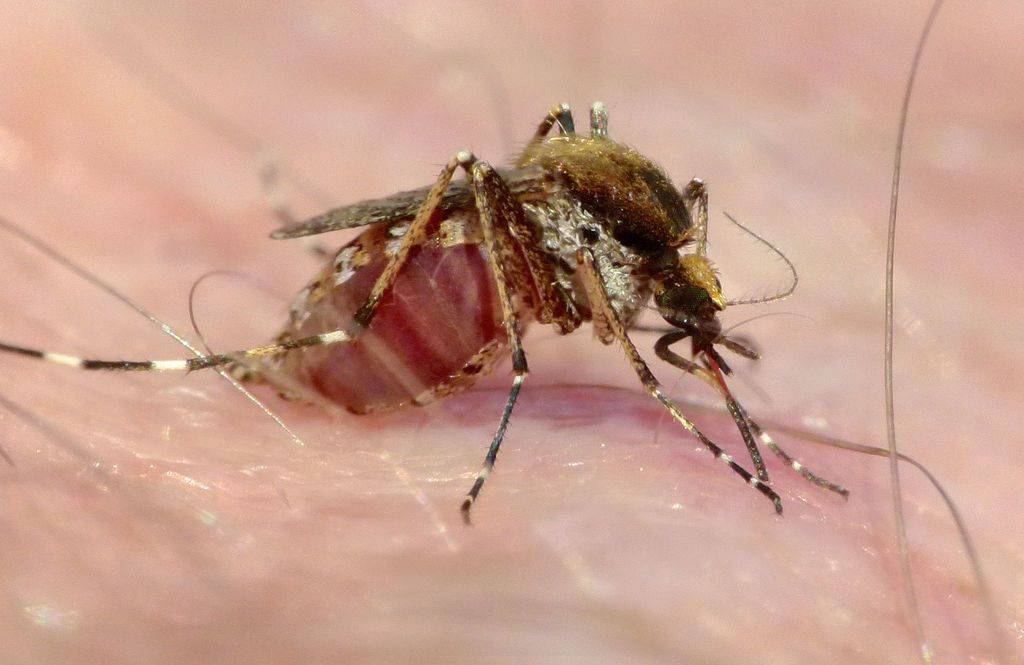
Adult Eastern Saltmarsh Mosquitoes are golden-brown and have distinctive white and yellow scale bands on the proboscis and hind legs. They live within a few miles of coastlines, sometimes inland where salty water pools exist, and can be found from the eastern US and Canada down the Gulf Coast to the Bahamas and Greater Antilles. Females need a blood meal from mammals or birds to lay eggs, feed most at twilight, and can transmit several serious diseases.
Source: Wikipedia
How to recognize it
A white scale band circles the middle of the proboscis and the front part of the hind tarsomeres, with a yellow band in the middle of those scales.
Source: Wikipedia
Size
Adults are golden brown, larger than the black Aedes taeniorhynchus.
Source: Wikipedia
Where it lives
They usually stay within about five miles of the coast, though wind can carry them farther. Occasionally they are found inland where salty pools exist, even as far west as Arizona.
Source: Wikipedia
What it eats
Females require one blood meal per egg batch, preferring mammals and secondarily birds. They are most active at dusk but will bite during the day if a host is present.
Source: Wikipedia
Life cycle
Eggs hatch 4 to 5 days after a spring tide fills the pool, under optimal conditions. In the south, adult numbers peak in spring and fall; in the north, they peak in summer, with fall eggs entering diapause until spring.
Source: Wikipedia
When you see it
Adult peaks occur in spring and fall in southern areas and in summer in northern areas.
Source: Wikipedia
Where it comes from
Native to the eastern United States and Canada, the Gulf Coast, the Bahamas and the Greater Antilles.
Source: Wikipedia
Lookalikes
It resembles Aedes taeniorhynchus but can be distinguished by adult and larval characteristics.
Source: Wikipedia
Where it is found in the US
Recorded in 31 of 51 states and DC. Most records: Florida, Iowa, Texas, Virginia, Maryland, South Carolina, Kansas, New York.
Darker = more records. Counts are museum and citizen-science records, not population size.
Source: GBIF
Status: native in North America; native in Canada. Source: iNaturalist
Months it is reported in the US
Source: GBIF
More photos

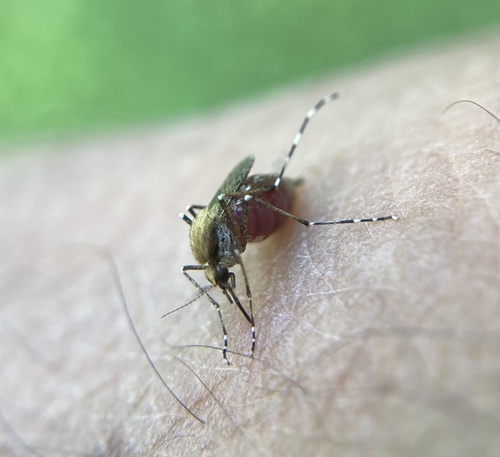
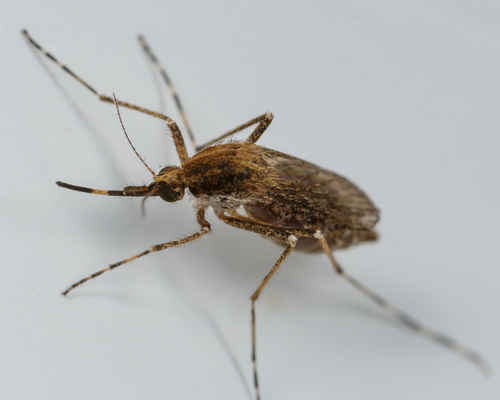
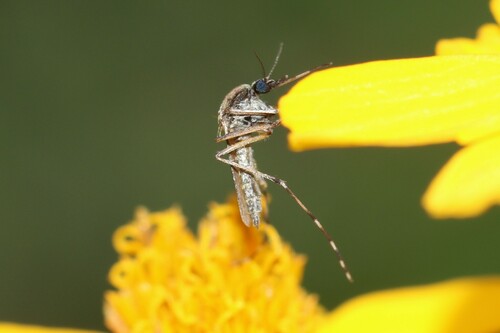
Questions people ask
Do they bite?
Yes, female Eastern Saltmarsh Mosquitoes bite mammals and birds to obtain a blood meal for egg production.
Source: Wikipedia
When are they most common?
In the southern range they are most abundant in spring and fall, while in the northern range they peak in summer.
Source: Wikipedia
Where do they live?
They stay near coastlines, usually within five miles, but can also be found inland at salty water sites, even as far west as Arizona.
Source: Wikipedia
Same family (Culicidae)
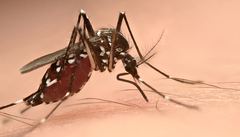 Asian Tiger MosquitoAedes albopictusCan spread germs or disease
 House Mosquito ComplexCulex pipiensCan spread germs or disease
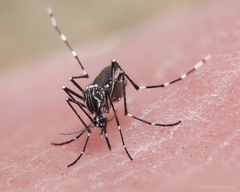 Yellow Fever MosquitoAedes aegyptiCan spread germs or disease
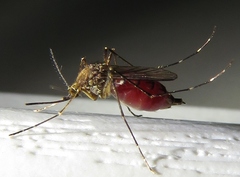 Inland Floodwater MosquitoAedes vexansCan spread germs or disease
 Asian Bush MosquitoAedes japonicusCan bite
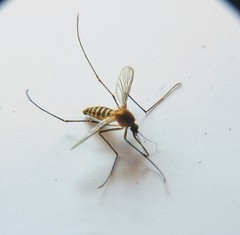 Southern House MosquitoCulex quinquefasciatusCan spread germs or disease
Sources
- Wikipedia: https://en.wikipedia.org/wiki/Aedes_sollicitans
Look it up elsewhere: GBIF · iNaturalist · BugGuide · ITIS · Wikipedia
Text written 2026-10-23 from the sources above and checked sentence by sentence against them. Data fetched 2026-10-23.