 Bug FAQ
Fall Armyworm Moth
Spodoptera frugiperda · Order: Lepidoptera · Family: Noctuidae
Also called: Fall Armyworm, autumn army worm
Source: Wikipedia
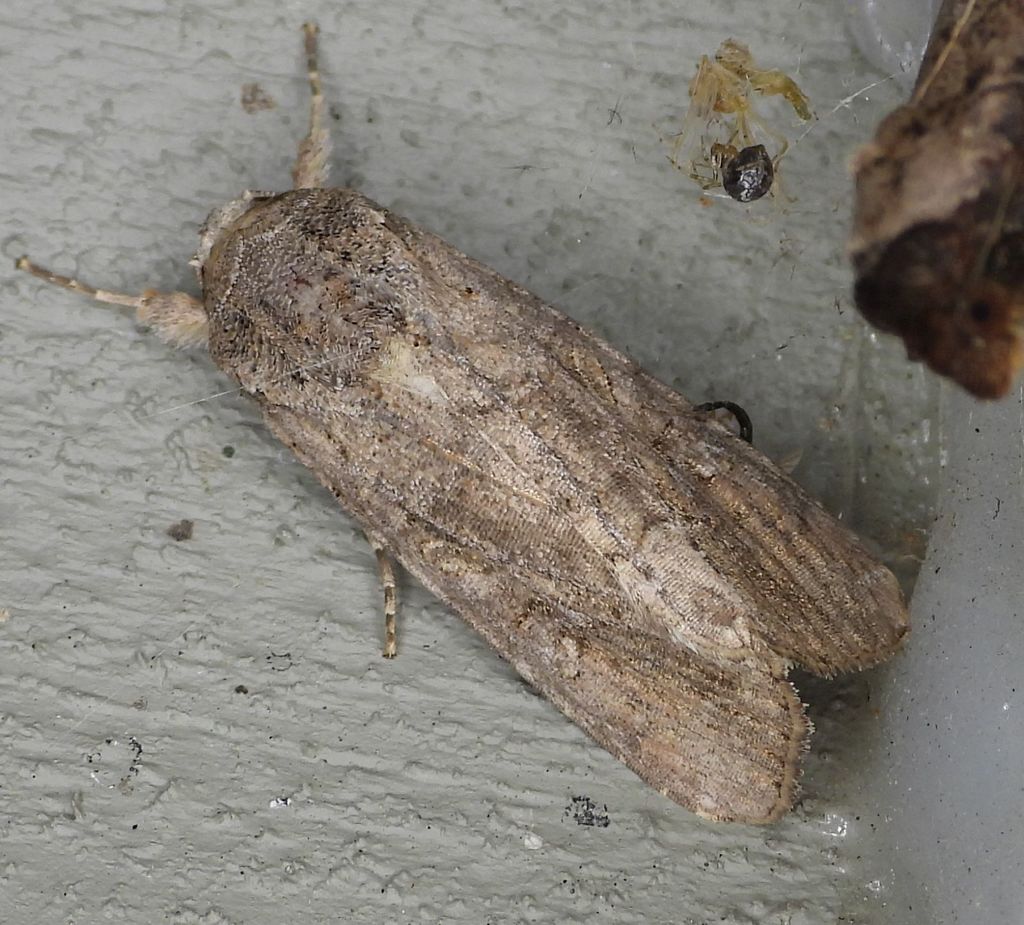
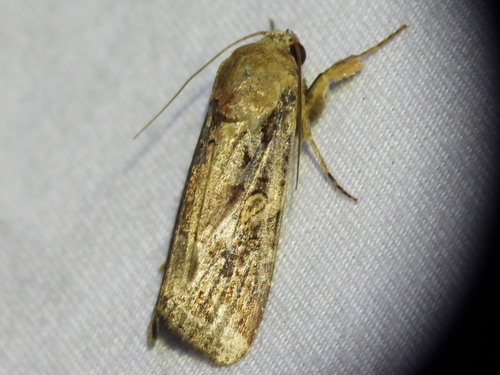
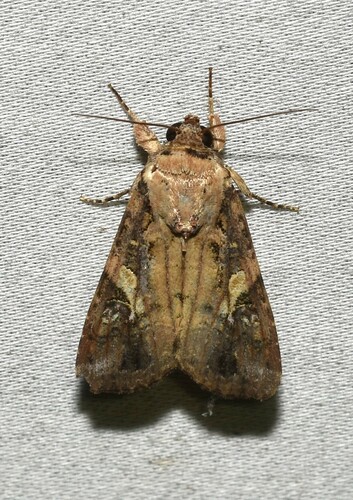
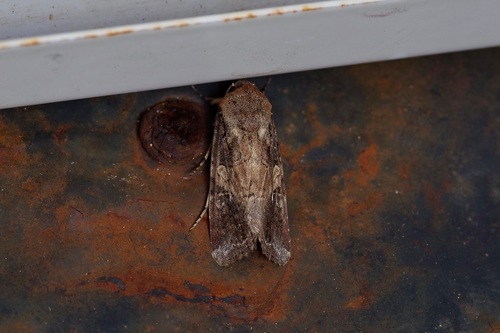
Adult fall armyworm moths have a wingspan of about 32-40 mm and show brown or gray forewings with white hindwings; males have extra patterning and a white spot on each forewing. They survive winter only in warm southern US states like Texas and Florida, but later spread northward to the eastern US and southern Canada where they find suitable food. The larvae are notorious pests that can destroy many crops, leading to significant economic damage, and control methods include a specific virus (SfNPV) and the parasitoid wasp Habrobracon hebetor.
Source: Wikipedia
Size
The moth’s wingspan ranges from 32 to 40 mm (about 1¼ to 1½ inches).
Source: Wikipedia
How to get rid of it
Recommended controls are the SfNPV virus specific to this species and the parasitoid wasp Habrobracon hebetor.
Source: Wikipedia
Where it lives
They cannot survive freezing temperatures, so they overwinter only in Texas and Florida. In summer they move across the eastern US and into southern Canada where food is available.
Source: Wikipedia
What it eats
The species is a pest that damages a wide variety of crops, causing large economic losses.
Source: Wikipedia
Life cycle
The term “armyworm” refers to the larval stage’s large-scale invasive behavior.
Source: Wikipedia
When you see it
Fall armyworm outbreaks happen in late summer in the southern US and early fall in northern regions, unlike the true armyworm which peaks early summer.
Source: Wikipedia
Where it comes from
They are native to eastern and central North America and also occur in South America.
Source: Wikipedia
Where it is found in the US
Recorded in 42 of 51 states and DC. Most records: Texas, Illinois, Georgia, Oklahoma, Florida, Alabama, North Carolina, Kansas.
Darker = more records. Counts are museum and citizen-science records, not population size.
Source: GBIF
Months it is reported in the US
Source: GBIF
More photos
Questions people ask
How can I get rid of fall armyworms in my garden?
Use the specific SfNPV virus or release Habrobracon hebetor wasps as biological controls.
Source: Wikipedia
Same family (Noctuidae)
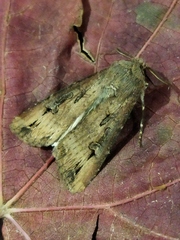 Ipsilon Dart MothAgrotis ipsilonDamages trees, gardens or crops
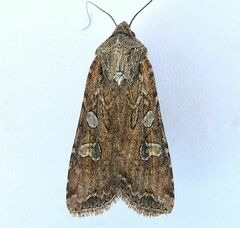 Army Cutworm MothEuxoa auxiliarisDamages trees, gardens or crops
 Large Yellow UnderwingNoctua pronubaDamages trees, gardens or crops
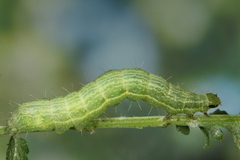 Silver ΥAutographa gamma
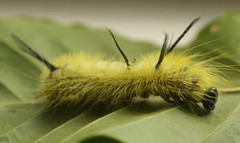 American DaggerAcronicta americanaCan irritate skin
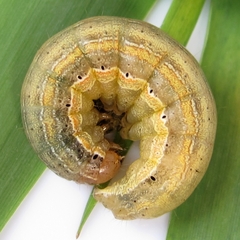 Armyworm MothPseudaletia unipunctaDamages trees, gardens or crops
Sources
- Wikipedia: https://en.wikipedia.org/wiki/Fall_armyworm
Look it up elsewhere: GBIF · iNaturalist · BugGuide · ITIS · Wikipedia
Text written 2026-10-22 from the sources above and checked sentence by sentence against them. Data fetched 2026-10-22.