 Bug FAQ
Silver Υ
Autographa gamma · Order: Lepidoptera · Family: Noctuidae
Also called: Silver Y
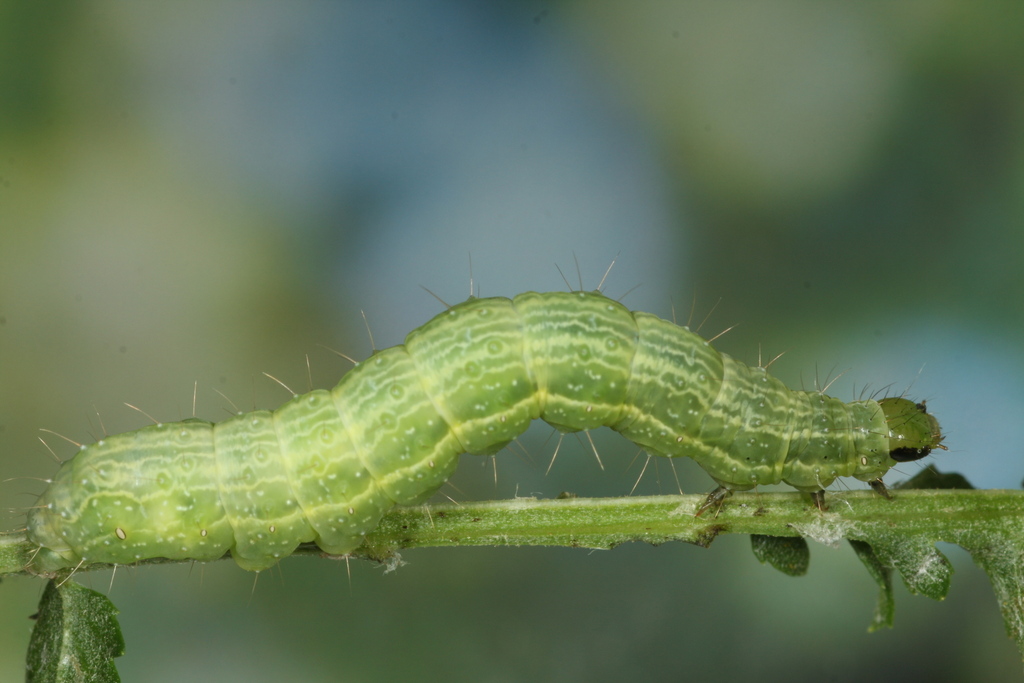
Each forewing bears a distinctive silver mark shaped like a lower-case y or Greek gamma and the wings show brown-grey camouflage patterns. It is widespread across Europe, the Palearctic and North Africa, flies from late spring to autumn with two or three generations per year, sometimes a fourth when conditions are good.
Source: Wikipedia
How to recognize it
A silver-coloured mark in the centre of each forewing looks like a lower-case y or Greek gamma. The rest of the wing is patterned with shades of brown and grey for camouflage.
Source: Wikipedia
Size
Wingspan ranges from about 30 to 45 mm, making it a medium-sized moth.
Source: Wikipedia
Where it lives
Found widely across Europe, the Palearctic region and North Africa.
Source: Wikipedia
Life cycle
The species can have two or three generations per year, with a possible fourth when conditions are especially favourable. Adults are on the wing from late spring through autumn.
Source: Wikipedia
When you see it
Adults are abundant from May onward, decreasing in late autumn as frosts kill them. A second wave of migrants arrives during the summer.
Source: Wikipedia
Where it comes from
Its native range covers most of the Palearctic.
Source: Wikipedia
Lookalikes
Various forms exist with different colours depending on larval climate, and some regional forms are smaller with more distinct forewing markings.
Source: Wikipedia
Where it is found in the US
Recorded in 2 of 51 states and DC. Most records: Pennsylvania, New York.
Darker = more records. Counts are museum and citizen-science records, not population size.
Source: GBIF
Status: native in North America; native in Canada. Source: iNaturalist
More photos


Same family (Noctuidae)
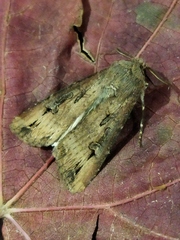 Ipsilon Dart MothAgrotis ipsilonDamages trees, gardens or crops
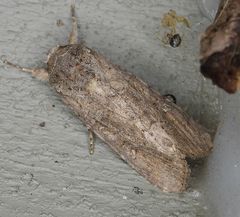 Fall Armyworm MothSpodoptera frugiperdaDamages trees, gardens or crops
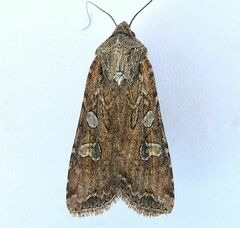 Army Cutworm MothEuxoa auxiliarisDamages trees, gardens or crops
 Large Yellow UnderwingNoctua pronubaDamages trees, gardens or crops
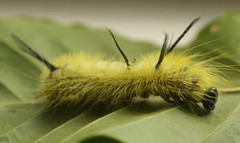 American DaggerAcronicta americanaCan irritate skin
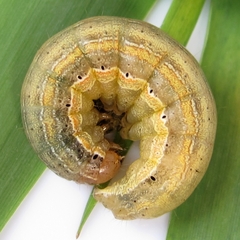 Armyworm MothPseudaletia unipunctaDamages trees, gardens or crops
Sources
- Wikipedia: https://en.wikipedia.org/wiki/Silver_Y
Look it up elsewhere: GBIF · iNaturalist · BugGuide · ITIS · Wikipedia
Text written 2026-10-22 from the sources above and checked sentence by sentence against them. Data fetched 2026-10-22.