 Bug FAQ
False Milkweed Bug
Lygaeus turcicus · Order: Hemiptera · Family: Lygaeidae

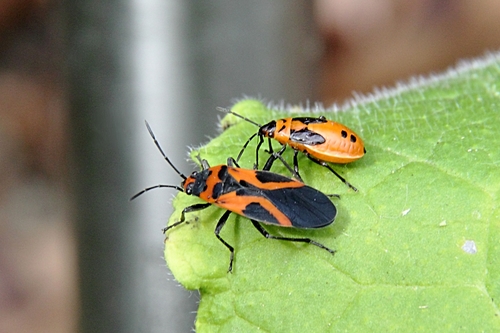
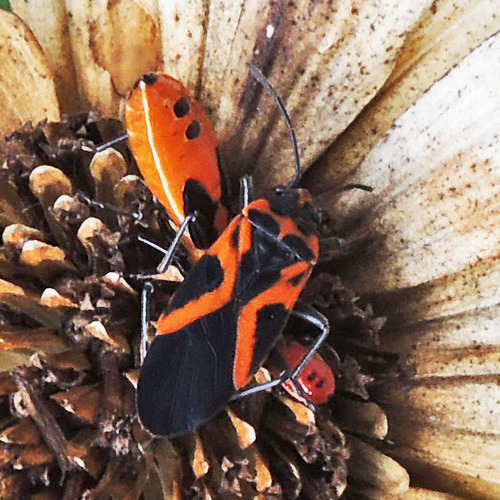
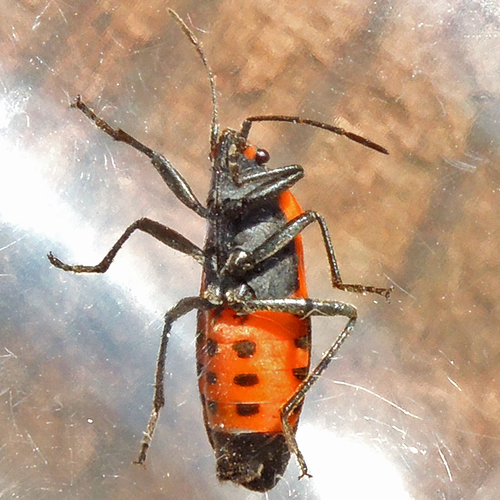
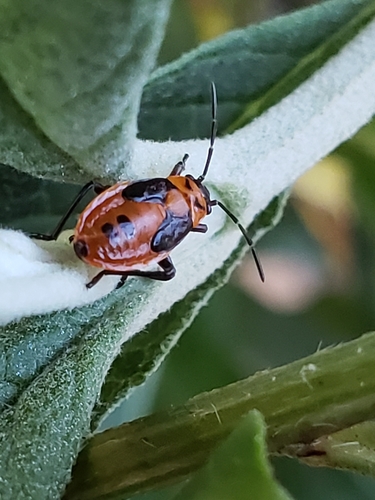
The false milkweed bug lives throughout the eastern United States and Canada. It mainly eats the seeds of false sunflower, Heliopsis helianthoides. It is often mistaken for other black and red or orange bugs such as Oncopeltus fasciatus, Lygaeus kalmii, and Lygaeus reclivatus.
Source: Wikipedia
Where it lives
Found widely across the eastern United States and Canada.
Source: Wikipedia
Where it comes from
Its native range covers the eastern United States and Canada.
Source: Wikipedia
Lookalikes
Often confused with Oncopeltus fasciatus, Lygaeus kalmii, and Lygaeus reclivatus.
Source: Wikipedia
Where it is found in the US
Recorded in 40 of 51 states and DC. Most records: Pennsylvania, New York, Massachusetts, Ohio, Illinois, Virginia, Maryland, Indiana.
Darker = more records. Counts are museum and citizen-science records, not population size.
Source: GBIF
Status: native in North America; native in United States; native in Canada. Source: iNaturalist
Months it is reported in the US
Source: GBIF
More photos
Questions people ask
What does the false milkweed bug eat?
It mainly eats the seeds of false sunflower, Heliopsis helianthoides.
Source: Wikipedia
What insects look like the false milkweed bug?
It can be mistaken for Oncopeltus fasciatus, Lygaeus kalmii, and Lygaeus reclivatus.
Source: Wikipedia
Same family (Lygaeidae)
 Large Milkweed BugOncopeltus fasciatus
 Small Milkweed BugLygaeus kalmii
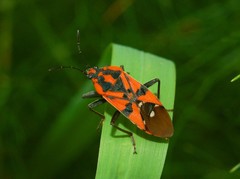 Indian Milkweed BugSpilostethus pandurusDamages trees, gardens or crops
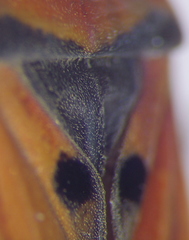 Black-and-Red BugLygaeus equestris
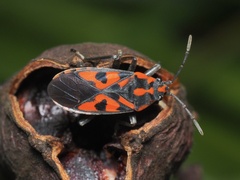 Harlequin bugSpilostethus saxatilisDamages trees, gardens or crops
 Darth Maul BugSpilostethus hospesDamages trees, gardens or crops
Sources
- Wikipedia: https://en.wikipedia.org/wiki/Lygaeus_turcicus
Look it up elsewhere: GBIF · iNaturalist · BugGuide · ITIS · Wikipedia
Text written 2026-10-22 from the sources above and checked sentence by sentence against them. Data fetched 2026-10-22.