 Bug FAQ
Harlequin bug
Spilostethus saxatilis · Order: Hemiptera · Family: Lygaeidae
Source: Wikipedia
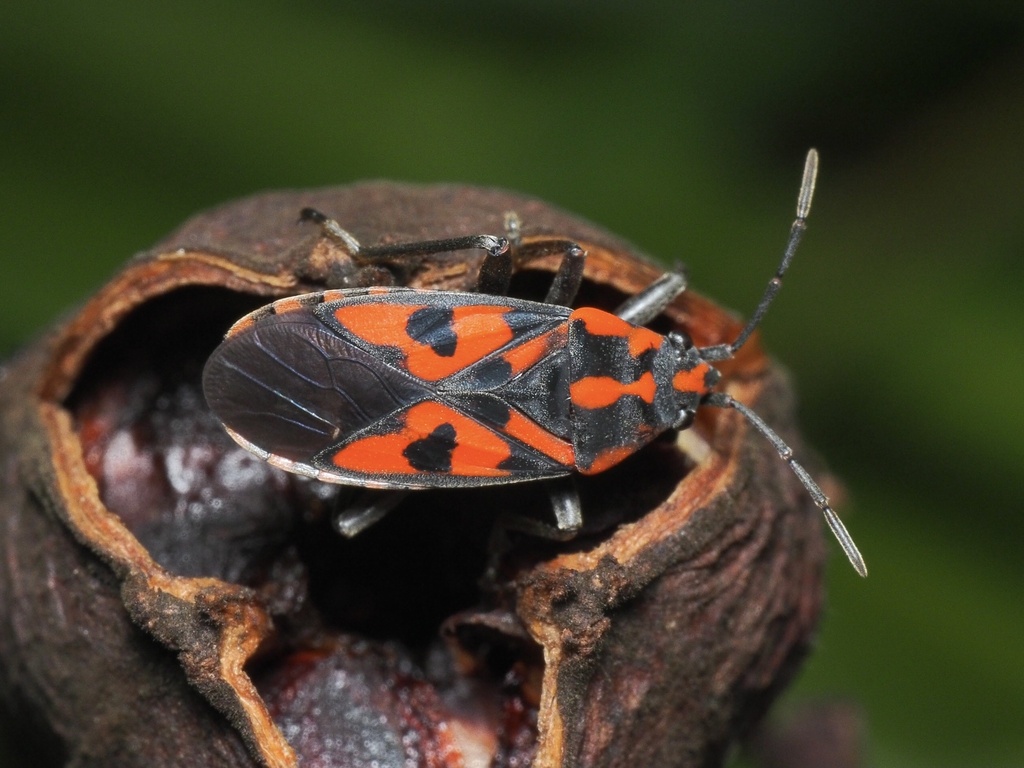
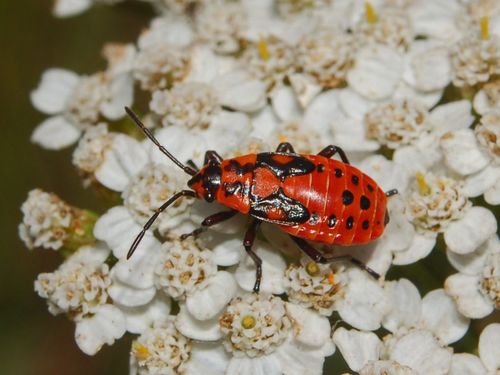
Spilostethus saxatilis is a small true bug about 8.5 to 12.5 mm long with a red pronotum marked by two broad black stripes. It lives in warm, dry open places, meadows, fields and even on rocks across most of Europe and into western Asia. The species has one generation per year; mating occurs in May-June, new adults appear in August, and adults overwinter.
Source: Wikipedia
How to recognize it
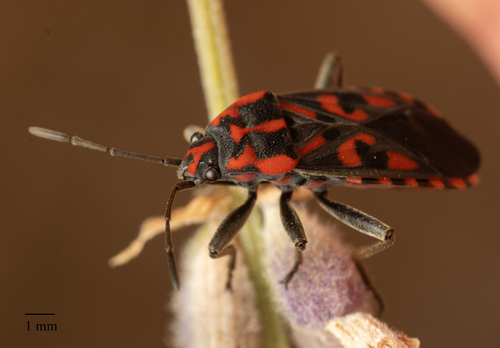
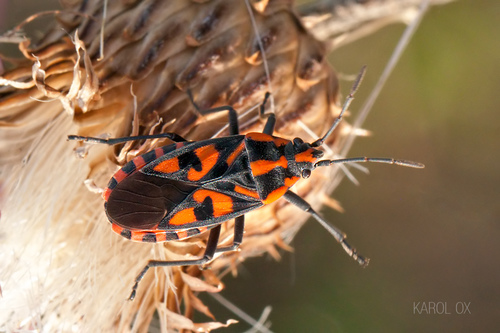
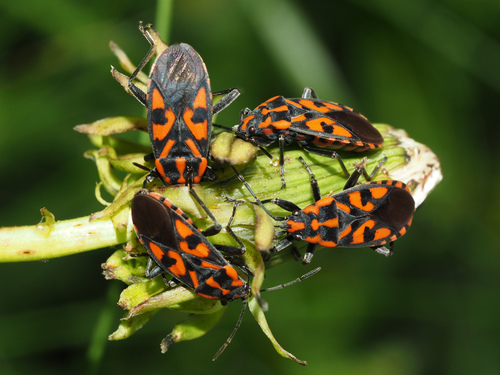
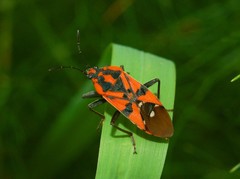
Its body shows black and red patterns, with a red pronotum crossed by two irregular black longitudinal stripes.
Source: Wikipedia
Size
Adults measure between 8.5 and 12.5 mm (about a third to a half inch) in length.
Source: Wikipedia
Where it lives
It prefers warm, dry open habitats such as meadows, fields and rocky areas.
Source: Wikipedia
What it eats
A polyphagous feeder that sucks seeds and juices from many plants, especially ferns (Aspleniaceae), daisies (Asteraceae) and carrots/parsley family (Apiaceae).
Source: Wikipedia
Life cycle
It produces one generation per year (univoltine). Mating occurs in May and June; new adults emerge in August and the adults survive through the winter.
Source: Wikipedia
Where it comes from
Found throughout most of Europe, from Portugal and Spain to Russia and Turkey, and extends east to Iran in the Euro-Mediterranean-Turanian region.
Source: Wikipedia
More photos
Questions people ask
Does Spilostethus saxatilis damage crops or garden plants?
Yes, it feeds on the seeds and juices of many herbaceous plants, including members of the daisy and carrot families, which can harm garden and field crops.
Source: Wikipedia
Same family (Lygaeidae)



Sources
- Wikipedia: https://en.wikipedia.org/wiki/Spilostethus_saxatilis
Look it up elsewhere: GBIF · iNaturalist · BugGuide · Wikipedia
Text written 2026-10-22 from the sources above and checked sentence by sentence against them. Data fetched 2026-10-22.