 Bug FAQ
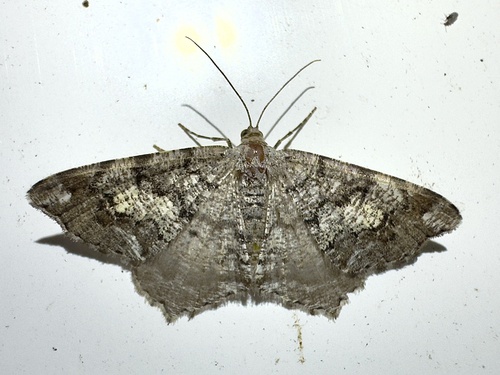
Granite Angle
Macaria granitata · Order: Lepidoptera · Family: Geometridae
Also called: Granite Angle Moth, Granite Moth
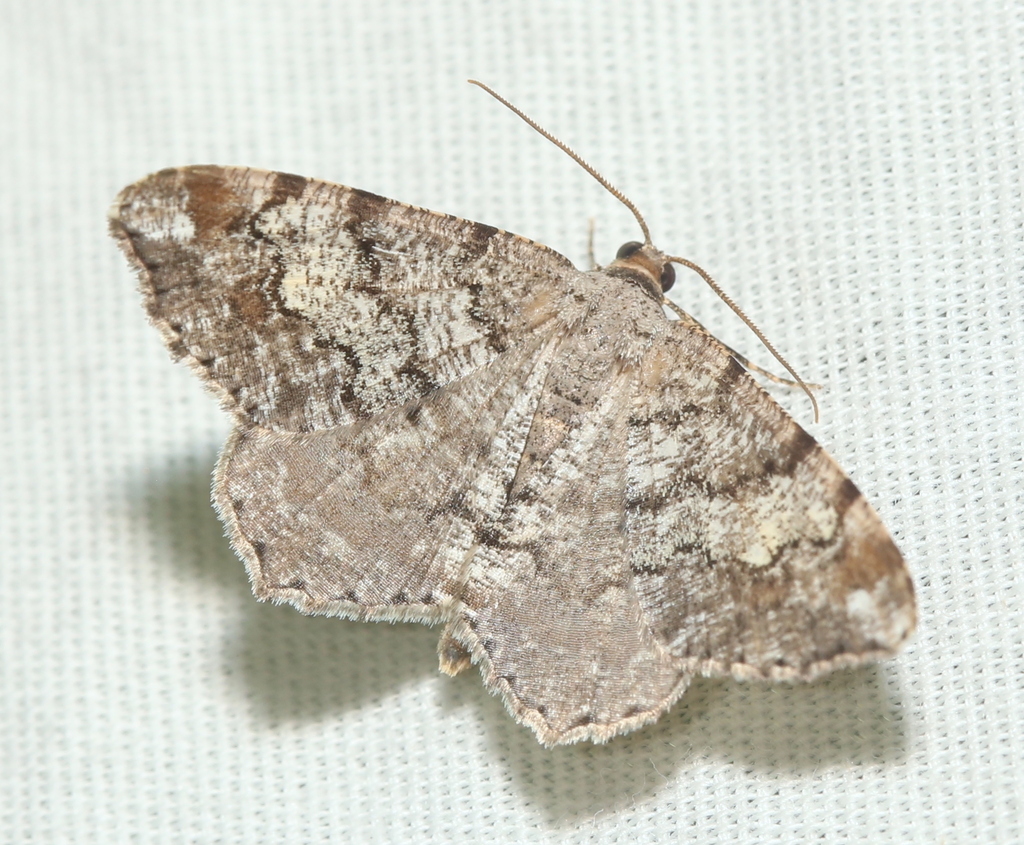
The granite angle moth has a wingspan of about 25 mm and belongs to the Geometridae family. It lives in parts of the northeastern United States and southern Canada, including Pennsylvania, Maine, New Hampshire, New Jersey, Ohio, the Carolinas and Georgia. Its caterpillars feed mainly on hard pines such as Pinus rigida.
Source: Wikipedia
How to recognize it
Macaria granitata, known as the granite moth, is a member of the Geometridae family.
Source: Wikipedia
Size
The adult’s wingspan measures roughly 25 mm.
Source: Wikipedia
What it eats
The larvae mainly eat the hard pine Pinus rigida, and have also been recorded on other hard pines in southern New Jersey.
Source: Wikipedia
Life cycle
There are one to two generations each year.
Source: Wikipedia
Where it comes from
Its range includes several eastern U.S. states and parts of southern Quebec in Canada.
Source: Wikipedia
Where it is found in the US
Recorded in 27 of 51 states and DC. Most records: Maryland, Massachusetts, North Carolina, Alabama, New Jersey, Tennessee, Virginia, Pennsylvania.
Darker = more records. Counts are museum and citizen-science records, not population size.
Source: GBIF
Status: native in North America; native in Canada. Source: iNaturalist
Months it is reported in the US
Source: GBIF
More photos
Questions people ask
How many generations does the granite angle moth have per year?
It produces one to two generations annually.
Source: Wikipedia
What do granite angle moth caterpillars eat?
They feed mainly on the hard pine Pinus rigida and sometimes on other hard pines.
Source: Wikipedia
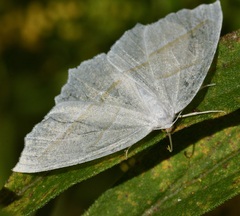
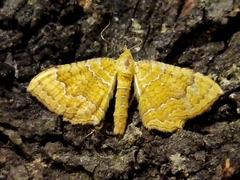
Same family (Geometridae)




Sources
- Wikipedia: https://en.wikipedia.org/wiki/Macaria_granitata
Look it up elsewhere: GBIF · iNaturalist · BugGuide · ITIS · Wikipedia
Text written 2026-10-24 from the sources above and checked sentence by sentence against them. Data fetched 2026-10-24.