 Bug FAQ
Heather crab spider
Thomisus onustus · Order: Araneae · Family: Thomisidae
Also called: Flower Spider, Pink Crab Spider
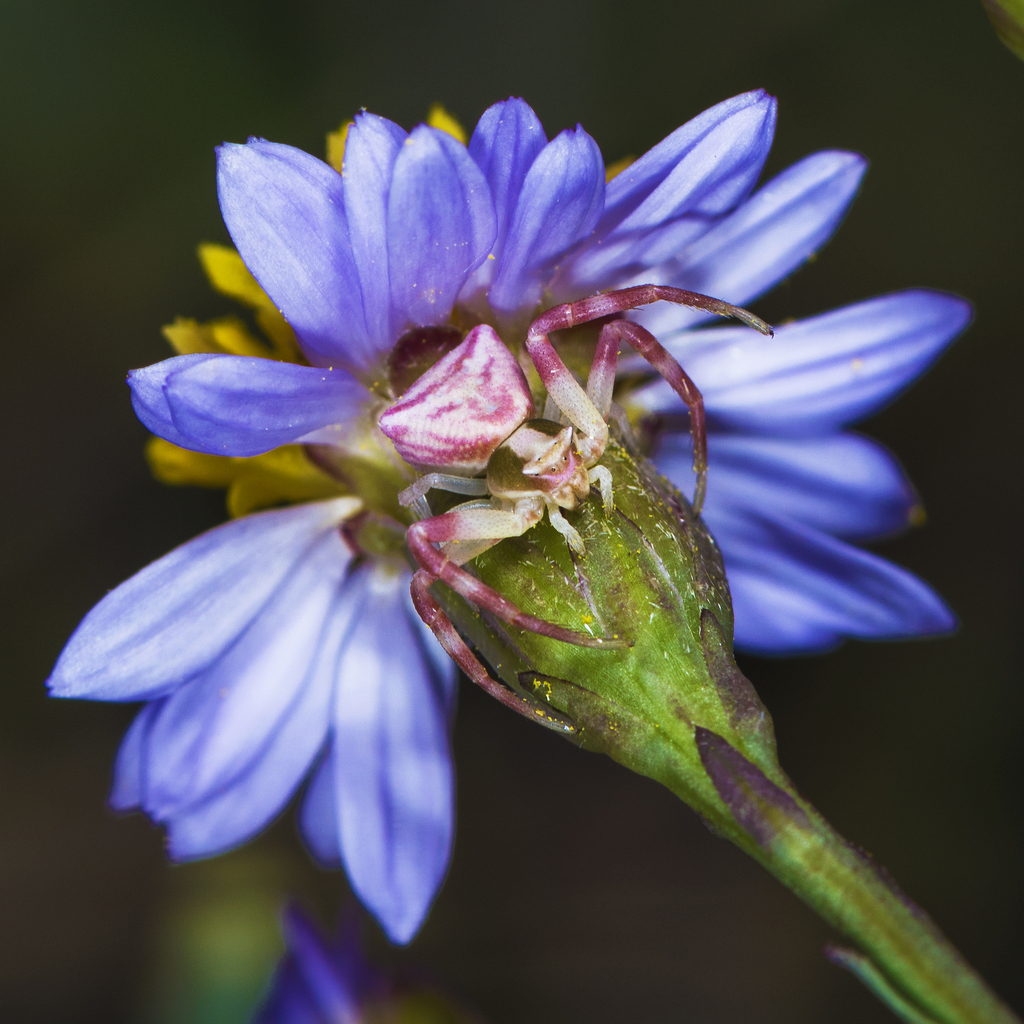
Females are larger, heavy-bodied, and often sit on flowers, while males are smaller, slender and move around more. They live on shrubs and low vegetation, especially on flowering plants in warm areas. They wait in flower corollas to catch insects such as bees, butterflies, hoverflies and other small bugs; males usually take smaller prey.
Source: Wikipedia
How to recognize it
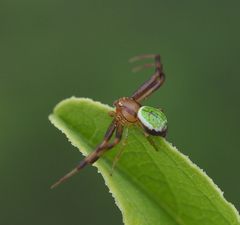
Females have a bulky body and stay mostly still; males are thin and more active. Female prosoma colors are pink, yellow or white, while males range from brown to green-yellow.
Source: Wikipedia
Size
Females measure about 7 to 11 mm, and males are much smaller at 2 to 4 mm.
Source: Wikipedia
Where it lives
They are found on shrubs and low-lying vegetation in warm regions. They favor a variety of flowering herbs and plants, especially when the flowers are in full bloom.
Source: Wikipedia
What it eats
They sit in flower petals and ambush insects like bees, butterflies, hoverflies, flies, other hymenopterans and even other spiders. Males tend to eat less and go after smaller insects.
Source: Wikipedia
Life cycle
Spiderlings appear either in late summer or early spring.
Source: Wikipedia
When you see it
They reproduce during the summer months.
Source: Wikipedia
Lookalikes
It can be told apart from the similar Thomisus zyuzini by specific shapes of the male’s tibial apophyses and the position of the epigynal opening.
Source: Wikipedia
Same family (Thomisidae)


Sources
- Wikipedia: https://en.wikipedia.org/wiki/Thomisus_onustus
Look it up elsewhere: GBIF · iNaturalist · BugGuide · ITIS · Wikipedia
Text written 2026-10-22 from the sources above and checked sentence by sentence against them. Data fetched 2026-10-22.