 Bug FAQ
Napoleon Spider
Synema globosum · Order: Araneae · Family: Thomisidae
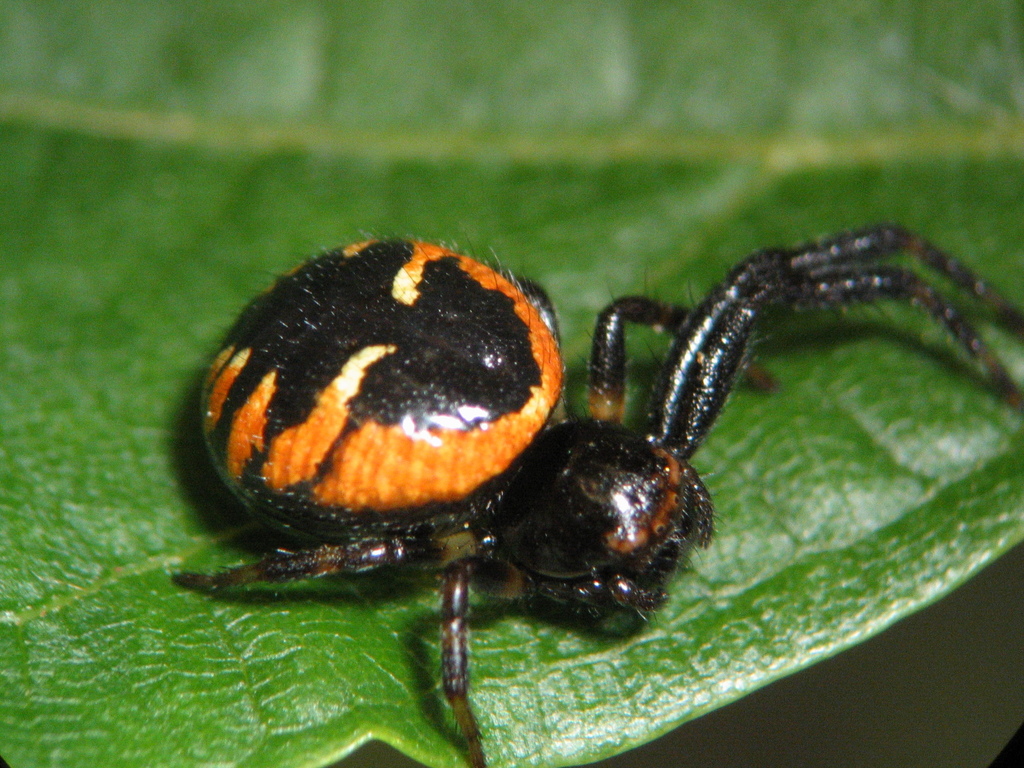
They are found from May to August on yellow or red Apiaceae flowers, hunting insects without building a web. The species lives throughout most of Europe and the eastern Palearctic, especially around the Mediterranean, but not in Scandinavia or the British Isles.
Source: Wikipedia
How to recognize it
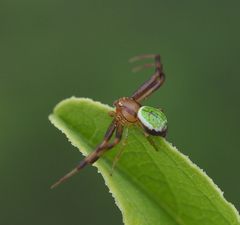
Mature females have a red, yellow or white abdomen with a black pattern that looks like Napoleon’s silhouette.
Source: Wikipedia
Size
Males are 2 to 4 mm long, while females are about 7 to 8 mm.
Source: Wikipedia
Where it lives
Like other crab spiders, they do not build webs but actively hunt their prey.
Source: Wikipedia
What it eats
They hunt insects on flowers rather than catching them in webs. Their prey are flower-feeding insects on yellow or red Apiaceae.
Source: Wikipedia
Life cycle
The front two pairs of legs are larger for catching prey, while the rear legs are mainly for movement.
Source: Wikipedia
When you see it
You will most often see them between May and August on flowering plants.
Source: Wikipedia
Where it comes from
They occur in most European countries and the eastern Palearctic, but are absent from Scandinavia and the British Isles. They are especially common throughout the Mediterranean region.
Source: Wikipedia
Lookalikes
Synema globosum belongs to the crab-spider family Thomisidae.
Source: Wikipedia
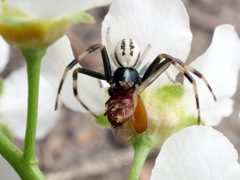
Same family (Thomisidae)


Sources
- Wikipedia: https://en.wikipedia.org/wiki/Synema_globosum
Look it up elsewhere: GBIF · iNaturalist · BugGuide · ITIS · Wikipedia
Text written 2026-10-22 from the sources above and checked sentence by sentence against them. Data fetched 2026-10-22.