 Bug FAQ
Hook-tip fern looper
Sarisa muriferata · Order: Lepidoptera · Family: Geometridae

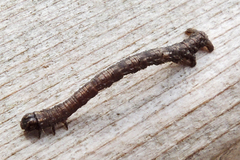
Full-grown larvae are about 30 mm long. The caterpillars feed on the fern Microsorum pustulatum, the tree fern Dicksonia fibrosa, and the leaves and sori of Pyrrosia eleagnifolia. The species overwinters as a pupa and likely produces two generations per year, with adults seen from September to March.
Source: Wikipedia
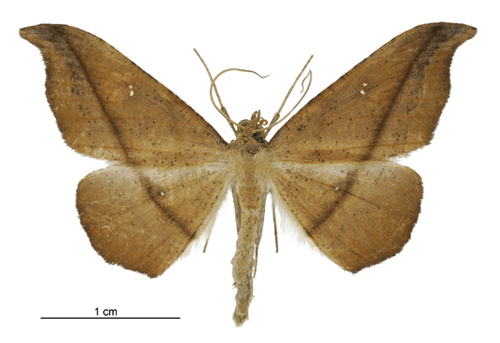
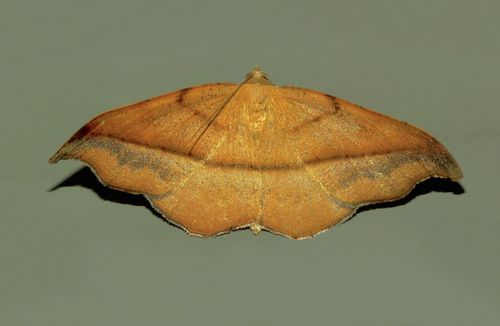
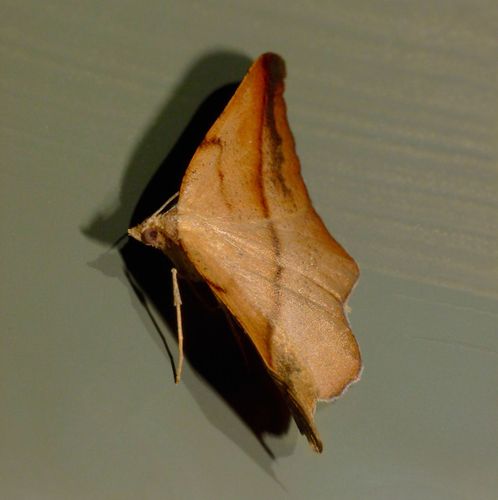
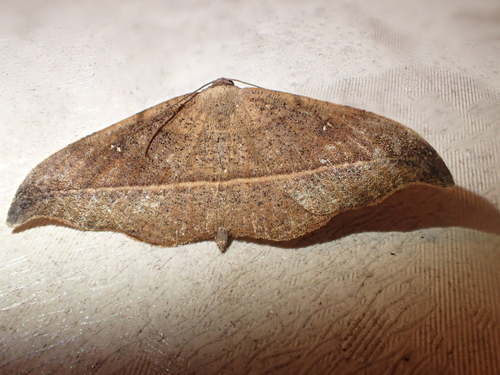
How to recognize it
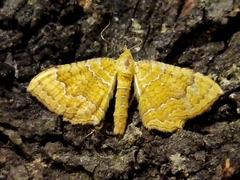
Adult moths have working mouthparts and are attracted to nectar.
Source: Wikipedia
Size
Full-grown larvae measure roughly 30 mm in length.
Source: Wikipedia
Where it lives
When disturbed, the moth drops to the ground and holds its wings still.
Source: Wikipedia
What it eats
They also eat the leaves and sori of Pyrrosia eleagnifolia.
Source: Wikipedia
Life cycle
The species spends the winter in the pupal stage. There are probably two generations each year, with adults observed from September to March.
Source: Wikipedia
When you see it
Adults can be on the wing throughout the whole year. Recorded adult activity spans from September to March.
Source: Wikipedia
Where it comes from
This moth is native to New Zealand and its surrounding islands.
Source: Wikipedia
More photos
Questions people ask
What do the larvae eat?
They feed on the fern Microsorum pustulatum, the tree fern Dicksonia fibrosa, and the leaves and sori of Pyrrosia eleagnifolia.
Source: Wikipedia
When are adult moths active?
Adults can be seen all year, with most records from September to March.
Source: Wikipedia
Where is the hook-tip fern looper found?
It is endemic to New Zealand and nearby islands.
Source: Wikipedia
Same family (Geometridae)




Sources
- Wikipedia: https://en.wikipedia.org/wiki/Sarisa_%28moth%29
Look it up elsewhere: GBIF · iNaturalist · BugGuide · Wikipedia
Text written 2026-10-23 from the sources above and checked sentence by sentence against them. Data fetched 2026-10-23.