 Bug FAQ
Kanuka looper
Poecilasthena schistaria · Order: Lepidoptera · Family: Geometridae

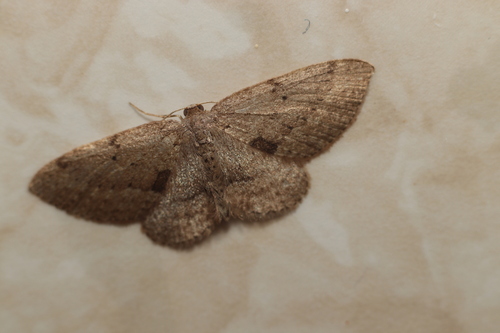
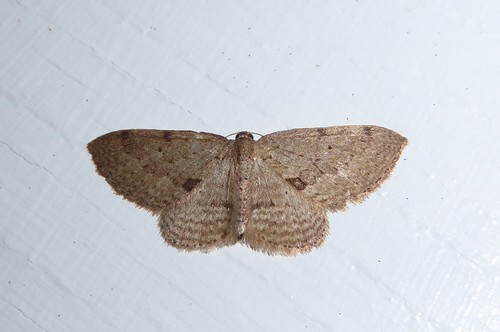
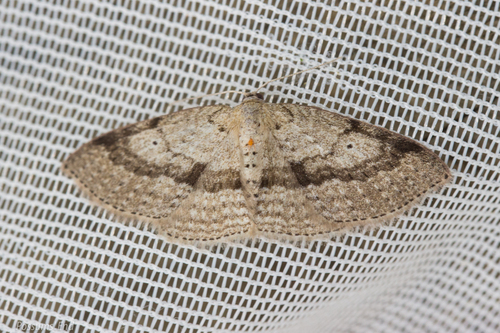
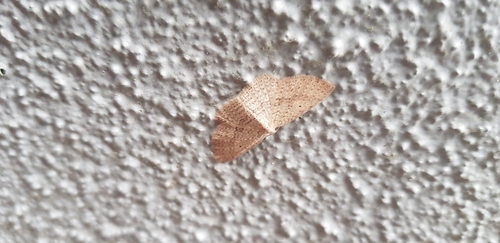
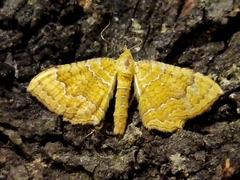
The Kanuka looper’s wings range from very pale brown to dull purplish-brown and show many jagged, darker crosswise lines. It lives throughout New Zealand and the adult moths fly from October through April. Its caterpillars eat the leaves of the native plant kanuka (Leptospermum scoparium).
Source: Wikipedia
How to recognize it
Wings vary from very pale brown to dull purplish-brown with many jagged, darker transverse lines.
Source: Wikipedia
Where it lives
Found in New Zealand.
Source: Wikipedia
What it eats
Larvae feed on the leaves of Leptospermum scoparium.
Source: Wikipedia
Life cycle
Pupation occurs in a thin cocoon just below the soil surface.
Source: Wikipedia
When you see it
Adults are on the wing from October to April.
Source: Wikipedia
Where it comes from
Native to New Zealand.
Source: Wikipedia
More photos
Questions people ask
What do the caterpillars eat?
They feed on the leaves of kanuka (Leptospermum scoparium).
Source: Wikipedia
Same family (Geometridae)





Sources
- Wikipedia: https://en.wikipedia.org/wiki/Poecilasthena_schistaria
Look it up elsewhere: GBIF · iNaturalist · BugGuide · Wikipedia
Text written 2026-10-24 from the sources above and checked sentence by sentence against them. Data fetched 2026-10-22.