 Bug FAQ
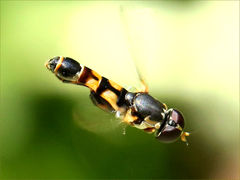
Native Drone Fly
Eristalinus punctulatus · Order: Diptera · Family: Syrphidae
Also called: Australian Drone Fly
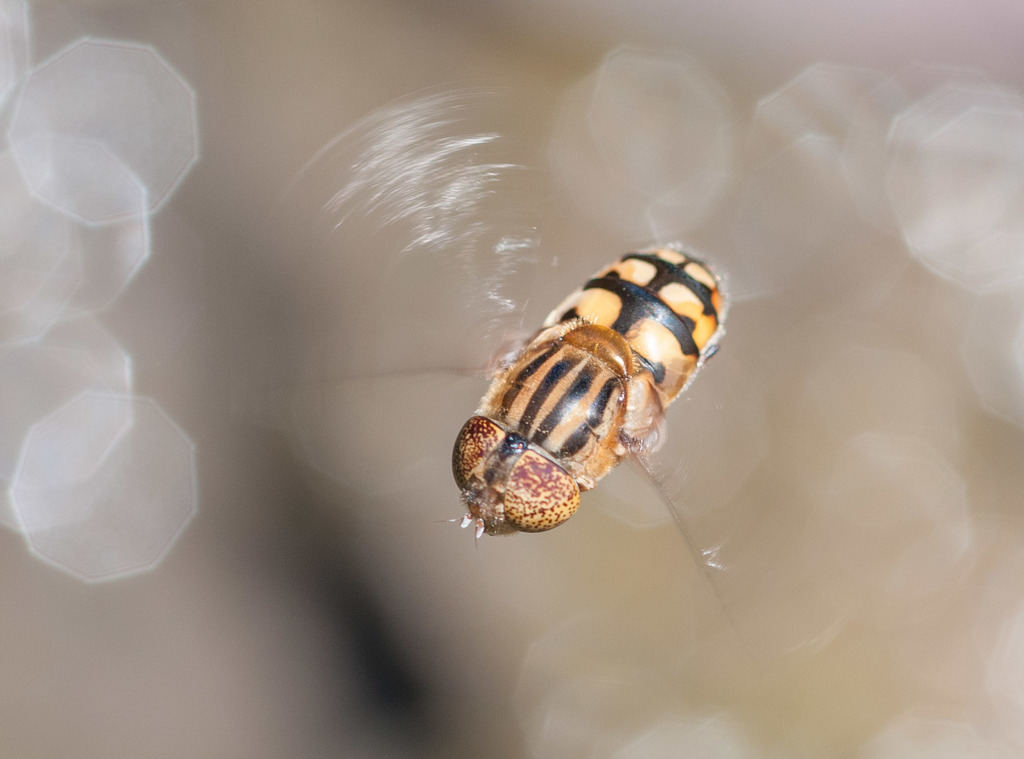
The native drone fly has spotted eyes; males have eyes that meet at the top, while females have separated eyes. Adults are seen almost year-round, with the highest numbers in the summer months of November to January. It occurs across Australia and has also been reported from New Caledonia and the Solomon Islands.
Source: Wikipedia
How to recognize it
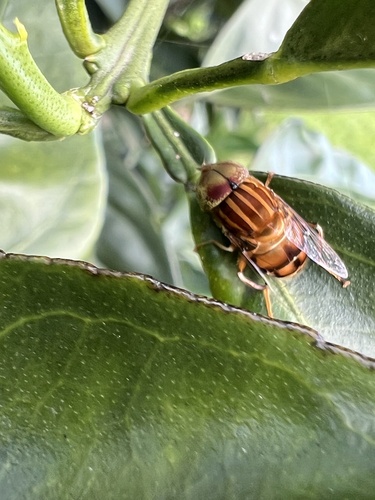
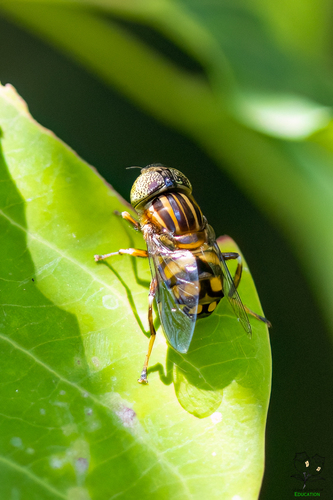
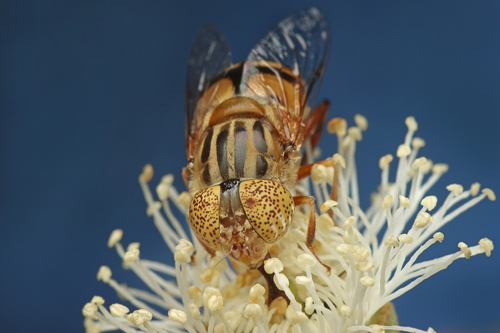
The eyes are spotted; males are holoptic (eyes meet) and females are dichoptic (eyes separated).
Source: Wikipedia
Where it lives
It is found throughout Australia and also on New Caledonia and the Solomon Islands.
Source: Wikipedia
Life cycle
Adults are active for most of the year, with a strong peak in the summer months of November to January.
Source: Wikipedia
When you see it
The species is most abundant in the summer period between November and January.
Source: Wikipedia
Where it comes from
Its range includes Australia, New Caledonia and the Solomon Islands.
Source: Wikipedia
More photos
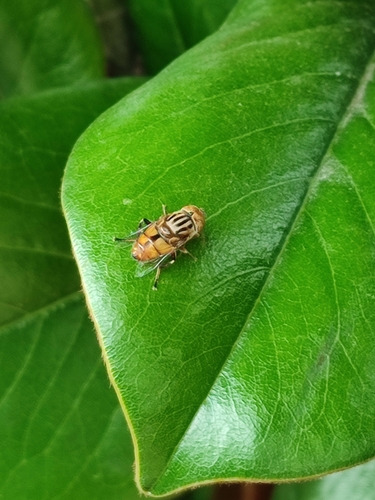
Questions people ask
When are native drone flies most common?
They are seen throughout the year but are especially numerous from November to January.
Source: Wikipedia
How can I tell male and female native drone flies apart?
Males have eyes that meet at the top of the head, while females have eyes that are separated.
Source: Wikipedia
Where does this fly live?
It occurs across Australia and has also been reported from New Caledonia and the Solomon Islands.
Source: Wikipedia
Same family (Syrphidae)
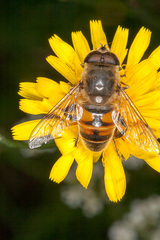
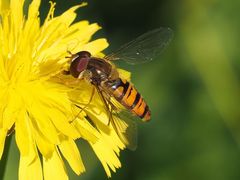
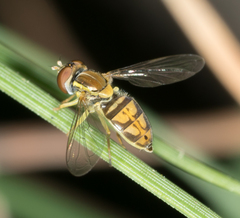


Sources
- Wikipedia: https://en.wikipedia.org/wiki/Eristalinus_punctulatus
Look it up elsewhere: GBIF · iNaturalist · BugGuide · Wikipedia
Text written 2026-10-24 from the sources above and checked sentence by sentence against them. Data fetched 2026-10-22.