 Bug FAQ
Northern Conifer Angles
Macaria signaria · Order: Lepidoptera · Family: Geometridae
Also called: Dusky Peacock, Pale-marked Angle, Pale-marked Angle Moth
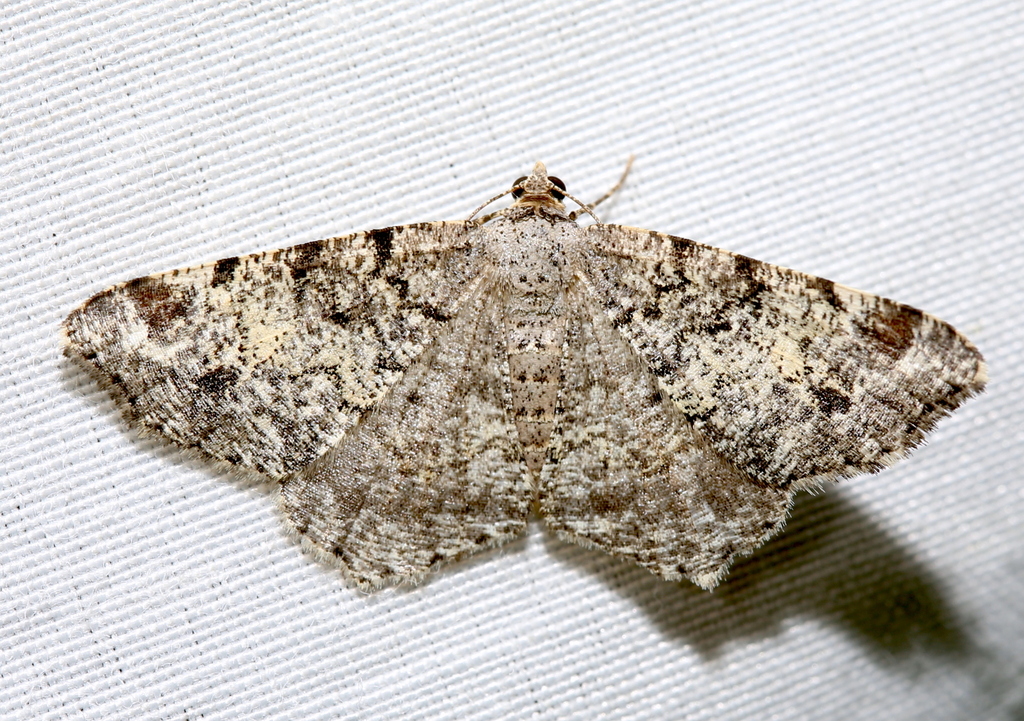
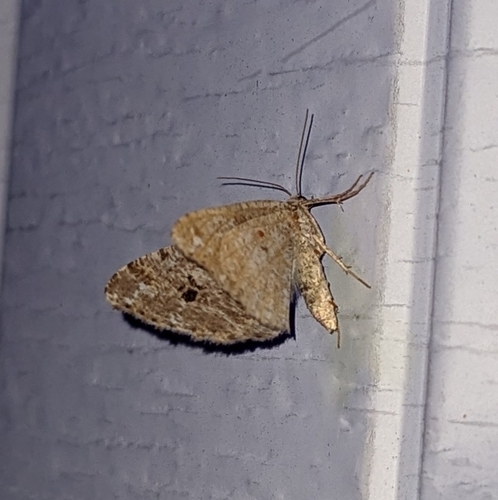
Macaria signaria is a small moth with a wingspan of about 20 to 28 mm and belongs to the Geometridae family. It occurs in Europe and Asia as one subspecies and across North America as another, flying from May to July.
Source: Wikipedia
Size
Adults have a wingspan ranging from 20 to 28 mm.
Source: Wikipedia
What it eats
Caterpillars feed on Norway spruce (Picea abies) and Siberian larch (Larix sibirica).
Source: Wikipedia
When you see it
Adults are on the wing between May and July, depending on location.
Source: Wikipedia
Where it comes from
One subspecies lives in Europe, Turkey, the Caucasus, Siberia, the Far East, Sakhalin, northern Iran and Japan.
Source: Wikipedia
Where it is found in the US
Recorded in 29 of 51 states and DC. Most records: Washington, Oregon, Wyoming, Montana, California, Colorado, North Carolina, Michigan.
Darker = more records. Counts are museum and citizen-science records, not population size.
Source: GBIF
Months it is reported in the US
Source: GBIF
More photos
Questions people ask
When are these moths active?
Adults fly from May through July, with exact timing varying by region.
Source: Wikipedia
What do the larvae eat?
The caterpillars feed on spruce and larch trees, specifically Picea abies and Larix sibirica.
Source: Wikipedia
Where is this moth found?
One form lives across Europe and parts of Asia, while another form ranges throughout North America from Canada to the southern United States.
Source: Wikipedia
Same family (Geometridae)




Sources
- Wikipedia: https://en.wikipedia.org/wiki/Macaria_signaria
Look it up elsewhere: GBIF · iNaturalist · BugGuide · ITIS · Wikipedia
Text written 2026-10-23 from the sources above and checked sentence by sentence against them. Data fetched 2026-10-23.