 Bug FAQ
Northwestern Phoenix Moth
Eulithis xylina · Order: Lepidoptera · Family: Geometridae
Source: Wikipedia
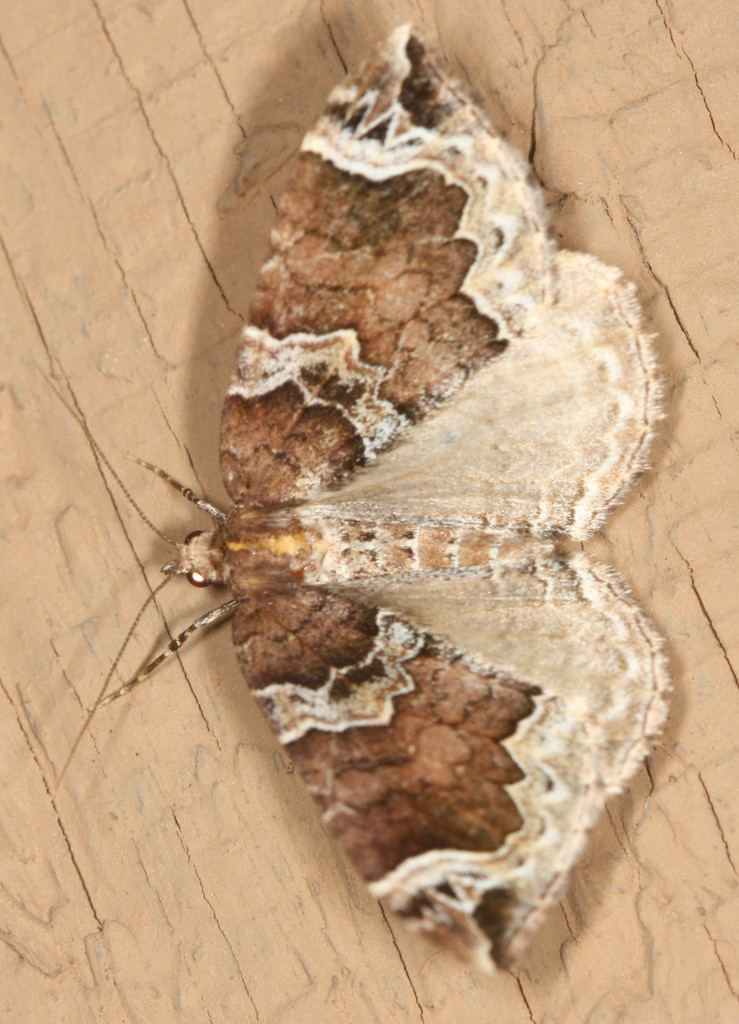
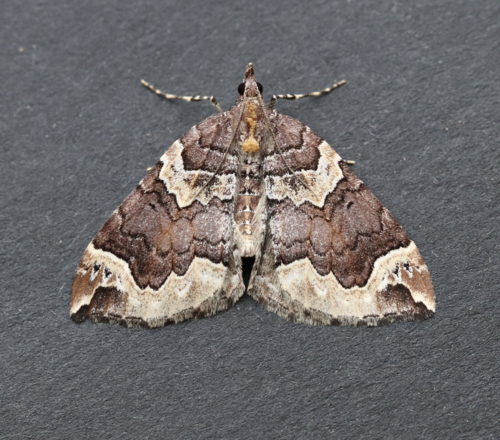
The Northwestern Phoenix Moth is a medium-sized nocturnal moth with reddish-brown marbled wings crossed by lacy white bands and a broad medial band that widens toward the front edge of the wing. It lives in western North America, from Alaska down the Pacific coast to California and eastward to Colorado and the boreal forests of Alberta and Saskatchewan. Its caterpillars eat many broad-leaf trees and shrubs such as alder, willow, dogwood and rose, and can cause noticeable leaf damage in gardens and forests.
Source: Wikipedia
How to recognize it
It is a common night moth with reddish-brown marbled scales and lacy white bands on the wings. The forewing shows a wide middle band that is reddish-brown to grayish-brown, broader near the leading edge than near the inner margin.
Source: Wikipedia
Size
The wingspan ranges from about 29 to 32 mm. Each forewing measures roughly 15 to 18 mm in length.
Source: Wikipedia
Where it lives
It prefers moist deciduous and mixed forests as well as riparian zones. Most records are from west of the Cascades in British Columbia, Washington and Oregon.
Source: Wikipedia
What it eats
The caterpillars feed on many broad-leaf plants.
Source: Wikipedia
Life cycle
Adults emerge in mid-summer and fly from June through September, with numbers peaking in late July; the species overwinters as an egg.
Source: Wikipedia
When you see it
Adults are on the wing from June to September, most abundant in late July. The species spends the winter in the egg stage.
Source: Wikipedia
Where it comes from
It is native to western North America. Its range extends from Alaska to California and east to Colorado, also reaching the boreal forests of Alberta and Saskatchewan.
Source: Wikipedia
Lookalikes
It can be confused with other Eulithis and carpet moths such as the Black-banded Carpet, Small Phoenix, Variable Eulithis, White Eulithis, Serrated Eulithis and the Phoenix moth.
Source: Wikipedia
Where it is found in the US
Recorded in 16 of 51 states and DC. Most records: Washington, Colorado, Oregon, Alaska, Wyoming, Montana, California, Idaho.
Darker = more records. Counts are museum and citizen-science records, not population size.
Source: GBIF
Status: native in North America; native in Canada; native in United States. Source: iNaturalist
Months it is reported in the US
Source: GBIF
More photos
Questions people ask
When are adult moths active?
Adults emerge in mid-summer and are active from June through September, with a peak in late July.
Source: Wikipedia
Where is this moth found?
It lives in western North America, from Alaska down the Pacific coast to California and eastward to Colorado and the boreal forests of Alberta and Saskatchewan.
Source: Wikipedia
How can I tell it apart from similar moths?
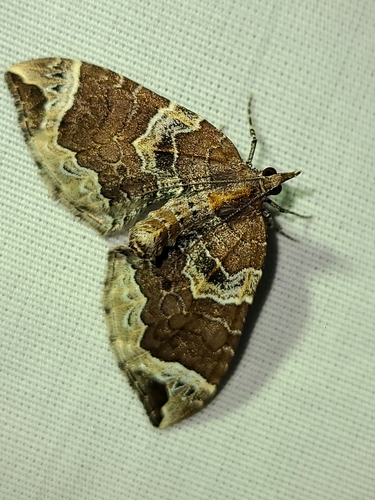
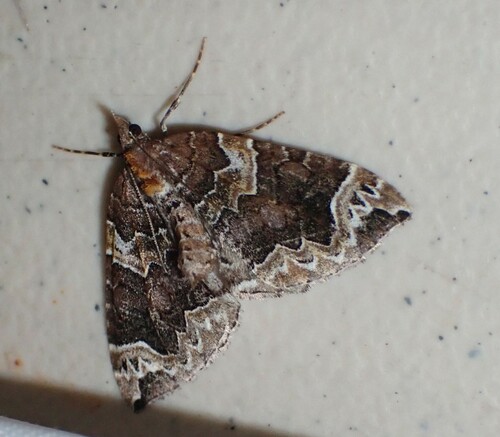
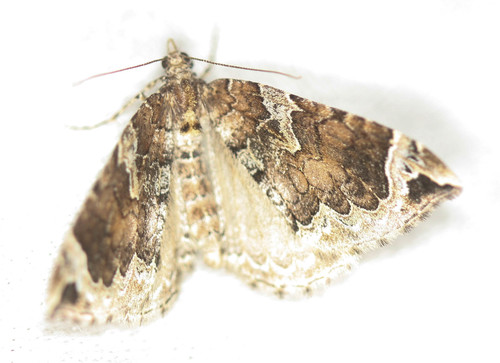
Look for the wide reddish-brown medial band on the forewing that is broader near the leading edge, and the lacy white intersecting patterns on a marbled reddish-brown background.
Source: Wikipedia
Same family (Geometridae)





Sources
- Wikipedia: https://en.wikipedia.org/wiki/Eulithis_xylina
Look it up elsewhere: GBIF · iNaturalist · BugGuide · ITIS · Wikipedia
Text written 2026-10-24 from the sources above and checked sentence by sentence against them. Data fetched 2026-10-24.