 Bug FAQ
Rabbit Tick
Haemaphysalis leporispalustris · Order: Ixodida · Family: Ixodidae
Also called: Rabbit fever tick
Source: Wikipedia
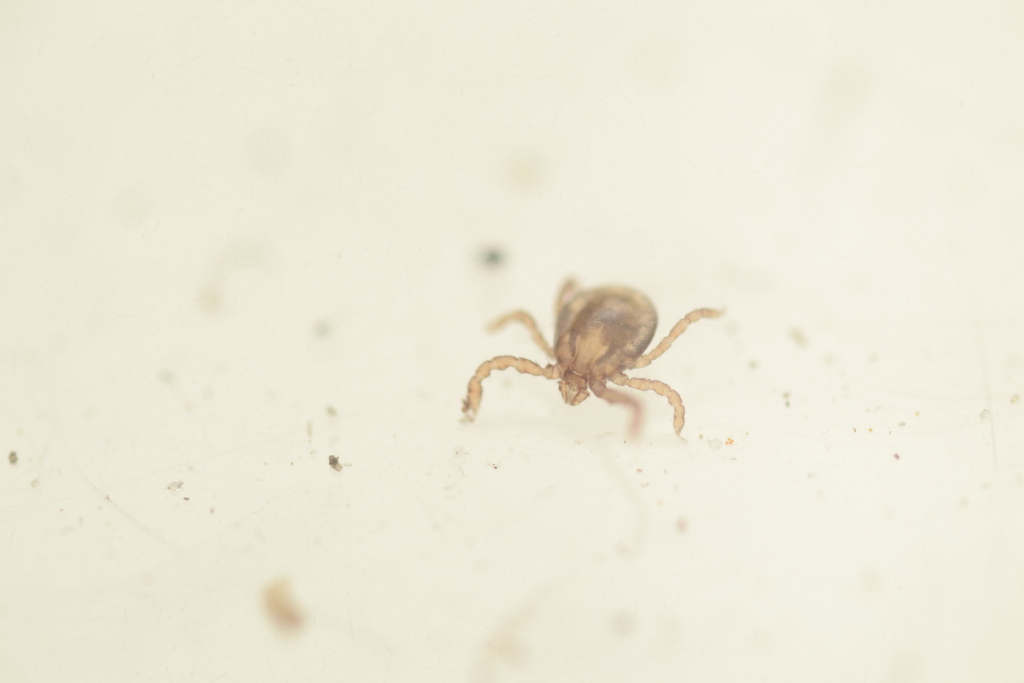
Adult rabbit ticks are about 1 mm long, have a rigid scutum, a forward-projecting capitulum and no eyes, giving them a “wood tick” look. They are common on rabbit and hare ears or necks, peak in summer, and are found from Alaska to Argentina. While they rarely bite humans, they can carry Coxiella burnetii, Francisella tularensis and Anaplasma bovis, making them a disease vector for other animals.
Source: Wikipedia
How to recognize it
The tick has a rigid shield (scutum) and a prominent mouthpart (capitulum) that sticks out forward, resembling a wood tick. It lacks eyes, its palpi are wider than long, and the scutum is smooth on both sexes; the capitulum base is rectangular, not hexagonal.
Source: Wikipedia
Size
An adult rabbit tick measures roughly one millimeter in length.
Source: Wikipedia
Is it a pest in the house?
It is not a major disease carrier for humans but can spread disease to other animals.
Source: Wikipedia
Does it bite or sting?
It rarely feeds on people. It can transmit Coxiella burnetii, Francisella tularensis and Anaplasma bovis.
Source: Wikipedia
How to get rid of it
Ivermectin is commonly used to treat rabbits and small mammals infested with this tick. Pyrethrin, permethrin and amitraz can harm small mammals and should be avoided.
Source: Wikipedia
Where it lives
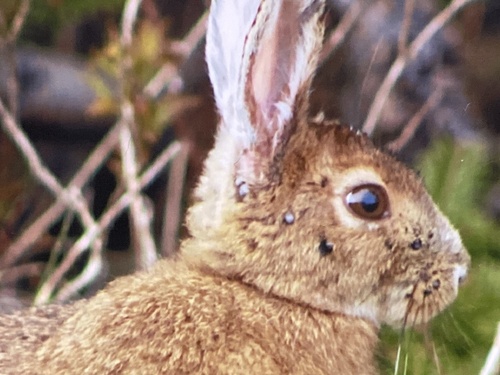
You’ll often find them on a rabbit’s ears, between the ears, or on the neck.
Source: Wikipedia
What it eats
Its main hosts are rabbits, hares and sometimes ground-feeding birds; larvae also feed on ground-dwelling birds.
Source: Wikipedia
Life cycle
The rabbit tick goes through egg, larva, nymph and adult stages in a complete life cycle.
Source: Wikipedia
When you see it
Tick numbers rise in summer and drop in winter.
Source: Wikipedia
Where it comes from
It is native throughout the Americas, from Alaska down to Argentina.
Source: Wikipedia
Lookalikes
It looks very similar to the many other species in the Haemaphysalis genus.
Source: Wikipedia
Where it is found in the US
Recorded in 37 of 51 states and DC. Most records: Maryland, Illinois, Florida, Texas, Iowa, Alaska, California, Wisconsin.
Darker = more records. Counts are museum and citizen-science records, not population size.
Source: GBIF
Status: native in North America; native in United States; native in Canada. Source: iNaturalist
Months it is reported in the US
Source: GBIF
More photos
Questions people ask
What diseases can rabbit ticks spread?
They can carry Coxiella burnetii, Francisella tularensis and Anaplasma bovis.
Source: Wikipedia
How can I treat a rabbit that has these ticks?
Ivermectin is the usual treatment for rabbits and other small mammals.
Source: Wikipedia
Where are rabbit ticks found?
They occur throughout the Americas, from Alaska to Argentina, often on the ears or neck of rabbits.
Source: Wikipedia
Same family (Ixodidae)
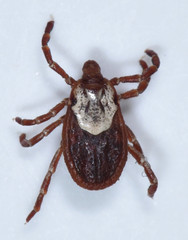 American Dog TickDermacentor variabilisCan spread germs or disease
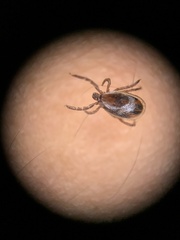 Eastern Black-legged TickIxodes scapularisCan spread germs or disease
 Lone Star TickAmblyomma americanumCan spread germs or disease
 Gulf Coast TickAmblyomma maculatumCan spread germs or disease
 Western Black-legged TickIxodes pacificusCan spread germs or disease
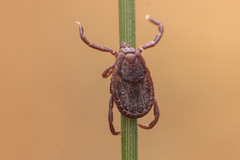 Brown Dog TickRhipicephalus sanguineusCan spread germs or disease
Sources
- Wikipedia: https://en.wikipedia.org/wiki/Haemaphysalis_leporispalustris
Look it up elsewhere: GBIF · iNaturalist · BugGuide · ITIS · Wikipedia
Text written 2026-10-24 from the sources above and checked sentence by sentence against them. Data fetched 2026-10-24.